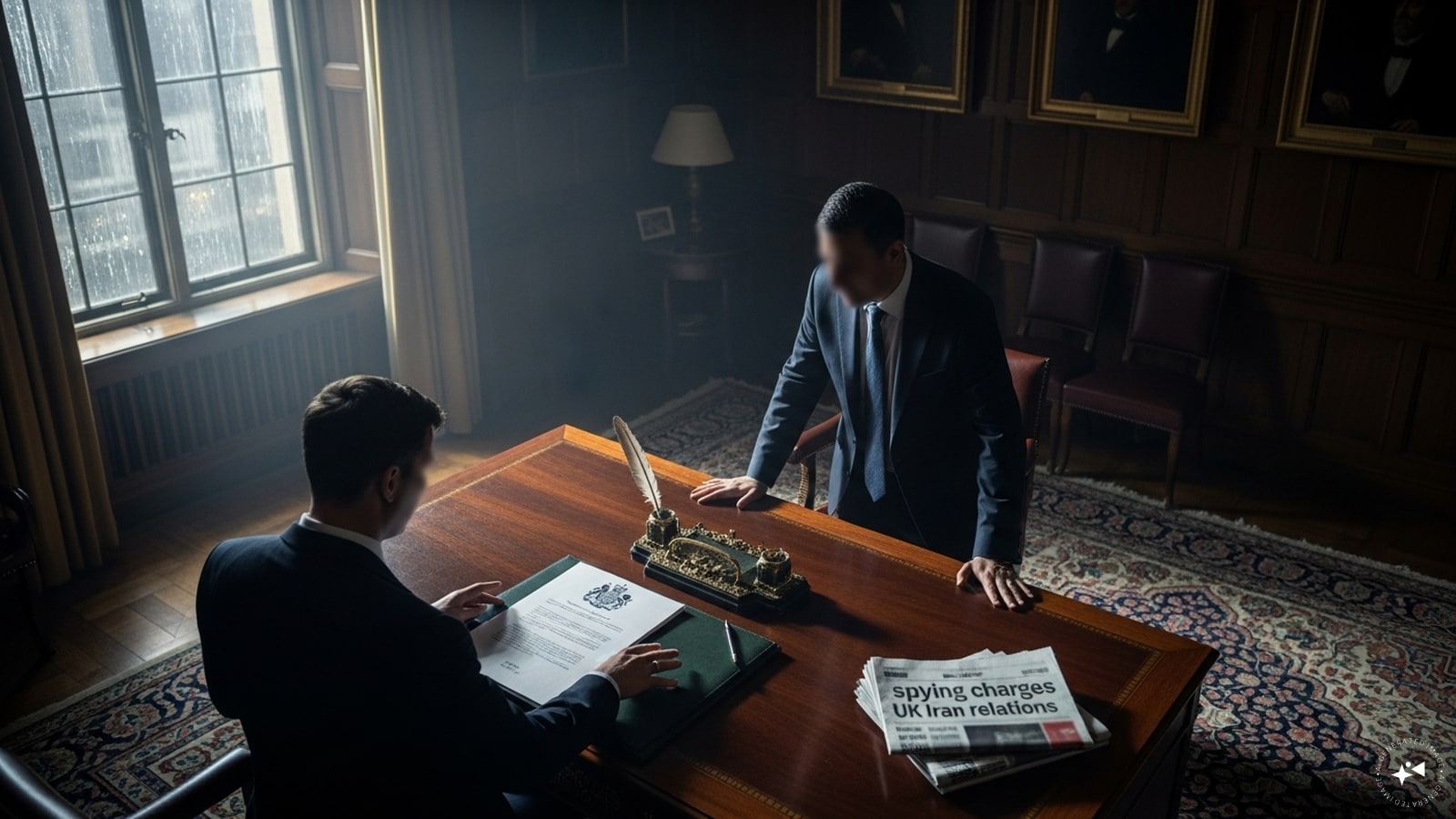
The British Foreign Office didn't just invite Seyed Ali Mousavi in for tea and biscuits on Monday. When the Iranian Ambassador was summoned to the Foreign, Commonwealth & Development Office (FCDO), it was a blunt, public middle finger to Tehran’s intelligence operations on British soil. This wasn't a sudden whim. It's the direct result of a high-stakes counter-terrorism investigation that just saw two men hauled into court for allegedly doing the Islamic Republic's dirty work.
Nematollah Shahsavani and Alireza Farasati aren't household names, but they’re currently at the center of a geopolitical firestorm. They stand accused of "hostile reconnaissance." That's the dry, legal way of saying they were allegedly casing the joint—specifically targets within the Jewish community. We're talking about Britain’s oldest synagogue and the Israeli Embassy.
The Reality of Iranian Espionage in London
Most people think of spying as James Bond gadgets or hacking into mainframes. The reality in 2026 is much grittier. It’s two guys with smartphones and notes, spending five weeks last summer hanging around North London neighborhoods. According to the prosecution, these weren't random wanderings. They were systematic efforts to gather intelligence for a foreign power.
Shahsavani, a 40-year-old dual British-Iranian national, and Farasati, a 22-year-old Iranian citizen, reportedly had a list. This wasn't a grocery list. It was a directory of targets. When you're allegedly conducting surveillance on religious centers and diplomatic buildings, you're not just "gathering info." You're providing the blueprints for potential future violence.
The timing here is everything. This investigation didn't start yesterday. The alleged activity happened between July and August of last year. So, why the big show now? Because the Crown Prosecution Service (CPS) finally felt they had enough to make the charges stick under the National Security Act. By summoning the Ambassador immediately after the court appearance, the UK is sending a message: "We know what you're doing, and we're going to name and shame you for it."
Why the National Security Act is a Big Deal
In the past, prosecuting these kinds of cases was a legal nightmare. You had to prove a specific intent to commit a specific act of terrorism, which is notoriously hard to do when someone is "just" taking photos. The National Security Act changed the rules. It makes it a crime to assist a foreign intelligence service, period.
It’s a broader net, and the UK government is using it to haul in people who previously might have slipped through the cracks. It’s a aggressive shift. We've seen MI5 Director General Ken McCallum warning for years that Iran is one of the most persistent state threats to the UK. He’s mentioned dozens of kidnap and assassination plots being disrupted. These aren't conspiracy theories; they're the daily reality for British security services.
A Pattern of Reckless Behavior
Iran’s playbook isn't exactly subtle. They’ve been accused of targeting journalists at Iran International, harassing dissidents, and now, apparently, mapping out Jewish community sites. It’s a strategy of intimidation. If you can't win the diplomatic argument, you try to scare the people who oppose you.
The Foreign Office spokesperson was uncharacteristically direct this week, calling Iran's actions "reckless and destabilizing." That’s diplomatic speak for "stop acting like a rogue state." But will a summons actually change anything?
Probably not in Tehran. They usually respond by summoning the British Ambassador in Iran and complaining about "interference." It’s a predictable dance. However, the value isn't in changing the minds of the mullahs. It's in signaling to the British public—and the international community—that the UK won't look the other way while its citizens are being surveilled by foreign agents.
The Human Cost of Surveillance
Imagine being a member of the Jewish community in North London right now. You’re hearing that your place of worship was allegedly a target for "hostile reconnaissance" by a foreign government. That’s not just a news story; it’s a direct threat to your safety and your way of life.
The Metropolitan Police’s Counter Terrorism Command spent months on this. They arrested four people back on March 6. While two were released, the charges against Shahsavani and Farasati are serious enough to keep them in custody until their next hearing at the Old Bailey on April 17.
What This Means for UK Iran Relations
Relationships between London and Tehran have been in the freezer for a long time, but they just hit absolute zero. With the ongoing regional tensions in the Middle East and the US-Israeli conflict with Iran, the UK is increasingly seen as a front line.
There's a real fear that the UK could become a proxy battlefield. When you have reports of Iranian nationals trying to breach nuclear submarine bases like Faslane in Scotland, you realize this isn't just about neighborhood surveillance. It’s a multi-layered intelligence offensive.
The UK government is basically saying they’ve had enough. By summoning Mousavi, they’re putting the weight of the state behind the police investigation. They’re telling the world that this isn't just a criminal matter; it's a matter of national sovereignty.
If you're wondering what happens next, keep an eye on that April 17 court date. The evidence presented at the Old Bailey will likely pull back the curtain even further on how Iranian intelligence operates in the UK.
For now, the best thing you can do is stay informed and stay vigilant. If you’re in a community that feels targeted, engage with the local police. They’re clearly taking these threats seriously, even if the diplomatic fallout feels like a slow-motion car crash. Don't expect a sudden thaw in relations; expect more headlines like this as the UK continues to purge foreign interference from its streets.