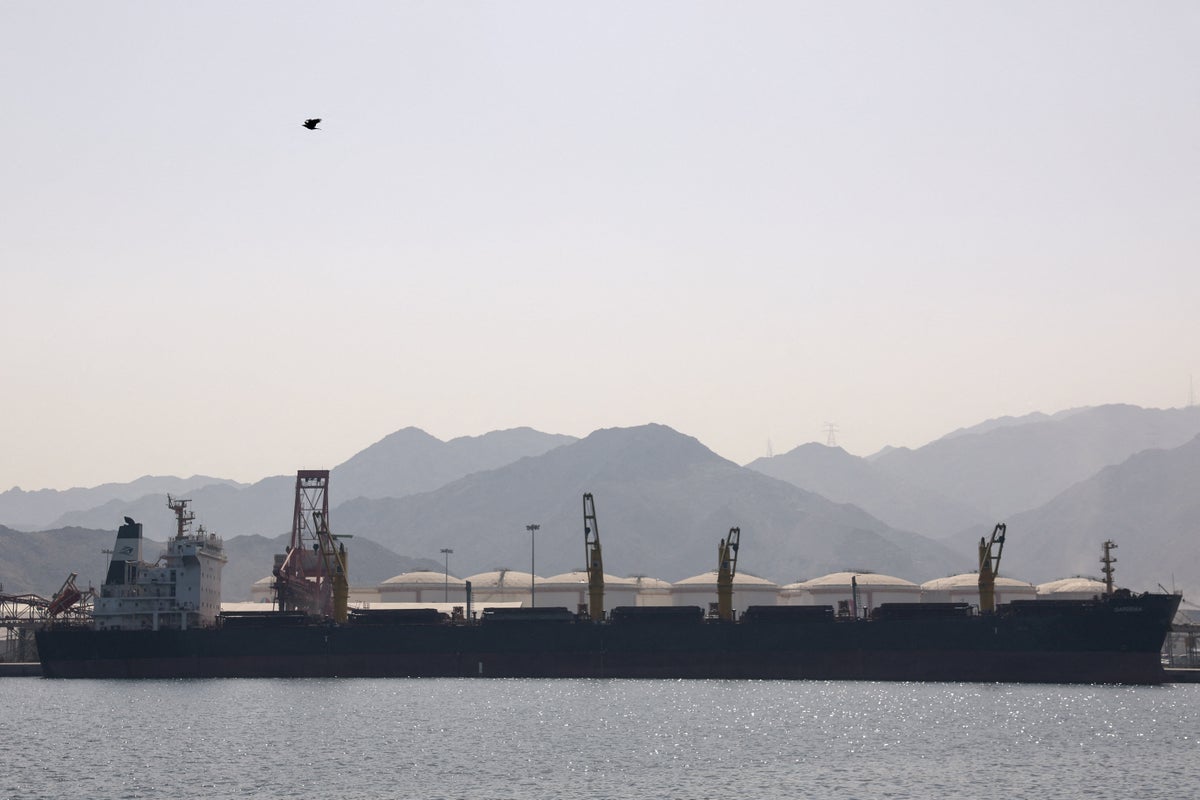
Abu Dhabi isn't waiting around for the Strait of Hormuz to reopen. With the vital maritime chokepoint effectively locked down since late February following intense regional military escalations, the UAE just made a massive geopolitical gamble.
On May 15, 2026, the Abu Dhabi Media Office confirmed that Crown Prince Sheikh Khaled bin Mohamed bin Zayed directed state oil titan ADNOC to fast-track construction on the brand-new West-East Pipeline project. The goal is brutal in its simplicity: double the nation's capacity to ship crude directly from the port of Fujairah on the Gulf of Oman, completely bypassing Iranian crosshairs. Also making waves in related news: The Day the Glowing Screen Bleed Green.
If you think this is just a temporary fix for a shipping crisis, you're missing the bigger picture. This infrastructure blitz is happening right after the UAE shocked the energy world by quitting OPEC on May 1. By leaving the cartel, Abu Dhabi freed itself from production quotas. They want to pump more oil, and they need a guaranteed way to get it to market.
The Numbers Behind the Blueprint
Right now, the UAE relies on a single pipeline lifeline to avoid the strait. The existing Abu Dhabi Crude Oil Pipeline, widely known as the Habshan-Fujairah line, runs for 406 kilometers from the onshore fields of Abu Dhabi down to the eastern coast. That 48-inch pipe has been pushed to its absolute limits lately, running at a maximum discharge of roughly 1.7 million to 1.8 million barrels per day. Further details into this topic are detailed by CNBC.
That isn't enough anymore. When the new 1.5 million barrels per day West-East Pipeline becomes operational, the math changes completely.
- Combined pipeline capacity: Around 3.3 million barrels per day will flow directly through the desert.
- Total export capacity: Thanks to massive storage infrastructure and terminal upgrades in Fujairah, the port will soon handle up to 4 million barrels per day.
- Target operational date: Abu Dhabi has compressed the timeline, demanding the system go live next year.
This rapid expansion directly supports ADNOC's aggressive push to hit 5 million barrels per day of output capacity. Before the current conflict choked off shipping lanes, the UAE was pumping just under 3.4 million barrels per day. The effective closure of Hormuz forced ADNOC to shut in massive amounts of production, cutting output almost in half. This new line ensures that never happens again.
Why Fujairah is the New Center of the Energy Map
The port of Fujairah sits in a uniquely powerful geographical position. Because it sits outside the Persian Gulf, tankers loading there don't have to risk sailing through the narrow 21-mile-wide ribbon of water monitored by Iran's Islamic Revolutionary Guard Corps.
But don't mistake this for a risk-free paradise. The reality is that building a pipeline doesn't automatically mean safety. Just a few weeks ago on May 4, an ADNOC tanker was hit by a drone, and a missile barrage targeted Fujairah's energy zone, wounding three workers. Tehran even published a revised maritime map claiming a new control zone that swallows up much of the UAE's Gulf of Oman coast, calling the waters a vast operational area.
Even with those threats, land-based pipelines offer far more security than vulnerable tankers idling in a traffic jam at sea. Fujairah is already the third-largest crude and refined product storage hub on earth. By feeding millions of additional barrels directly into these massive tank farms, the UAE gives itself the commercial flexibility to store, blend, and export oil whenever the market demands it.
Moving Fast While Neighbors Sit Stranded
You have to look at who wins and loses in this scenario to understand the sheer scale of the UAE's move. Only two nations in the Gulf possess the geographic footprint and financial muscle to build pipelines directly to open water: Saudi Arabia and the UAE.
Saudi Arabia relies on its East-West pipeline to transport crude across the kingdom to the Red Sea port of Yanbu. While that asset remains a critical lifeline, it's currently running well under its 7 million barrels per day capacity limit. Oman enjoys a vast coastline outside the strait, but it lacks the massive upstream production of its neighbors.
Meanwhile, look at the nations left out in the cold. Kuwait, Iraq, Qatar, and Bahrain have zero land alternatives. They remain almost entirely dependent on the Strait of Hormuz to get their energy exports to global markets. While those states are forced to negotiate or pray for diplomatic breakthroughs, Abu Dhabi is simply laying down miles of steel pipe.
How to Navigate This Shift
If you manage logistics, trade energy commodities, or analyze regional risk, you can't treat this project as a distant corporate update. The acceleration of the West-East Pipeline alters trade flows through the end of the decade.
First, recalculate your freight risk models. As Fujairah's capacity expands toward 4 million barrels per day, expect a permanent shift in Very Large Crude Carrier traffic patterns away from the inner Gulf ports. The premium on loading outside the chokepoint will likely keep tank rates high but predictable around the Gulf of Oman.
Second, monitor storage volumes closely. With the UAE operating independently of OPEC mandates, ADNOC will use the massive Fujairah storage hub to aggressively time the market. Watch for inventory builds in the eastern UAE as a signal of upcoming supply surges into Asia.
Finally, prepare for localized infrastructure security premiums. Because Iran has proved it can target land terminals with drones, security costs around Fujairah will inevitably rise. Factor these protection and insurance premiums into your long-term regional supply chain costs now.