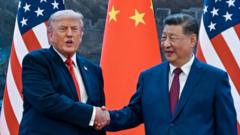
Donald Trump just touched down in Beijing, and if you think this is just another diplomatic photo op, you haven't been paying attention. This isn't 2017. The red carpet is thicker, the stakes are higher, and the tension over Taiwan and the Iran conflict is simmering just beneath the surface of those polite smiles.
While the world watches the handshakes, the real story is happening in the quiet moments between sessions. China doesn't do anything by accident. From the choice of the greeting party to the specific rooms used for talks, every inch of this visit is a coded message about power. Don't miss our recent article on this related article.
The Pomp and the Red Carpet
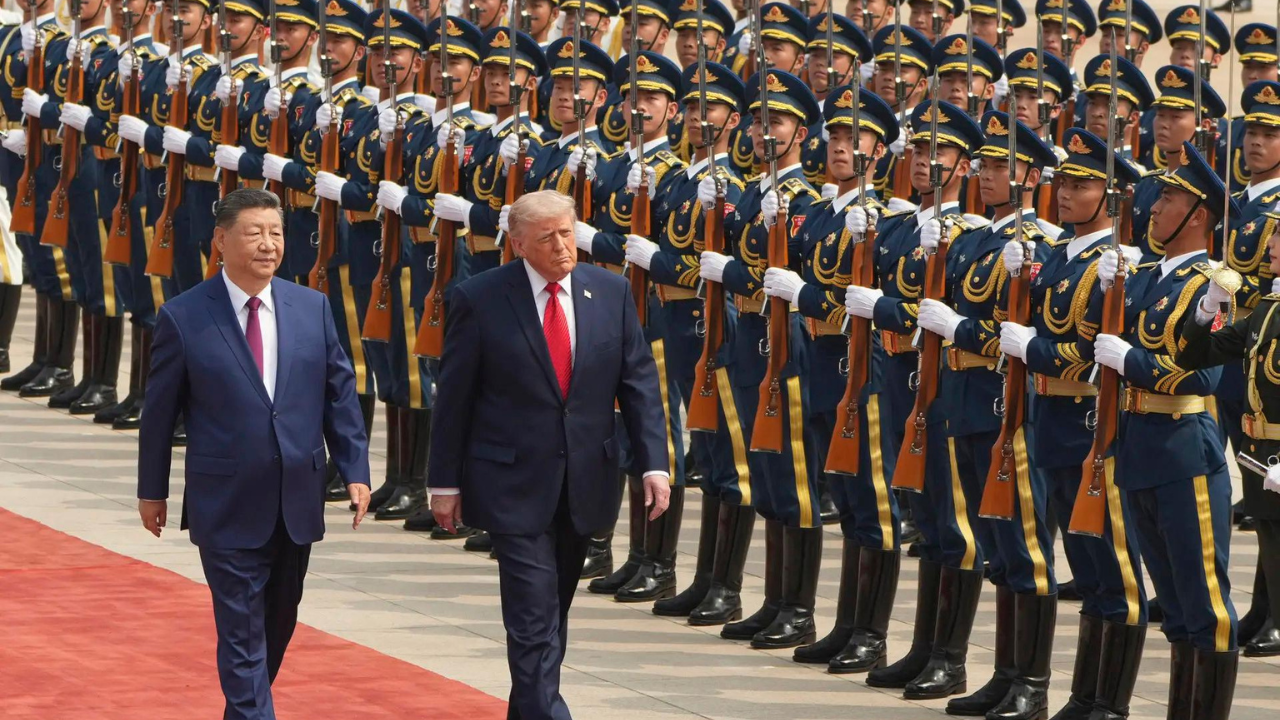
Air Force One didn't just land; it made an entrance. Trump was met at the airport by a massive military honor guard and hundreds of children waving flags. It's the kind of "state visit plus" treatment we saw during his first term, but with a sharper edge.
Chinese Vice President Han Zheng and Ambassador Xie Feng were there to pull him off the plane. The atmosphere was celebratory, yet the underlying reality is that the U.S. and China are currently locked in a struggle for technological and military dominance. Trump's first words to reporters on the way over were telling. He called the U.S. and China the "two superpowers" and the "strongest nations on Earth." He’s not here to play second fiddle. If you want more about the context here, BBC News offers an informative summary.
Why Taiwan is the Elephant in the Room
You can't talk about this trip without talking about chips and ships. Taiwan is the sticking point that could derail everything. Trump has been vocal about an $11 billion weapons package for Taiwan—the largest ever approved. Beijing hates it.
The People’s Daily basically laid out a warning right before he landed, calling Taiwan the "first red line" that cannot be crossed. Honestly, it’s a high-stakes game of chicken. Trump is using the weapons deal as a bargaining chip for trade concessions, while Xi is looking for a firm commitment that the U.S. won't push for Taiwanese independence.
The meeting at the Great Hall of the People went twice as long as anyone expected. Two hours of closed-door talks isn't just "getting to know you" time. They’re hashing out the details of a relationship that has become increasingly complicated since the rise of AI and the global scramble for semiconductors.
Trade Realities and the $250 Billion Shadow
Back in 2017, Trump walked away with $250 billion in "deals," though many were just non-binding memos. This time, the pressure is on to get something concrete. The U.S. trade deficit with China remains a massive political thorn in Trump's side.
He told Xi directly that he doesn't blame China for taking advantage of past U.S. administrations, but he’s making it clear that the free ride is over. He wants market access. He wants an end to government intervention in the Chinese economy. And he’s willing to use every trade remedy in the book to get it.
What Actually Happened Behind Closed Doors
- The Iran Factor: Trump is pushing China to stop the flow of weapons and tech to Iran.
- The Ukraine Conflict: There's a quiet push for China to play a bigger role in ending the war in Europe.
- AI Dominance: Both leaders know that whoever wins the AI race wins the century.
The Forbidden City and the Power of Optics
The first day wrapped up with a return to the symbolism of the Forbidden City. Xi knows Trump loves grandiosity. By hosting him in the "Golden Room" and showing off imperial treasures, China is reminding the U.S. of its long history. It’s a subtle way of saying, "We’ve been here for thousands of years, and we aren't going anywhere."
The banquet speech by Xi was fascinating. He actually used the phrase "Make America Great Again" alongside his own "Great Rejuvenation of the Chinese Nation." He's trying to frame the two goals as compatible. Whether they actually are is the trillion-dollar question.
What You Should Watch For Next
The "meat" of the summit starts now. The first day was about sets and staging. Day two is where the actual policies get hammered out.
Keep a close eye on any joint statements regarding the Taiwan Strait. If there’s even a slight shift in language, it’ll send shockwaves through the global markets. Also, look for any movement on the $11 billion arms package. If Trump delays it, he likely got something big in return on trade.
Check the latest market reports on semiconductor stocks this evening. The tech sector is going to react first to any "leaks" from the closed-door sessions. If you're invested in tech, you need to be watching the headlines out of Beijing like a hawk.