Donald Trump is doing it again. Just forty-eight hours before the United States and Iran are scheduled to formally sign a diplomatic protocol in Switzerland to end a brutal four-month war, the American president decided to remind everyone that his finger remains firmly on the trigger.
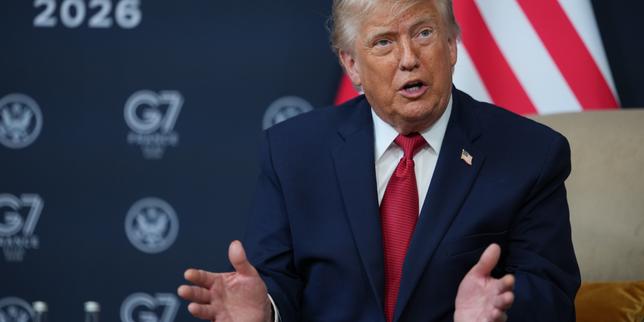
Speaking on the sidelines of the G7 summit in Evian, France, during a meeting with Egyptian President Abdel Fattah al-Sissi, Trump made it clear that he views the upcoming agreement as nothing more than a temporary arrangement. He told reporters that if Iran does not behave, the US will go right back to dropping bombs on their heads.
It is classic Trump theater, but it exposes a deeper, darker reality about the state of global geopolitics in 2026. This isn't a permanent peace. It is a highly volatile truce masquerading as a diplomatic breakthrough.
The Art of the Deal Under the Shadow of War
If you think this memorandum of understanding means the Middle East is sliding into a period of stable tranquility, you haven't been paying attention to how we got here. The conflict erupted out of nowhere on February 28, 2026. The US and Israel launched massive, coordinated airstrikes code-named Operation Epic Fury. The stated goal was simple yet incredibly risky, destroy Iran's ballistic missile infrastructure and permanently cripple its nuclear program.
What followed was four months of devastating escalation. Iran didn't just sit back and take the hits. Tehran retaliated by hammering US military installations across the region, striking Israeli targets, and launching drone and missile attacks against Arab Gulf states that host American forces.
The biggest blow to the global economy came when Iran choked off the Strait of Hormuz, implementing a total maritime blockade. Oil markets went into an absolute frenzy. Gas prices soared, and the threat of a prolonged global economic collapse became very real.
Now, after weeks of quiet mediation handled by Pakistani diplomats, we are told an interim framework is ready. Trump and Iranian negotiator Mohammad Bagher Ghalibaf have already signed an electronic version of the text. Yet, Trump cannot help but threaten to blow up the entire arrangement before the ink on the physical paper is even dry.
What the Deal Actually Says and What it Ignores
Trump bragged to reporters at the G7 that the market loves the new agreement beyond anything he has ever seen. He claims the alternative was a worldwide economic depression. He isn't entirely wrong about the market reaction. Oil prices plummeted to a three-month low the moment details of the potential signing leaked out.
But look closely at what this agreement actually does. It is not a comprehensive treaty. It is a bare-bones framework designed to stop the immediate bleeding. The core terms focus on a few immediate actions.
- The complete reopening of the Strait of Hormuz by Friday, June 19.
- A mutual pause in direct military strikes between US-led forces and the Iranian military.
- The re-establishment of basic maritime security guarantees for commercial shipping.
What is missing is far more telling. Trump explicitly confirmed that this memorandum does not offer immediate, sweeping sanctions relief for Iran. The American economic chokehold remains securely in place. Trump wants the world to believe he extracted total compliance without giving up an inch of leverage.
That strategy is inherently dangerous. Tehran is agreeing to open the oil gates because its economy is under water and its internal infrastructure is buckling after months of bombardment. But an Iran that gets no economic relief while being forced to surrender its main geopolitical leverage point is an Iran that will eventually look for an exit strategy.
The Supreme Leader and the Pressure Inside Tehran
To understand why Trump's latest bombastic warnings are so reckless, you have to look at what is happening inside the halls of power in Tehran. This isn't the same Iranian regime that the world dealt with a year ago. The 2026 war fundamentally transformed the country's leadership structure.
During the initial weeks of the American and Israeli bombing campaign, Iran's long-serving Supreme Leader Ali Khamenei passed away. The transition of power to his son, Mojtaba Khamenei, happened under a cloud of extreme secrecy and immense military pressure.
Mojtaba Khamenei took over a country facing massive domestic unrest. The Iranian public was already furious over a collapsing economy and failing infrastructure before the first American missiles even crossed the border. The regime put down internal protests with brutal force in the early months of 2026, but the undercurrent of anger hasn't vanished.
A Leader with Something to Prove
The new Supreme Leader cannot afford to look weak. He is trying to establish his legitimacy while navigating a war that has systematically targeted his nation's most prized military assets.
When Trump stands up at a press conference and treats the Iranian government like misbehaving children, he is backing Mojtaba Khamenei into a dangerous corner. The Iranian political elite and the Islamic Revolutionary Guard Corps are watching their new leader closely. If he appears to be bowing unconditionally to Western threats, his grip on power could slip.
The Iranian foreign ministry has already shown signs of deep hesitation. Just last week, when Trump first announced that an imminent deal had been reached, Tehran immediately pushed back. Iranian officials stated they hadn't finalized anything, cooling down the American administration's public euphoria. They don't want to look like they are taking marching orders from the White House.
Why the Global Markets Are Buying the Hype Anyway
Wall Street and global energy trading floors don't care about diplomatic nuance or presidential posturing. They care about supply lines. The mere mention of the Strait of Hormuz returning to normal operations was enough to send traders into a selling spree, pushing crude prices down below pre-war levels.
Trump is hyper-aware of this dynamic. His political brand is tied directly to economic metrics, and he knows that a prolonged energy crisis would destroy any domestic momentum he has built. By boasting that oil prices will fall even lower than they were before the war started, he is trying to take full credit for saving the global economy from disaster.
Global Crude Oil Price Trend (2026)
---------------------------------------------
Feb 2026 (Pre-War):        $75/barrel
March-May 2026 (Blockade): $140+/barrel
June 17, 2026 (MoU News):  $72/barrel
But the markets are notoriously short-sighted. They are pricing in a successful, peaceful implementation of the protocol on Friday. They are completely ignoring the fact that the deal is built on a foundation of intense mutual distrust.
If an Iranian fast-attack craft gets too close to an American destroyer in the Persian Gulf tomorrow, or if a rogue proxy group launches a single drone into an allied base, the entire framework falls apart instantly. Trump has given himself a public green light to resume full-scale military operations at the slightest provocation.
The Reality of Preemptive War in the Modern Era
The conflict of 2026 has shown the distinct limits of modern military power. When the United States and Israel launched their surprise strikes in February, the consensus among hawks in Washington was that a swift, overwhelming campaign would force an immediate regime collapse or total capitulation.
That didn't happen. Instead, the war proved that even a heavily sanctioned, bombarded nation can inflict massive pain on the global economy through asymmetric warfare. Iran utilized its geographical position to holding the global energy supply hostage, forcing the international community to demand an end to the hostilities.
Even close American allies have grown tired of the chaotic strategy. British Prime Minister Sir Keir Starmer openly questioned the approach earlier this year, stating that he does not believe in attempting regime change from the skies. While the UK allowed American forces to utilize strategic bases like Diego Garcia for specific, defensive operations to safeguard shipping lines, European support for a prolonged war of choice against Iran has been incredibly thin.
The Problem with Zero Sum Diplomacy
Trump's rhetoric indicates he still believes that absolute pressure is the only way to manage international relations. He treats the Geneva protocol as a total surrender by Tehran.
True diplomacy requires a balance where both sides find the terms acceptable enough to maintain the status quo. By publicly humiliating the Iranian leadership and reminding them that American bombers are ready to fly at a moment's notice, Trump undercuts the very agreement his diplomats spent weeks negotiating.
Preparing for the Fallout of a Volatile Accord
The formal signing ceremony is still on track for Friday in Switzerland. The Strait of Hormuz will likely see commercial traffic begin to flow again over the weekend. But anyone operating in international business, logistics, or global energy needs to look past the celebratory headlines.
Do not mistake a temporary pause in violence for a resolved conflict. The structural issues that caused the 2026 war are still completely unresolved. Iran's long-term nuclear ambitions haven't disappeared, the heavy economic sanctions are still active, and a fresh, unproven Supreme Leader in Tehran is trying to maintain domestic control while under constant threat.
If you are managing supply chains or investment portfolios that depend on Middle Eastern stability, keep your risk mitigation strategies active. Keep a close eye on the actual implementation of the maritime safety guidelines over the next two weeks. Watch how the Iranian regime explains this deal to its own people. Most importantly, ignore the political spin from the White House and focus on the movements on the ground. The bombs have stopped falling for now, but the runway is still clear, and the planes are fueled up and waiting.