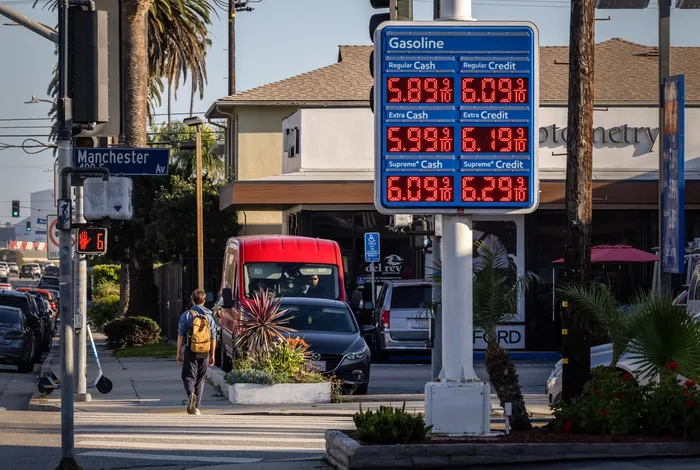
The Treasury Secretary’s recent public optimism regarding a return to $3-per-gallon gasoline by September is more than a casual forecast. It is a calculated political gamble. For months, the administration has navigated a minefield of stubborn inflation and volatile energy markets, but the claim that relief is just around the corner rests on a fragile alignment of global supply chains and domestic refining capacity. If the math holds, the economy gets a needed breather. If it fails, the credibility of federal economic projections will hit a new low just as the seasonal driving peak arrives.
High prices at the pump act as a regressive tax on the American worker. When the cost of transport rises, every link in the supply chain tightens. The Treasury’s current stance suggests that the cooling of the labor market and a slight uptick in domestic crude production will be enough to offset the usual summer price hikes. However, this outlook ignores the razor-thin margins at Gulf Coast refineries and the persistent threat of geopolitical instability in the Middle East. Relying on a "best-case scenario" is a dangerous way to communicate with a public that is already feeling the squeeze at the grocery store.
The Crude Reality of Refinery Bottlenecks
Predicting gas prices based solely on the price of oil is a rookie mistake. While crude oil prices dictate the floor, the ceiling is set by refining spreads. You can have all the oil in the world, but if you cannot turn it into 87-octane fuel fast enough, the price at the pump stays high.
Right now, the United States is operating with a reduced refining footprint compared to the pre-2020 era. Several major plants have been shuttered or converted to biofuels, leaving the remaining facilities running at near-maximum capacity. Any unscheduled maintenance or a significant hurricane in the Gulf of Mexico could send the Treasury’s $3 dream up in smoke. The Secretary’s projection assumes a perfect run for these facilities through the hottest months of the year, which is a statistical anomaly in the energy sector.
Furthermore, the crack spread—the difference between the price of crude and the products refined from it—remains volatile. Even if crude sits at $75 a barrel, high refining demand can keep gas prices pinned near $3.50 or $4.00 in high-tax states. The Treasury is looking at national averages, which are often skewed by lower prices in the Southeast, ignoring the fact that much of the country will never see a $3 handle under current fiscal policies.
Strategic Reserves and the Bottom of the Barrel
The administration has used the Strategic Petroleum Reserve (SPR) as a primary tool to blunt price spikes over the last two years. This is a finite lever. With the SPR at its lowest levels in decades, the government has less room to maneuver if a supply shock hits.
The Secretary’s confidence implies that no further draws will be necessary to reach that $3 target. This suggests a belief that OPEC+ will stay the course or that American shale producers will fill the gap. But shale isn't what it used to be. Investors are demanding capital discipline. Instead of drilling every possible hole in the ground to chase volume, public energy companies are focused on returning dividends to shareholders. The days of "drill, baby, drill" leading to an immediate glut are over; the industry is now governed by "return, baby, return."
The Logistics of the $3 Target
To understand how we get to $3, we have to look at the transition from summer-grade to winter-grade fuel.
- Summer Grade: Required by the EPA to reduce smog, this blend is more expensive to produce.
- Winter Grade: Cheaper to manufacture and typically hits the market in mid-September.
The Treasury is essentially banking on the calendar. By pointing to September, they are waiting for the regulatory shift that naturally lowers production costs. It is a bit like a meteorologist predicting it will get cooler in October. It is technically true, but it doesn't necessarily mean the underlying inflationary pressures have been solved. It is a seasonal reprieve masquerading as a policy victory.
Demand Destruction or Economic Soft Landing
There is a darker side to lower gas prices that the Treasury doesn't like to broadcast. Prices often drop because people stop buying. If we see $3 gas by September, it might not be because of a supply miracle, but because consumer demand has cratered.
Credit card delinquencies are rising. Savings accounts parched during the post-pandemic spending spree are finally running dry. If the American consumer retreats, gas prices will fall because the economy is cooling too fast. The "soft landing" the Federal Reserve is aiming for requires a delicate balance. If gas prices plumment because we are sliding into a recession, the $3 price tag will be a cold comfort for those facing layoffs.
High-end journalism requires us to look at the divergence between official rhetoric and the raw data on the ground. The Treasury is incentivized to project calm. They need to keep inflation expectations low to prevent a self-fulfilling prophecy where businesses raise prices in anticipation of higher costs. By anchoring the public to the $3 figure, they are attempting to manage the psychology of the market.
Global Wildcards the Treasury Cannot Control
Washington often acts as if the global energy market revolves around the Beltway. It doesn't. Several external factors could derail the $3 goal overnight.
- Shipping Disruptions: The Red Sea remains a volatility zone. If tankers are forced to take longer routes consistently, the added freight costs will eventually be passed to the consumer.
- The China Factor: China’s industrial recovery has been sluggish. If their demand for crude suddenly ramps up to meet stimulus goals, the global supply will tighten instantly.
- Currency Fluctuations: Oil is priced in dollars. If the dollar weakens against a basket of currencies, the relative price of oil for international buyers changes, often putting upward pressure on the nominal dollar price.
The Secretary’s projection is an "all else being equal" statement in a world where nothing is ever equal. It treats the global energy market as a static system rather than a chaotic one. For the average driver in Ohio or Pennsylvania, these nuances don't matter as much as the total at the pump, but for an industry analyst, they are the difference between a reliable forecast and a hope-based press release.
Breaking Down the Regional Disparity
National averages are a lie of omission. While the Treasury Secretary touts $3, residents in California, Washington, and New York are likely to remain stuck well above $4. This is due to a combination of high state taxes, isolated pipeline infrastructure, and strict environmental regulations.
The political messaging of $3 gas is designed for the swing states of the Midwest and the South, where prices are already lower. By focusing on a national average, the administration can claim a win even if half the country is still paying premium prices. This creates a fragmented economic reality. If you live in a region with high refining capacity and low taxes, the $3 goal is already a reality. If you live on the coast, the Treasury’s promise feels like gaslighting.
The Impact of Electric Vehicle Adoption
While EV sales have slowed compared to the initial hype, the growing fleet of non-ICE (Internal Combustion Engine) vehicles is starting to shave the top off total gasoline demand. However, this impact is currently marginal. It isn't enough to drive a price collapse. The real pressure remains on the traditional fleet, which is older on average than it has been in decades. People are holding onto their gas-powered cars longer because new car interest rates are punishing. This keeps gasoline demand "sticky." People have to get to work, and they can't afford to trade in their old sedan for a Tesla just to save $20 a week on fuel.
The Margin of Error
The math required to hit $3 by September is tight. We would need crude oil to stay below $80, no major refinery outages, a quiet hurricane season, and no escalation in regional wars.
In the world of commodities, betting on four "ifs" is a losing strategy. The Treasury is counting on the public's short memory. If September comes and gas is $3.45, they will point to a specific storm or a specific geopolitical event as an excuse. They have built themselves an exit ramp. But for the small business owner managing a fleet of delivery vans, these "ifs" are the difference between profit and loss.
The government’s role in gas prices is often overstated by both sides of the aisle, but the Treasury Secretary’s decision to put a specific number and a specific date on the table changes the dynamic. It turns a market fluctuation into a benchmark for administrative success.
Watch the crack spreads in August. If they don't narrow significantly by the second week of that month, the $3 target will be mathematically impossible regardless of what the Secretary says at a podium. The market doesn't care about talking points; it cares about the volume of liquid moving through a pipe.
Pay attention to the inventory reports from the Energy Information Administration (EIA). If gasoline stocks don't show a consistent build over the next six weeks, the supply side will be too brittle to support a price drop. The data will tell the story long before the Secretary gives the next update. Rely on the numbers, not the narrative.


