The judicial system just handed a gift to our adversaries, and the media is busy popping champagne.
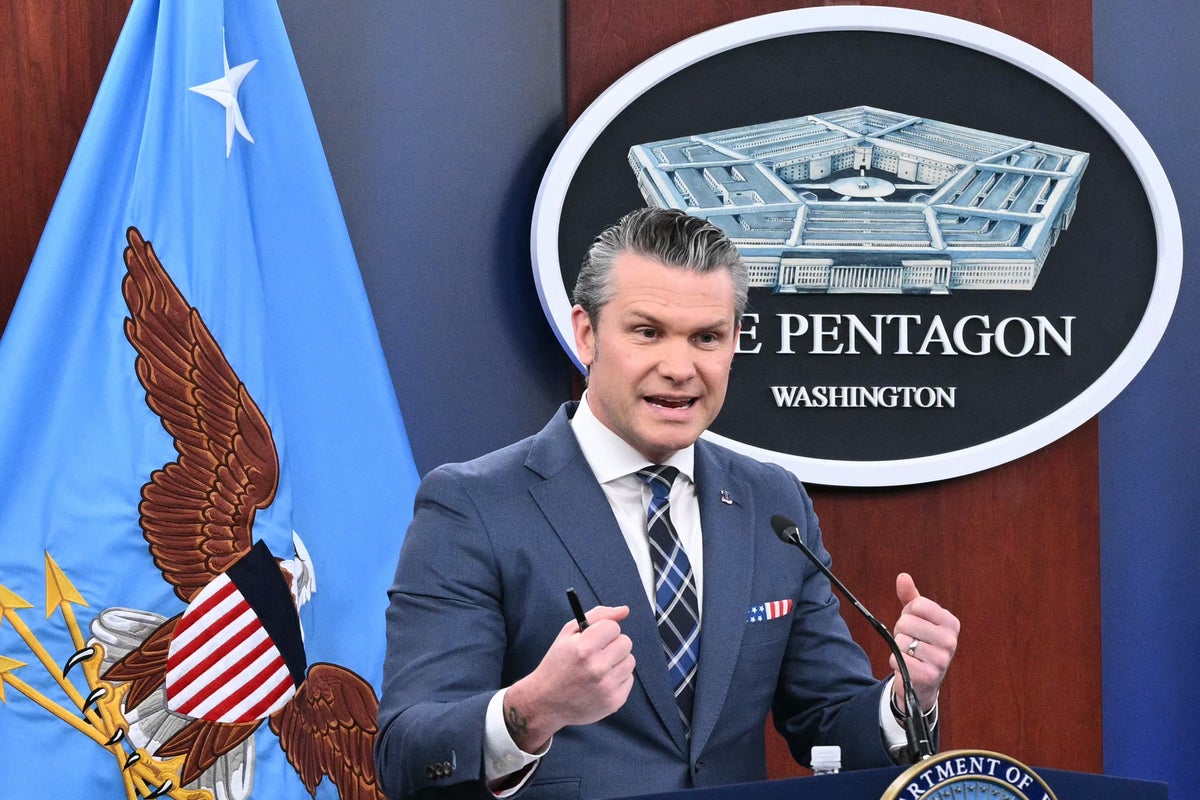
When a judge strikes down a restrictive media policy—especially one helmed by a figure as polarizing as Pete Hegseth—the reflex is to celebrate the "victory" for the First Amendment. We are told that sunlight is the best disinfectant. We are told that in the shadow of a looming conflict with Iran, the public needs more access, more data, and more "truth."
That narrative is a comforting lie.
The reality of modern warfare is that the distinction between "public information" and "intelligence assets" has evaporated. By dismantling Pete Hegseth’s attempts to tighten the lid on information flow, the courts haven't protected democracy; they have mandated a vulnerability. We are applying 1970s legal logic to a 2026 digital battlefield where an unvetted tweet from a "journalist" on a carrier deck is worth more to an Iranian drone operator than a thousand satellite passes.
The Myth of the Objective Observer
The "lazy consensus" among the press corps is that media presence acts as a check on executive overreach. In theory, that sounds noble. In practice, I have watched how "embedded access" functions in high-tension environments. It creates a feedback loop of performative optics rather than strategic clarity.
When Hegseth pushed for a policy that prioritized operational security over press convenience, he wasn't just being a "hawk." He was acknowledging a shift in the nature of conflict. In the past, a reporter’s story took 24 to 48 hours to hit the wire. Today, metadata is instantaneous. Every photograph published is a data point for an enemy’s machine-learning model to map out our logistics, our morale, and our technical capabilities.
The court’s ruling ignores the fact that the "right to know" now directly competes with the "right to survive." If you think a judge understands the nuances of electronic warfare or signal signatures better than the Department of Defense, you’ve never spent a day in a SCIF.
Intelligence for Free: The Media as an Unintentional Asset
Let’s talk about Iran. If you are an operative in Tehran, you don't need a massive spy network in D.C. You just need a high-speed internet connection and a subscription to major news outlets.
The competitor article argues that media access is "more important than ever" during a war. This is a fundamental misunderstanding of the current threat environment. In a conventional war, information is a commodity. In a hybrid war, information is a weapon.
Imagine a scenario where a journalist, seeking a "human interest" angle, films a group of soldiers in a staging area. That video contains:
- Geospatial markers that can be cross-referenced with commercial satellite imagery.
- Unit patches that reveal the exact order of battle.
- Equipment conditions that signal supply chain gaps.
By forcing the Pentagon to open its doors under the guise of "transparency," the courts are essentially subsidizing the Iranian intelligence budget. We are handing over the blueprint for our movements because we are too afraid to tell the press "no."
The False Premise of the First Amendment Shield
Constitutional purists will scream that any restriction is a slippery slope. They are wrong. The First Amendment was never intended to be a suicide pact.
The legal standard for "prior restraint" is incredibly high, as it should be. But there is a massive difference between suppressing an opinion and managing a tactical environment. Hegseth’s policy was an attempt to define the borders of the battlefield. The court’s intervention suggests that the battlefield has no borders—that the entire world is a front-row seat for a global audience, regardless of the cost in lives.
I’ve seen how this plays out. When the military is forced to operate under the constant gaze of 24-hour news cycles, commanders stop making the best tactical decisions. They start making the most "defensible" decisions. They become risk-averse. They worry about how a split-second life-or-death choice will look in a 30-second clip on social media, stripped of context.
This isn't just about "hiding mistakes." It’s about the fact that transparency, in its current unbridled form, induces a paralyzing friction into the chain of command.
Why the Public is Asking the Wrong Questions
Most people are asking: "Should we trust the government to tell us the truth about Iran?"
That is the wrong question. The government is not a monolith of truth, and it never has been. The real question is: "Does the public's desire for real-time updates outweigh the safety of the individuals actually doing the fighting?"
The media frames this as a battle between "tyranny" and "freedom." It’s actually a battle between efficiency and entertainment. The public doesn't consume war news to be informed citizens; they consume it as content. By striking down the Hegseth policy, the court has prioritized the content-consumption habits of the American public over the operational integrity of the military.
The Downside of Discretion
Admittedly, a closed-door policy has its risks. Without oversight, errors go uncorrected and corruption can fester. I'm not suggesting we give the Pentagon a blank check to lie.
However, we need to stop pretending that "The Media" is a neutral, specialized body of experts. Most modern journalists covering defense don't know the difference between a battalion and a brigade. They are generalists looking for a narrative. To grant them unfettered access during a potential conflict with a sophisticated adversary like Iran is a recipe for disaster.
We need a middle ground that involves rigorous, non-public oversight—perhaps through congressional committees with actual teeth—rather than a "free for all" that invites our enemies into our planning rooms.
The New Rules of Engagement
If we are heading toward a conflict with Iran, the old rules are dead. The court’s ruling is a relic of a bygone era.
- Information is a physical asset. It must be guarded like ammunition.
- Access is a privilege, not a right. If a journalist cannot guarantee the security of the data they collect, they shouldn't be there.
- The court is not a military strategist. Judges should stay in their lane instead of dictating how a war zone should be managed.
We have reached a point where our own legal system is being used as a tool for asymmetric warfare against us. The celebrate-the-ruling crowd thinks they’ve won a victory for civil liberties. In reality, they’ve just made the next war significantly more lethal for the people fighting it.
Stop asking for "more access" and start asking why we are so eager to broadcast our vulnerabilities to the world in 4K.
The court didn't save the First Amendment. It just gave Iran a front-row seat.