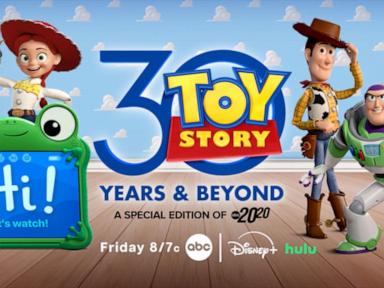
In November 1995, a skeletal digital cowboy and a plastic spaceman changed cinema history. Toy Story did more than launch Pixar; it fundamentally dismantled the traditional animation industry and built a multibillion-dollar empire on its ruins. For three decades, Hollywood has celebrated this milestone as a triumph of technological progress. But the uncomfortable truth is that the overwhelming success of that single film created a creative monopoly. It forced hand-drawn art into near-extinction and locked mainstream Western animation into a rigid, homogenous visual style that the industry is only now, thirty years later, beginning to question.
The transition was brutal and fast. What began as a bold experiment in computer-generated imagery quickly became the only format major studios were willing to finance.
The Illusion of Progress and the Death of the Pencil
Before Woody and Buzz Lightyear arrived, feature animation was defined by variety. Audiences bounced from the lush, operatic worlds of the Disney Renaissance to the gritty, dark fantasy of Don Bluth, and the surrealist experimentation of independent creators. There was a tactile weight to the medium. Animators spent years mastering the physics of ink, paint, and paper, creating distinct visual identities for every project.
Pixar changed the math. The corporate suite looked at the box office returns of 1995 and didn't see a charming story about childhood toys. They saw a cheaper, infinitely scalable production pipeline.
Computers allowed studios to eliminate the costly, labor-intensive process of physical ink and paint departments. Once a digital model was built, it could be repurposed, tweaked, and moved across three-dimensional space with the click of a mouse. The financial logic was undeniable. Within a decade of Toy Story hitting theaters, Disney shuttered its traditional animation units, laying off hundreds of master artisans who had spent lifetimes perfecting a craft that was suddenly deemed obsolete.
This was not a natural evolution driven by artistic desire. It was an aggressive corporate pivot. The industry traded the infinite expressive possibilities of the human hand for the mathematical uniformity of the silicon chip.
The Monoculture of the Plastic Aesthetic
For twenty-five of the last thirty years, major American animation studios operated under a self-imposed mandate. Every film had to look like it existed in the same hyper-realistic, yet strangely sanitized, digital universe.
[Traditional Animation: Infinite Visual Styles]
       │
       ▼ (1995: Toy Story Success)
[The CG Pipeline: Standardized Asset Modeling]
       │
       ▼
[The 3D Monoculture: Photorealistic Textures + Uniform Character Designs]
This pipeline forced a specific visual language onto every story, regardless of its tone or cultural origin. Think about the standard design blueprint that dominated the 2000s and 2010s. Characters possessed oversized eyes, perfectly smooth skin that resembled polished vinyl, and hair that reacted with flawless algorithmic physics.
The underlying technology was brilliant, but the artistic output became monotonous. Studios spent millions of dollars developing proprietary software to render the exact texture of a monster's fur or the hyper-accurate refraction of light through a snowflake. Yet, the actual character designs and comedic timing became interchangeable. The industry fell into a trap where technological complexity was treated as a substitute for genuine visual style.
Independent studios and international creators watched this centralization with growing alarm. While Japanese directors like Hayao Miyazaki continued to prove that hand-drawn art could command global audiences and win Academy Awards, Hollywood remained fiercely committed to the three-dimensional grid. The success of Toy Story had created a generational blind spot. Executives genuinely believed that audiences would no longer accept a flat, two-dimensional image.
Breaking Free from the Pixar Grid
The cracks in this corporate consensus finally started to show when creators grew tired of working within the strict confines of the photorealistic model. The turning point did not come from Pixar or Disney, but from a rival studio willing to break the established rules of the digital pipeline.
When Spider-Man: Into the Spider-Verse arrived in 2018, it felt like an administrative revolt against the legacy of 1995. The filmmakers deliberately broke the smooth, mathematically perfect rendering systems that had been industry standard for decades. They introduced artificial imperfections. They dropped frames to create a jagged, kinetic rhythm reminiscent of comic book pages. They layered two-dimensional hand-drawn line work directly over three-dimensional digital models.
The New Animation Playbook
- Framerate Manipulation: Rejecting the hyper-smooth 24-frames-per-second digital interpolation to give characters distinct, human movement.
- Non-Photorealistic Rendering: Using software to simulate watercolor paint, comic book half-tones, and sketch lines instead of real-world physics.
- Stylized Geometry: Moving away from anatomically predictable digital puppets toward expressive, abstract shapes that defy gravity and logic.
This stylistic rebellion proved that the audience's supposed aversion to non-3D styles was a myth manufactured by risk-averse executives. Audiences didn't want twenty variations of the Pixar look every year; they wanted visual excitement. The critical and commercial success of these stylized films forced a industry-wide reckoning, proving that the thirty-year obsession with photorealism was a detour rather than the destination.
The Economics of Creative Risk
The hesitation to move away from the established Toy Story blueprint comes down to the staggering cost of modern feature animation. A flagship production from a major studio routinely costs between $150 million and $200 million before marketing budgets are even considered.
When that much capital is on the line, experimentation is viewed as a liability. It is much safer to rely on an established asset library and a rendering pipeline that guarantees a predictable visual outcome. This economic reality explains why the industry has been flooded with sequels, spin-offs, and soft reboots that maintain the exact same aesthetic footprint as their predecessors.
True innovation requires rewriting the pipeline from scratch. It means training animators to unlearn the habits of the last three decades and forcing software engineers to build tools that prioritize artistic expression over mathematical accuracy. This process is expensive, messy, and unpredictable.
+--------------------------------------+--------------------------------------+
| The Safe Blueprint (Post-1995)       | The Modern Alternative               |
+--------------------------------------+--------------------------------------+
| Hyper-realistic light simulation     | Stylized, flat color palettes        |
| Uniform character proportions        | Exaggerated, non-human shapes        |
| Predictive algorithmic physics       | Hand-keyed, expressive motion        |
| Reliance on established asset pools  | Custom-built visual identities       |
+--------------------------------------+--------------------------------------+
The future of the medium depends entirely on who controls the financial levers. If executives continue to view animation purely as a predictable product category designed to sell merchandise, the ghost of 1995 will continue to dictate every creative choice. But if the success of recent, stylistically radical films teaches the industry anything, it is that technology should serve the artist, not the other way around. The pencil was never the problem. The problem was the industry's collective loss of imagination the moment they figured out how to plug the pencil into a wall outlet.