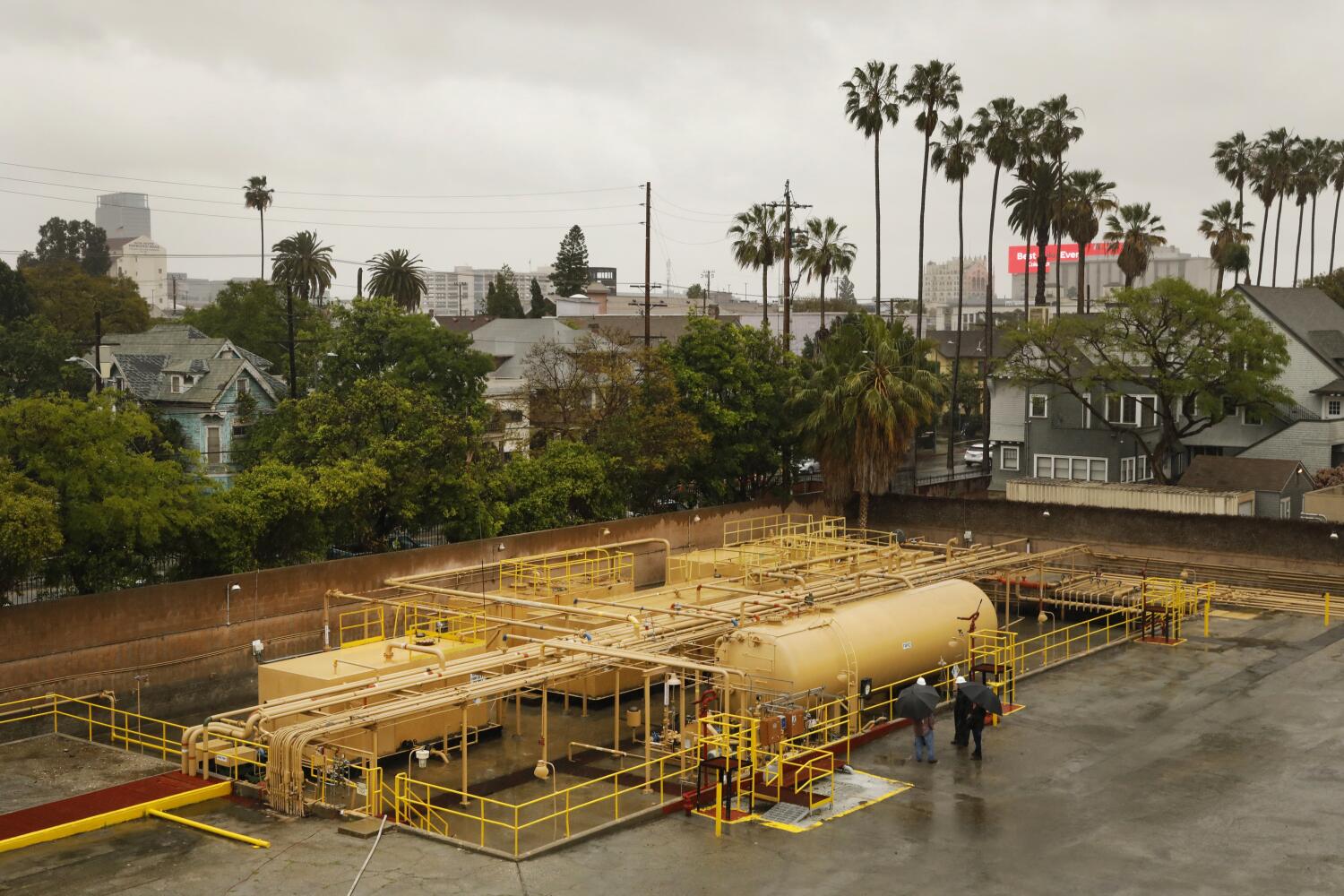
For decades, the residents of South Los Angeles lived in the shadow of steel pumpjacks that pulled crude oil from beneath their playgrounds and bedroom windows. The recent plugging of these notoriously hazardous wells represents a hard-fought victory for community activists, but the celebration masks a much darker industrial reality. While the physical machinery is finally being dismantled, the environmental and economic fallout remains deeply embedded in the soil. This wasn't just a failure of equipment; it was a systemic collapse of regulatory oversight that allowed urban drilling to persist in high-density neighborhoods long after the health risks became undeniable.
The closure of sites like the AllenCo and Jefferson Boulevard drilling pads serves as a case study in how corporate interests can stall public safety for a generation. To understand how these wells operated for so long, one must look past the rusted fences and into the labyrinth of California’s oil and gas laws.
The Invisible Architecture of Neglect
The mechanics of urban oil extraction are inherently violent to the surrounding environment. When a well is active, it releases a cocktail of volatile organic compounds (VOCs) and methane. In South LA, these emissions weren't drifting over empty plains; they were venting into the lungs of schoolchildren. For years, the South Coast Air Quality Management District (SCAQMD) received thousands of complaints regarding nosebleeds, respiratory distress, and chronic headaches. Yet, the legal threshold for a "nuisance" often outweighed the medical evidence presented by residents.
The industry operated on a principle of managed friction. By the time regulators issued a fine, the operator had already factored that cost into their quarterly projections. It was cheaper to pay a penalty than to modernize a site or, heaven forbid, shut it down. This economic calculation kept the lights on at sites that should have been decommissioned in the 1990s. The plugging process now underway is not an act of corporate altruism. It is a forced retreat necessitated by a relentless grassroots campaign that stripped away the anonymity these companies relied upon.
The Plugging Problem and the Orphan Well Crisis
Plugging a well is not as simple as pouring cement down a hole. It is a complex engineering feat that requires sealing the wellbore to prevent fluids and gases from migrating between underground layers or reaching the surface. If done incorrectly, the well becomes a "zombie," leaking methane into the atmosphere for eternity.
The financial burden of this process is staggering. In California, the average cost to properly decommission an urban well can exceed $100,000, and that’s a conservative estimate for sites with contaminated soil. The state is currently grappling with thousands of "orphan wells"—sites where the operator has gone bankrupt, leaving the taxpayer to foot the bill for the cleanup.
The Shell Game of Corporate Liability
A common tactic in the oil industry involves "flipping" aging assets. A major oil company, sensing that a well is nearing the end of its profitable life, sells the site to a smaller, less capitalized firm. This smaller entity squeezes the last few barrels of oil out of the ground while assuming the massive environmental liability. When the well finally runs dry, the small company declares bankruptcy. The original owner walks away with the profits, and the community is left with a toxic monument.
In South LA, we saw variations of this theme. The pressure to plug these wells didn't just come from health concerns; it came from a legal realization that if these companies weren't forced to act now, they would disappear before the bill came due. The state’s bonding requirements—the money companies must set aside for cleanup—have historically been laughably low. For years, the bond amount covered only a fraction of the actual decommissioning costs.
Why the Science Was Ignored
The health data was never a secret. Epidemiological studies from USC and other institutions consistently showed a correlation between proximity to active oil sites and reduced lung function. In a neighborhood where asthma rates were already double the national average, the presence of active drilling was like throwing gasoline on a fire.
The delay in action was fueled by a technicality-driven defense. Industry lobbyists argued that because South LA is crisscrossed by freeways, the air quality issues were primarily caused by vehicular exhaust. This "background noise" defense allowed operators to claim that their specific emissions were negligible. It took years of specialized air monitoring by independent groups to prove that the spikes in toxic chemicals were directly synchronized with drilling activities.
The Economic Ghost Town
Even with the wells plugged, the land remains a liability. The "brownfield" status of these sites means they cannot be easily converted into housing or parks without massive remediation efforts. The soil is often saturated with petroleum hydrocarbons and heavy metals.
Developers are hesitant to touch these plots because the "all-clear" from a state agency doesn't always protect them from future litigation if new contamination is discovered. Consequently, these neighborhoods are left with fenced-off, vacant lots that serve as a reminder of an extractive past. The victory of plugging the wells is only the first step in a long, expensive journey toward land reclamation.
A Blueprint for the Rest of the Country
What happened in South LA is a warning to other urban centers. From the Permian Basin to the suburbs of Colorado, the line between industrial zones and residential life is blurring. The "South LA Model" of community resistance—combining localized air monitoring with aggressive legal pressure—is now being exported to other cities facing similar threats.
The lesson here is that regulatory agencies rarely lead; they follow. They follow the noise, the lawsuits, and the political pressure. If the residents of South LA had waited for the state to protect them based on the data alone, those pumps would still be turning today.
The Reality of a Post-Oil Neighborhood
The transition away from urban drilling is often framed as a clean, linear progress. It isn't. It is a messy, litigious, and physically demanding process. The cement plugs at the bottom of these wells are a temporary fix for a permanent problem. As the ground shifts and the casings age over the next century, we will need a permanent monitoring infrastructure to ensure the ghosts of the petroleum age don't come back to haunt the surface.
To ensure this never happens again, California must overhaul its bonding system to reflect the true $100,000-plus cost of decommissioning. We cannot allow companies to treat the environment as a high-interest credit card that they intend to default on. Every active well in an urban area today should be viewed not as an asset, but as a future liability that the operator must be forced to pre-pay.
Hold the companies accountable for the full life cycle of the well before the first drill bit even touches the dirt.