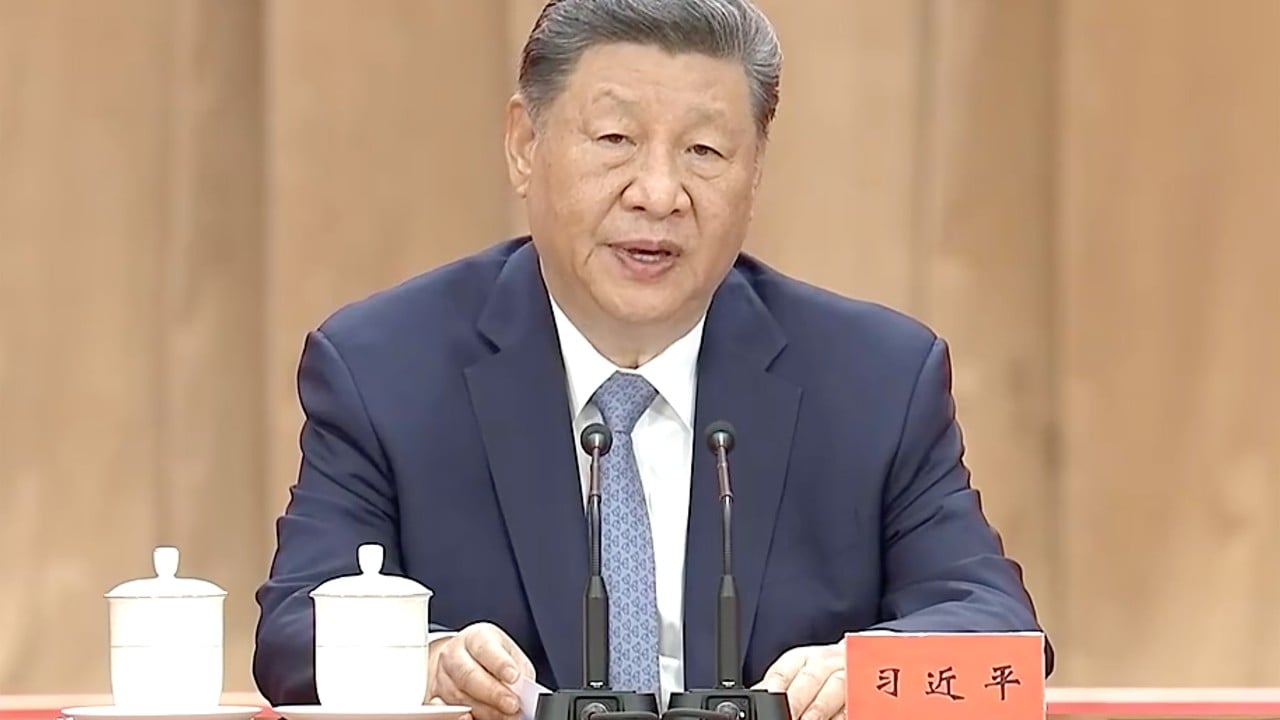
Western analysts are panicking over Beijing’s latest decree to overhaul its science and technology systems. The narrative is always the same: when Xi Jinping demands a centralized mobilization of resources to beat global rivals, the West should tremble at the sheer scale of state-directed capital.
They are looking at the problem completely backward.
The lazy consensus treats state-directed innovation as an unstoppable juggernaut. It assumes that if you throw enough state capital, bureaucratic oversight, and nationalist fervor at high-tech bottlenecks like advanced lithography or quantum computing, breakthroughs become inevitable.
It is a fundamental misunderstanding of how breakthroughs actually happen. You cannot decree a revolution into existence through committee meetings and five-year plans. In fact, the more Beijing tightens its grip on the steering wheel of technology, the more it guarantees it will spin out on the tightest turns.
The Illusion of the Command Economy Breakthrough
The core flaw in the state-led innovation thesis is the confusion between engineering execution and true innovation.
Command economies are spectacular at execution. If the goal is to build 40,000 kilometers of high-speed rail, lay down ultra-high-voltage power grids, or mass-produce lithium-iron-phosphate batteries, centralization wins. These are known engineering problems. They require capital allocation, supply chain coordination, and raw political will.
But true innovation—the kind that fundamentally resets global supply chains—is messy, unpredictable, and explicitly wasteful. It requires a high tolerance for failure and the freedom to pursue dead ends.
When a state bureaucracy manages an innovation fund, failure is not a metric; it is a political liability. Under intense pressure to show results to Beijing, bureaucrats do what they always do: they fund the safest, most obvious, and often outdated iterations of existing technology. They subsidize yesterday's solutions to today's problems, terrified of funding a radical idea that might flop.
Consider the National Integrated Circuit Industry Investment Fund, widely known as the Big Fund. I have watched billions of dollars pour into these state-backed semiconductor vehicles over the past decade. What did it buy? Monumental corruption scandals, duplicated efforts across dozens of provinces, and a fleet of legacy-node fabs that still rely heavily on foreign tooling. The few bright spots emerged not because of bureaucratic brilliance, but despite it, driven by battle-scarred engineers working around the system.
The Compliance Tax is Killing Original Thought
To understand why an overhaul won't work, you have to look at the reality on the ground for Chinese researchers and tech executives.
Every time Beijing issues a directive to improve "ideological alignment" alongside technical output, a compliance tax is levied on every brilliant mind in the country. Researchers spend less time in the lab and more time writing self-criticisms, attending political study sessions, and aligning their research proposals with the exact vocabulary of the latest central committee document.
Imagine a scenario where a brilliant young researcher has a wild, unorthodox hypothesis about post-silicon computing. Under a decentralized, venture-backed system, they hunt for an eccentric angel investor willing to lose money on a long shot. Under a centralized innovation system, that researcher must pitch a panel of state-appointed academics and party functionaries. If the hypothesis does not explicitly fit into the pre-approved list of strategic priorities, it is dead on arrival.
The result is a culture of systemic risk aversion masquerading as hyper-acceleration. Scientists optimize for patents filed and papers published in state-approved journals rather than actual commercial utility or paradigm-shifting breakthroughs. They play the metric game because the metric game is safe.
The Talent Trap
The West fears that China's massive pool of STEM graduates will simply overwhelm global rivals by sheer volume. This is another metric error.
Innovation is driven by outliers, not averages. The brightest minds require environments that tolerate non-conformity. When you clamp down on the cultural and economic autonomy of the tech sector—as Beijing did during the sweeping crackdowns on consumer internet giants, gaming companies, and ed-tech platforms—you send a chilling message to the next generation of founders.
The message is clear: if you build something truly disruptive, the state will eventually take the wheel.
Consequently, top-tier talent shifts its ambition. Instead of trying to build the next world-changing platform, they seek the safety of state-owned enterprises or emigrate. Those who stay operate with their hands tied behind their backs, well aware that stepping too far outside the lines means career erasure.
The Flawed Premise of Self-Reliance
The global technology ecosystem is too complex for any single nation to achieve absolute self-reliance, no matter how many resources it mobilizes.
An advanced semiconductor lithography machine is not a Dutch product; it is a global product. It requires mirrors from Germany, light sources from the United States, chemicals from Japan, and precision engineering from a dozen other nations.
By framing innovation purely through the lens of national security and geopolitical rivalry, Beijing is forcing its tech sector to reinvent wheels that the rest of the world has already optimized. Spending trillions of yuan just to replicate Western or East Asian technologies from five years ago is not winning; it is running as fast as you can just to stay in the same place.
The downside to my argument is obvious: targeted state spending can create massive industrial capacity that distorts global markets. It can crash prices and drive Western competitors out of business in mature industries, just as it did in solar panels and electric vehicles. But do not confuse industrial dumping with technological leadership.
Stop tracking the number of state labs China opens or the size of its newest government guidance funds. These are inputs, not outputs. The more centralized the control, the more brittle the system becomes. True technological supremacy cannot be built by a committee terrified of making a mistake. It is built by those who are free to fail spectacularly.