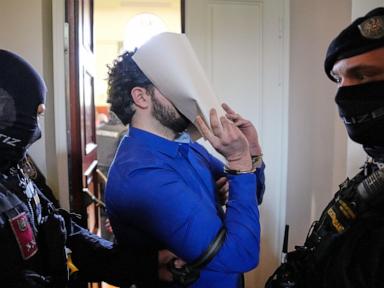
We finally have a confession. Two years after the Eras Tour was brought to a grinding halt in Austria, the man behind the chaos has admitted his guilt. On Tuesday, April 28, 2026, 21-year-old Beran A. stood in a Wiener Neustadt courtroom and copped to most of the charges against him. It’s a moment of reckoning for a plot that nearly turned one of the world's biggest pop culture celebrations into a mass casualty site.
The suspect, an Austrian citizen who’d radicalized himself online, didn't just want to disrupt a show. He wanted a bloodbath. He’d pledged allegiance to the Islamic State and spent months preparing for a suicide mission. Honestly, it’s chilling to look back and realize how close he came. He was arrested on August 7, 2024, just 24 hours before the first of three sold-out shows was supposed to start at Ernst Happel Stadium.
Why the Vienna Plot was Different
Most terror threats involve vague chatter or distant planning. This wasn't that. Beran A. had already quit his job at a steelworks factory, telling his coworkers he had "big plans." He’d stolen chemicals from that same factory to build a bomb using triacetone triperoxide (TATP)—the same volatile explosive used in the Manchester Arena and Paris attacks.
He wasn't just targeting the people with tickets. His plan focused on the "Taylor-gaters," the 30,000 fans who gather outside the stadium to trade friendship bracelets and sing along. Inside, another 65,000 people were waiting. The goal was to drive a car into the crowd and then use knives and homemade explosives to "kill as many people as possible."
The sheer scale of the potential tragedy is why the decision to cancel was so swift and final. You can't gamble with 190,000 lives.
The Role of International Intelligence
Austria’s domestic intelligence agency didn't find this on their own. The U.S. Central Intelligence Agency (CIA) and other international partners flagged the threat. They’d intercepted a digital oath of allegiance the suspect uploaded to Telegram. It’s a stark reminder that in 2026, the battle against radicalization happens almost entirely in the digital space.
There’s been some pushback from defense lawyers, claiming the government "overacted" to push for more surveillance powers. But when the police found a car rigged with a blue siren, machetes, and enough chemicals to level a city block, that argument kinda falls apart.
What the Guilty Plea Means Now
By pleading guilty today, Beran A. avoids a long, drawn-out trial that would have forced victims and fans to relive the trauma of that week. He’s facing up to 20 years in prison for terrorism offenses and membership in a terrorist organization.
A second man, who was a teenager at the time of the arrest, is also standing trial. Prosecutors say they networked with other Islamic State members to coordinate the logistics. They weren't lone wolves in the traditional sense; they were part of a broader, decentralized network of online radicalization.
The Impact on the Eras Tour Legacy
For many Swifties, the 2024 cancellations remain a sore spot. While fans in Vienna turned the city into a giant party anyway—singing in the streets and trading bracelets despite the fear—the event changed how stadium security is handled globally.
- Pre-show perimeters are now wider and more strictly controlled.
- Intelligence sharing between private security and government agencies has become the standard.
- Online monitoring of public forums and fan groups has intensified to spot "red flag" behaviors early.
Taylor Swift eventually broke her silence after the tour moved to London, admitting that the "reason for the cancellations filled me with a new sense of fear." She was right to be scared. The trial proves that the threat wasn't just a rumor; it was a blueprint for a massacre.
Stay Vigilant but Don't Stop Dancing
The best way to handle this news is to understand the reality of modern security without letting it paralyze you. If you're heading to a massive event this summer, pay attention to the official security briefings. They aren't just boilerplate text anymore.
- Follow official stadium apps for real-time security updates.
- Arrive early to clear the new, more intensive security checkpoints.
- Report suspicious behavior immediately to onsite staff.
It's easy to get cynical about the state of the world, but the fact that this plot was caught is a win for the good guys. We're grieving canceled concerts, not lives. That’s a trade we should be willing to make every single time.