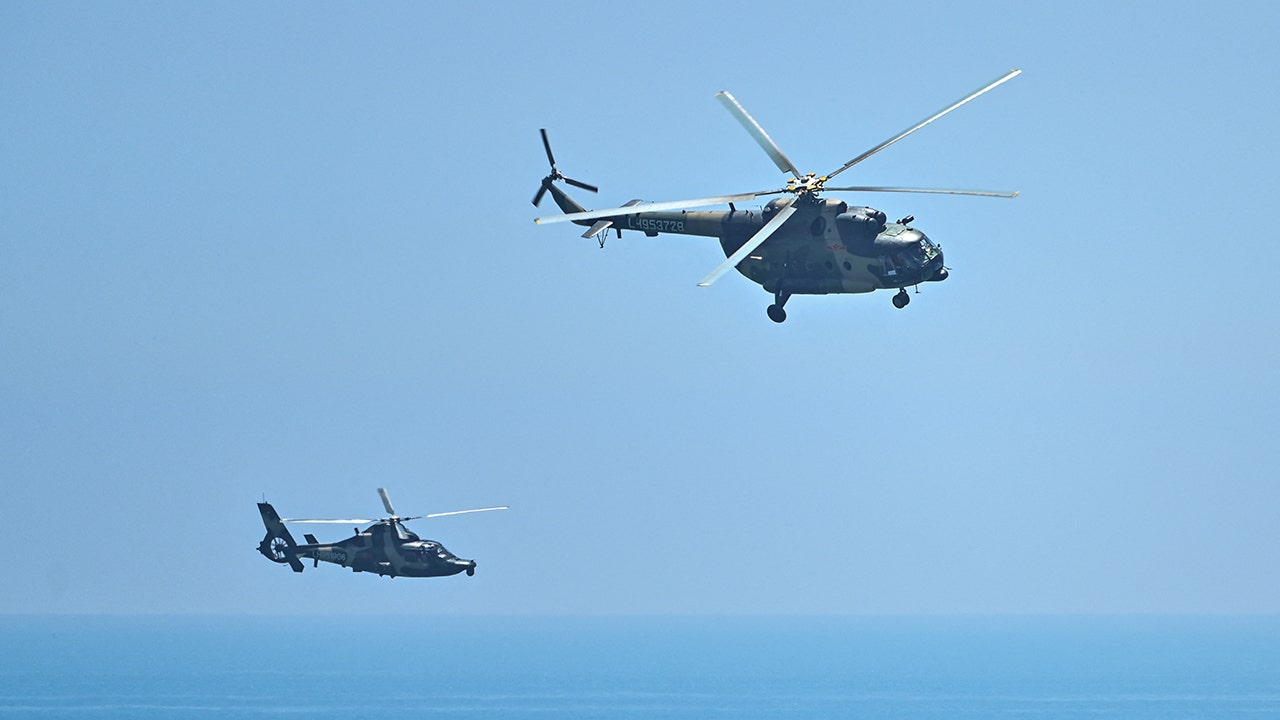
The 2027 "Davidson Window" has evolved from a specific military assessment into a rigid geopolitical shorthand that obscures the actual mechanics of Chinese decision-making. While US intelligence indicates that Beijing has not committed to a 2027 invasion, this observation is not a signal of de-escalation; it is an acknowledgment of the gap between technical capacity and operational confidence. The year 2027 represents a milestone for People’s Liberation Army (PLA) modernization—specifically the centenary of its founding—rather than a pre-determined launch date for a cross-strait kinetic operation.
The Triad of Capability, Cost, and Certainty
To understand why an invasion remains a high-variance tail risk rather than a baseline expectation for 2027, one must analyze the three variables that dictate the Chinese Communist Party (CCP) calculus.
1. The Operational Maturity Gap
Modernization is not a synonym for readiness. While the PLA has achieved parity or superiority in specific regional niches—such as Long-Range Precision Fires (LRPF) and Integrated Air Defense Systems (IADS)—it lacks the proven sealift capacity and joint-force integration required for the largest amphibious assault in human history.
An invasion of Taiwan requires the simultaneous coordination of:
- Subsurface blockade operations to deny external intervention.
- Cyber-electromagnetic pulse (CEMP) strikes to decapitate Taiwanese Command and Control (C2).
- Massive amphibious transport involving not just naval vessels, but the forced integration of the civilian merchant marine fleet.
The "2027" directive issued by Xi Jinping was a mandate to have the capability to succeed, not a directive to execute. Intelligence assessments suggest that the PLA’s leadership remains skeptical of their own "Joint Power Projection" capabilities, particularly in the face of evolving "porcupine" defense strategies adopted by Taipei.
2. The Economic Friction Coefficient
The CCP’s legitimacy is tethered to internal stability and the "Great Rejuvenation," both of which depend on continued access to global capital markets and high-end technology. A kinetic conflict over Taiwan triggers immediate, non-linear economic decoupling.
The cost function of an invasion includes:
- The Silicon Shield: Taiwan produces over 60% of the world’s semiconductors and 90% of the most advanced logic chips. A physical conflict likely results in the destruction of these facilities, either through collateral damage or scorched-earth policies, inducing a global depression that would hit China’s export-oriented economy hardest.
- Sanction Vulnerability: Unlike Russia, China is deeply integrated into the SWIFT system and global trade. The freezing of US dollar reserves and the cut-off from energy imports through the Strait of Malacca creates a structural bottleneck that Beijing has not yet solved through its "Dual Circulation" strategy.
3. The Political Risk of Failure
For the CCP, an unsuccessful invasion is not merely a military defeat; it is an existential threat to the party's survival. The "Total National Power" framework used by Chinese strategists weighs the benefits of "unification" against the risk of internal fragmentation. If the military objective is not achieved swiftly—a "fait accompli" before the US can mobilize—the resulting prolonged war of attrition could lead to domestic unrest.
The Mechanics of Gray Zone Dominance
The absence of an invasion plan for 2027 does not equate to a status quo. Instead, China is pivoting toward a "Comprehensive Coercion" model. This strategy aims to win without fighting by degrading Taiwan’s sovereignty through incrementalism.
Structural Attrition
The PLA uses frequent sorties across the Median Line and into Taiwan’s Air Defense Identification Zone (ADIZ) to achieve three objectives:
- Pilot Fatigue: Forcing the Republic of China (ROC) Air Force to scramble incessantly, depleting their airframe lifespans and straining maintenance budgets.
- Normalizing Presence: Gradually shifting the "baseline" of military activity so that the actual buildup for an attack is masked by routine maneuvers.
- Response Mapping: Collecting electronic intelligence (ELINT) on how Taiwan’s radar and missile batteries react to various strike packages.
Cognitive and Legal Warfare
Beijing is increasingly utilizing "Lawfare" to redefine the Strait as internal waters rather than international territory. By deploying the China Coast Guard (CCG) to board civilian vessels or enforce "regulatory inspections," they test the international community’s appetite for escalation over non-kinetic provocations. This creates a strategic dilemma for the US and its allies: intervene and risk escalating a minor policing action into a global war, or do nothing and cede de facto control of the waterway.
Technological Bottlenecks and the "S-Curve" of Modernization
The transition of the PLA from a regional land-based force to a global blue-water navy follows a predictable S-curve. We are currently in the steep growth phase, but several technical bottlenecks persist.
The Engine Deficit
Despite breakthroughs in stealth airframes like the J-20, China continues to struggle with the mass production of high-performance, high-bypass turbofan engines with sufficient Mean Time Between Overhaul (MTBO). Reliance on localized iterations of older Russian designs or nascent domestic versions creates a reliability gap in sustained combat operations.
The Undersea Domain
The US retains a significant qualitative edge in nuclear-powered attack submarines (SSNs) and acoustic quieting. In an invasion scenario, the Taiwan Strait becomes a "kill zone" for Chinese transport ships. Until China can achieve "Undersea Domain Awareness" or field enough silent submarines to counter the US Pacific Fleet, a cross-strait invasion remains high-risk.
Integrated Joint Logistics
Moving a million troops across 100 miles of water is a logistics problem, not just a tactical one. The PLA’s "Joint Logistics Support Force" is still in its infancy. Exercises have shown deficiencies in real-time supply chain management under contested conditions—specifically the ability to refuel and re-arm dispersed units while under fire from Taiwanese precision-guided munitions (PGMs).
Strategic Logic of the 2027-2035 Horizon
If 2027 is the year of capability, 2035 is the year of parity. Intelligence shifts suggest that Beijing is eyeing the mid-2030s as a more viable window for several reasons:
- Demographic Pressure: China’s aging population begins to severely impact its military manpower and economic vitality by the late 2030s, creating a "now or never" window.
- Nuclear Breakout: By 2035, China is expected to have 1,500 nuclear warheads, providing a "nuclear umbrella" that could deter US intervention in a regional conflict.
- Technological Autarky: Efforts to bypass Western lithography and aerospace technology will likely reach maturity by this period, reducing the impact of potential sanctions.
The Decoupling of Intent and Capability
Standard analysis often conflates Xi Jinping’s rhetoric with operational timelines. However, the CCP operates on a "Stochastic Decision Tree." The "intent" to take Taiwan is constant; the "trigger" is variable.
The US intelligence assessment that an invasion is not expected by 2027 is rooted in the "Failure of Certainty." The Chinese leadership is hyper-aware of the Russian experience in Ukraine—specifically how corruption can hollow out military capabilities and how a "three-day war" can turn into a multi-year disaster.
The Strategic Play: Active Deterrence and Industrial Resiliency
The policy implication of this data is not complacency, but a retooling of the deterrence framework. Since the risk is not a fixed date but a moving target of "perceived success," the objective must be to keep the cost of an invasion higher than the perceived benefit.
- Accelerate the "Hellscape" Concept: The US and Taiwan must deploy thousands of low-cost, autonomous lethal drones in the Strait. This shifts the cost-exchange ratio, forcing China to use expensive missiles to down cheap attritable systems.
- Hardening Civilian Infrastructure: Taiwan’s vulnerability is not just military; it is its energy and communications grid. Rapidly deploying Starlink-like satellite constellations and localized microgrids reduces the effectiveness of China’s "decapitation" strikes.
- Clarifying the Economic Consequences: The G7 must move beyond vague warnings and codify specific, "pre-packaged" sanctions that trigger automatically upon a blockade. Removing the uncertainty of the Western response reduces the likelihood of a Chinese miscalculation.
The 2027 milestone should be viewed as the end of the "Post-Cold War" era of Western dominance in the Pacific and the beginning of a "Contested Parity" phase. Success in the next three years depends on the ability to transform the Taiwan Strait into an indigestible operational environment, ensuring that when the CCP leadership looks at their 2027 readiness reports, the answer to "Can we win?" remains a definitive "Not yet."