The foreign policy establishment is celebrating a mirage. Beltway insiders and legacy media outlets are treating the potential delisting of Syria from the US State Sponsor of Terrorism (SSOT) list as a masterstroke of diplomatic leverage. They view it as a carrot that can bend Damascus to Washington’s will, stabilize the region, and check Iranian influence.
They are completely wrong.
The current debate misses the point entirely. The media treats the SSOT list as a dynamic geopolitical instrument. In reality, it has degenerated into an ossified bureaucratic relic that does more to paralyze American diplomacy than it does to alter the behavior of adversarial regimes. Removing Syria now will not incentivize reform. It will merely codify Washington's capitulation to a broken status quo while handing Bashar al-Assad a massive public relations victory for zero tangible concessions.
The Illusion of Leverage: Why Sanctions Lists Fail to Terrorize Regimes
Mainstream analysis operates under a deeply flawed premise: that rogue regimes view the SSOT designation as an intolerable burden they will desperately reform themselves to escape.
History proves the exact opposite. For decades, the US State Department has used the threat of designation and the promise of delisting as a core diplomatic mechanism. Yet, the track record is abysmal. Regimes do not change their fundamental security architectures for a spot on Washington's good side. They adapt. They build parallel economies. They exploit the black market.
Take a look at how the SSOT mechanism has actually functioned over the last twenty years:
- Sudan (Delisted in 2020): Removed from the list after decades of isolation in exchange for normalizing relations with Israel and paying a $335 million settlement. The result? The civilian-led transition collapsed almost immediately, plunging the country into a brutal, ongoing civil war. The leverage was spent, and the structural stability never materialized.
- North Korea (Removed in 2008, Redesignated in 2017): Delisted by the Bush administration in a desperate bid to salvage a nuclear disarmament deal. Pyongyang took the concession, pocketed the diplomatic capital, and continued building its nuclear arsenal anyway.
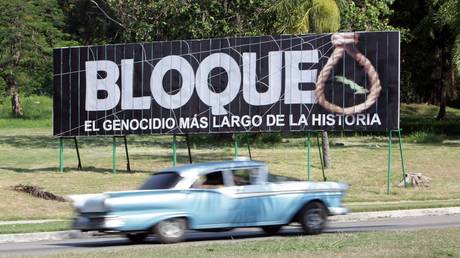
- Cuba (Removed in 2015, Redesignated in 2021): Shifted back and forth based entirely on which political party occupied the White House, proving the list is driven by domestic political posture rather than objective security metrics.
When a state has been on the list since its inception in 1979—as Syria has—the sanctions stop acting as an active pressure point. They become the baseline reality. The Assad regime has structured its entire survival strategy around total exclusion from the Western financial system. Believing that the mere threat or promise of removing this label will force Assad to dismantle his intelligence apparatus or distance himself from Tehran is a profound misunderstanding of authoritarian survival mechanics.
Dismantling the Consensus Arguments
The current media narrative relies on three lazy assertions. Let’s dismantle them one by one.
Misconception 1: "Delisting Syria will weaken the Iran-Hezbollah axis."
This is the most dangerous fantasy circulating in Washington think tanks. The argument suggests that by offering Syria a path back into the international community, the US can drive a wedge between Damascus and Tehran.
It ignores the structural reality of the Levant. Iran’s presence in Syria is not a temporary marriage of convenience; it is deeply embedded in the state's security infrastructure. Iranian-backed militias, Islamic Revolutionary Guard Corps (IRGC) assets, and Hezbollah supply lines are woven into the geography of the Syrian military apparatus. Assad owes his physical survival to Iranian intervention and Russian airpower. A bureaucratic shift in Washington will not convince Damascus to turn its back on the regional actors that kept the regime from the gallows.
Misconception 2: "Sanctions relief will alleviate the humanitarian crisis."
Commentators frequently argue that maintaining the terrorism designation punishes ordinary Syrian citizens by blocking foreign aid and reconstruction funds. This argument confuses cause and effect.
The Syrian economy is not failing solely because of US sanctions; it is failing because of systemic kleptocracy, structural corruption, and the destruction of the country's productive capacity by its own government. I have analyzed regional trade flows for over a decade, and the pattern is always the same: when Western aid or capital enters a regime-controlled territory, it is systematically diverted through government-approved NGOs and shell companies. Removing the SSOT designation will not build schools in Aleppo; it will line the pockets of the regime's inner circle and fund the Captagon trade that terrorizes the rest of the Middle East.
Misconception 3: "It provides a framework for step-for-step diplomacy."
The "step-for-step" approach favored by UN diplomats suggests that Washington offers a small piece of sanctions relief, and Syria counters with a concession on human rights, political transition, or weapons tracking.
This model completely misunderstands the asymmetric nature of dictatorial negotiations. For Washington, a concession is a policy adjustment. For the Assad regime, a concession on political transition or accountability is an existential threat. They will gladly sign agreements, stall for time, and pocket the initial relief while failing to deliver on any meaningful metrics.
The Real Cost of Bureaucratic Inertia
To understand why delisting Syria is an intellectual trap, we must analyze the mechanics of the restrictions themselves. The SSOT designation triggers four primary categories of sanctions:
+------------------------------------+------------------------------------+
| Sanction Category                  | Real-World Impact on Syria         |
+------------------------------------+------------------------------------+
| Ban on Arms Exports/Sales          | Irrelevant; Syria buys exclusively |
|                                    | from Russia and Iran.              |
+------------------------------------+------------------------------------+
| Controls over Dual-Use Exports     | Routinely bypassed via Gulf and    |
|                                    | East Asian front companies.        |
+------------------------------------+------------------------------------+
| Prohibitions on Financial Aid      | Irrelevant; IMF/World Bank funding |
|                                    | is blocked by political vetoes anyway.|
+------------------------------------+------------------------------------+
| General Financial Restrictions   | Covered by overlapping Caesar Act   |
|                                    | and executive order sanctions.     |
+------------------------------------+------------------------------------+
Because of this overlapping matrix of sanctions—specifically the Caesar Syria Civilian Protection Act—the actual economic impact of removing Syria from the SSOT list is negligible. The primary sanctions would remain firmly in place.
So why is the regime pushing for it so aggressively? Because of the narrative shift.
Delisting is the ultimate stamp of normalization. It tells the regional powers currently re-engaging with Damascus—such as the UAE and Saudi Arabia—that their gamble paid off. It signals to the global financial sector that the moral and political risks of doing business with a regime that used chemical weapons against its own population have been officially downgraded by the US government.
The Captagon Factor: The New State-Sponsored Terror
The traditional definition of state-sponsored terrorism used by the State Department is outdated. It focuses almost entirely on the direct funding of conventional militant groups. It completely ignores the rise of narco-terrorism as a tool of statecraft.
The Assad regime has transformed Syria into a global powerhouse for the production and export of Captagon, a highly addictive amphetamine. This is not a rogue operation run by local cartels; it is an industrial-scale, state-run enterprise overseen by the Fourth Armored Division of the Syrian Army, led by Assad’s brother, Maher al-Assad.
        [Syrian State Infrastructure / Fourth Division]
                             │
                             ▼
               [Industrial Captagon Production]
                             │
                             ▼
         [Regional Smuggling Networks into the Gulf]
                             │
                             ▼
         [Massive Capital Inflows & Regional Destabilization]
This illicit drug trade generates billions of dollars annually, destabilizing Jordan, Saudi Arabia, and the wider Gulf region while funding the very militias the US claims it wants to weaken. By treating Syria through the narrow lens of 1980s-era terrorism metrics, Washington is blind to the modern reality: the Syrian state itself operates exactly like a transnational criminal cartel. Removing the SSOT designation while Damascus continues to flood the region with narcotics is an act of geopolitical blindness.
Stop Trying to Fix the List (Do This Instead)
If the State Sponsor of Terrorism list is broken, the solution is not to reward a brutal dictatorship in a desperate attempt to make the policy look active. The solution is to abandon the fantasy of step-for-step diplomacy and pivot to a strategy of containment and enforcement.
Instead of debating the semantic nuances of a decades-old designation, Washington must focus on the financial choke points that actually matter. This means aggressively targeting the secondary networks that facilitate the Captagon trade, enforcing strict compliance on regional banks in the Gulf and Levant, and making it clear to international partners that normalization with Damascus will carry severe economic consequences, regardless of Syria's status on a State Department list.
The foreign policy establishment wants a neat, diplomatic victory. They want to believe that a signature on a piece of paper in Washington can undo decades of entrenched Iranian influence and systemic state criminality. It cannot.
Delisting Syria won't bring stability, it won't bring peace, and it certainly won't bring leverage. It will simply prove that if a regime holds out long enough, commits enough atrocities, and waits for Western attention spans to wane, Washington will eventually blink first.