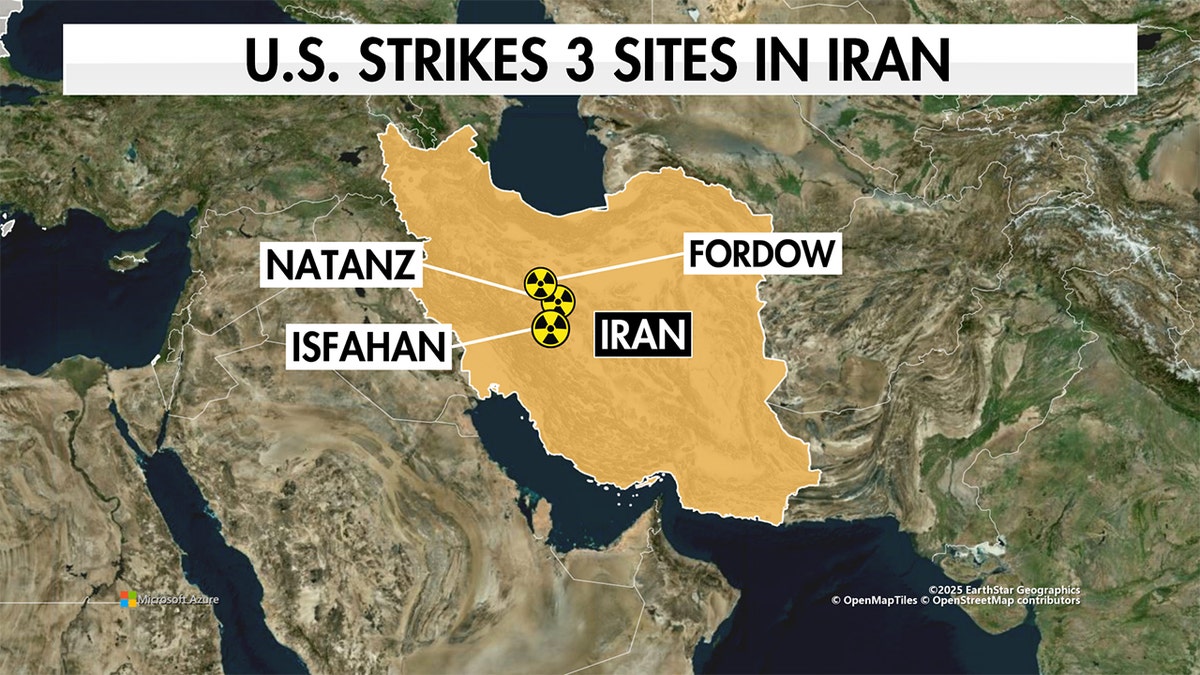
The smoke rising from a targeted structure in the Middle East often signals more than a tactical military victory. When Israeli intelligence identifies a specific building—not a munitions depot or a drone factory, but a room filled with influential clerics—the objective is political decapitation. Recent reports of a strike targeting a meeting of high-ranking Iranian officials allegedly tasked with choosing the successor to Supreme Leader Ali Khamenei represent a massive escalation in the shadow war between Jerusalem and Tehran. This was not a random act of aggression. It was a calculated attempt to disrupt the very continuity of the Islamic Republic.
By hitting the architects of Iran’s future, Israel is signaling that no internal process is private and no transition of power is safe. This operation targets the "Assembly of Experts" logic—the constitutional body responsible for picking the next Supreme Leader—by physically removing the kingmakers before they can crown a king.
The Intelligence Breach Behind the Blast
You don't hit a moving target of this magnitude without an unprecedented level of penetration. For a strike to occur while a succession committee is in session, the intelligence must be real-time, human-verified, and precise down to the square meter. This points to a deep, systemic rot within Iran’s internal security apparatus.
Israel’s Mossad has spent decades building networks of assets inside the Islamic Republic, but the ability to pinpoint a secret succession meeting suggests a breach at the highest levels of the clerical and security elite. It isn't just about a drone or a missile. It's about a man in a room with a radio or a encrypted phone, sending a signal that says, "They are here now."
The Vulnerable Chain of Iranian Power
The Islamic Republic of Iran is a unique hybrid of theocratic and republican institutions. At the top of the pyramid sits the Supreme Leader, a position currently held by 86-year-old Ali Khamenei. His health has been the subject of intense speculation for years. Because the Supreme Leader holds absolute power over the military, the judiciary, and the state media, the person who replaces him will dictate the direction of the country for decades.
The committee allegedly targeted in this strike represents the core of the succession planning. This is not a public body; it is a small, insulated group of clerics and Revolutionary Guard (IRGC) figures who operate in the shadows to ensure the next leader maintains the "Velayat-e Faqih" (Guardianship of the Islamic Jurist) system. By striking this group, Israel isn't just killing individuals; it is killing the plans they hold in their heads.
Why Succession is Iran's Greatest Weakness
The succession process in Iran is inherently unstable because it lacks a clear, hereditary path or a democratic mandate. It is a game of high-stakes political poker played by three main factions:
- The Ultra-Conservative Clerics: They want a leader who will double down on religious purity and the export of the revolution.
- The IRGC Hardliners: They want a leader who will prioritize military expansion and the "Axis of Resistance" over everything else.
- The Pragmatists: A dwindling group that seeks to preserve the system by making small concessions to the West and the Iranian public to avoid a total collapse.
When a bomb disrupts a meeting of these factions, it forces the survivors to look at one another with suspicion. Who leaked the location? Who stood to gain from the death of a rival candidate? The strike sows paranoia, which is often more effective than the physical damage itself.
The Technological Precision of Modern Assassination
The era of carpet-bombing a city block to hit a single target is over. Modern kinetic operations rely on advanced intelligence, surveillance, and reconnaissance (ISR) capabilities. Israel has demonstrated an ability to use loitering munitions and high-precision missiles that can enter a specific window or hit a specific floor of a building while leaving the rest of the structure standing.
This surgical precision is a psychological weapon. It tells the Iranian leadership that their bunkers are not deep enough and their safe houses are not secret enough. If a missile can find a cleric in a windowless room in the heart of a secure compound, it can find anyone.
The Failure of the Iranian Shield
Tehran has invested billions in its air defense systems, including the Russian-made S-300 and its own homegrown variants like the Bavar-373. Yet, these systems continue to fail against Israeli incursions. This suggests that the electronic warfare (EW) gap between the two nations is a chasm.
Israeli jets and drones frequently operate with near-impunity over Iranian-linked targets in Syria, Lebanon, and even within Iran’s own borders. They use sophisticated jamming technology to blind Iranian radar, creating a "corridor of silence" through which their munitions can travel. For the Iranian clerics, this means the threat is invisible until the roof falls in.
The Geopolitical Fallout of a Decapitated Leadership
The immediate aftermath of such a strike is a vacuum. In the short term, the IRGC will likely take even more control of the state, using the "martyrdom" of the clerics as a pretext to crack down on domestic dissent. But in the long term, the disruption of the succession process could lead to a civil war within the regime.
If Khamenei were to die today, the lack of a pre-arranged, vetted successor could lead to a chaotic scramble for power. The IRGC might try to bypass the Assembly of Experts entirely and install a military junta under the guise of "national security." This would alienate the clerical establishment and potentially fracture the bedrock of the Islamic Republic.
The Role of Israel’s Strategic Ambiguity
Israel rarely claims direct responsibility for these strikes, preferring a policy of strategic ambiguity. This forces the target to decide whether to retaliate and risk a full-scale war or remain silent and look weak. For Iran, the choice is agonizing. If they do nothing, their credibility as a regional hegemon is destroyed. If they strike back, they risk a massive Israeli and potentially American response that could end the regime.
This calculated pressure is designed to make the Iranian leadership prioritize their own survival over their regional ambitions. It is a slow-motion strangulation of the regime’s power projection.
Moving the Chess Pieces
We are witnessing a fundamental shift in the rules of engagement. For decades, the "shadow war" was fought on the periphery—at sea, in the cyber realm, or through proxies in Gaza and Lebanon. Now, the war has moved to the very heart of the Iranian state.
The targeting of succession planners is an admission that the current leadership is a spent force and the real battle is for what comes next. By removing the individuals who would guide the transition, Israel is betting that the resulting chaos will be more damaging to Iran than any conventional military campaign could ever be.
This is a high-risk gamble. A cornered and paranoid regime might decide that its only hope for survival is to go nuclear, accelerating its enrichment program to achieve a "breakout" before more of its leadership is eliminated. The world is watching a game of brinkmanship where the stakes are no longer just regional influence, but the very existence of a nuclear-armed power in the heart of the Middle East.
The next few months will reveal if the Iranian security apparatus can plug its leaks or if the succession will happen in a bunker that even the most advanced intelligence cannot find. For the clerics in Tehran, the sky is no longer just the limit; it is the source of their greatest fear.
Identify the names of the survivors of the meeting to understand which faction has gained the most from the internal vacuum.