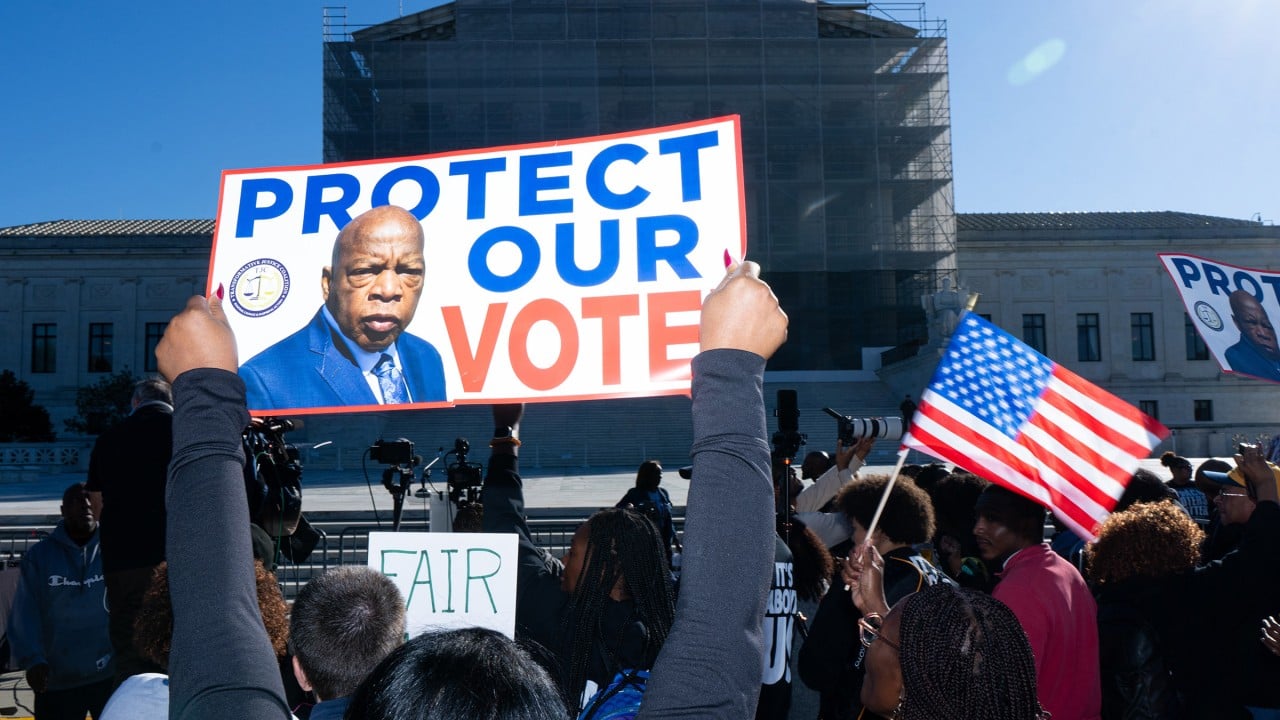
The ground just shifted under American elections. If you thought the battle over "fair maps" was settled after last year's headlines, today's 6-3 Supreme Court ruling proves the conservative majority is just getting started. By striking down Louisiana’s congressional map, the Court didn't just toss out a single district—it essentially put Section 2 of the Voting Rights Act (VRA) on life support.
For anyone trying to keep up, the whiplash is real. Just a short while ago, in Allen v. Milligan, the Court seemingly protected minority voting rights by forcing Alabama to create a second majority-Black district. But today’s decision in the Louisiana case (Robinson v. Callais) pulls a massive U-turn. The justices ruled that Louisiana’s attempt to fix its own map was an "unconstitutional racial gerrymander."
Basically, the Court is telling states: "You have to fix discriminatory maps, but if you use race to do it, you're violating the Constitution." It's a legal catch-22 that leaves voting rights advocates with almost no path forward.
The Louisiana Trap
Louisiana is roughly 33% Black, yet for years, it only had one majority-Black district out of six. After a long legal slog, the state legislature finally drew a second one—District 6—which snaked from Shreveport down to Baton Rouge. It was a victory for representation, until a group of "non-African American" voters sued, claiming the map relied too heavily on race.
Justice Samuel Alito, writing for the majority, agreed. He called the map an "unconstitutional gerrymander" and argued that the state didn't have a "compelling interest" to use race as the primary factor in drawing those lines.
The irony here is thick enough to choke on. Louisiana only drew that map because they were told the old one likely violated the VRA. Now, the Court says the fix itself is the problem. It’s like being told to paint a room blue, then getting sued for using blue paint.
What the New Standard Actually Means
The Court is pivotting toward a much harder test for anyone challenging a map. Alito’s opinion suggests that Section 2 of the VRA should only apply when there's "intentional" discrimination.
- Old Standard: You could win if you proved a map had the effect of diluting minority votes.
- New Standard: You likely have to prove the mapmakers were trying to be racist.
Proving intent in 2026 is nearly impossible. Modern mapmakers are smart; they use "partisan data" as a shield. They’ll claim they weren't targeting Black voters; they were just targeting Democrats. Since those two groups often overlap, the result is the same, but the legal protection vanishes.
The 6-3 Split and the Death of Precedent
Justice Elena Kagan’s dissent didn't pull any punches. She wrote that the decision renders Section 2 "all but a dead letter." She's right to be worried. By raising the bar for what counts as a "reasonably configured" district, the Court has given a green light to legislatures across the country to pack and crack minority communities with impunity.
We’re seeing a clear pattern. The Roberts Court has been chip-chip-chipping away at the VRA for over a decade.
- 2013 (Shelby County): Gutted the "preclearance" formula that stopped discriminatory laws before they started.
- 2021 (Brnovich): Made it harder to challenge voting rules like ID requirements.
- 2026 (Today): Effectively kills the ability to challenge discriminatory maps.
Why This Matters for the 2026 Midterms
This isn't just a dry legal debate for law professors. This has immediate, cold-blooded political consequences.
Republicans are currently fighting to hold a razor-thin majority in the House. Majority-Black districts in the South almost always elect Democrats. By striking down this map (and potentially others in Georgia and Alabama next), the Court is essentially protecting Republican seats.
If you live in one of these states, your "representative" might have just been picked for you by a computer algorithm designed to ensure your vote doesn't actually change the outcome.
The Ripple Effect Beyond the South
Don't think this is just a "Southern problem." This ruling sets a precedent for every state house in the country.
- Red States: Can now more aggressively "dilute" minority blocks by claiming they're just maximizing partisan advantage.
- Blue States: Might find their own attempts at "remedial" maps struck down if they try to protect minority representation too explicitly.
The Court’s "race-blind" philosophy sounds nice on paper, but in a country where race and party are so closely linked, being race-blind is just a fancy way of being power-blind.
What Happens Now
Louisiana is back to the drawing board. They have a looming primary on May 16, and no legal map to run it on. The legislature will likely try to cram through a "race-neutral" map that favors the GOP, and given today’s ruling, it’ll be almost impossible to stop them in court.
If you care about how your lines are drawn, stop looking at the Supreme Court for help. They’ve made their stance clear. The only remaining avenues are:
- State Courts: Some state constitutions have stronger protections than the federal one (see: Pennsylvania or New York).
- Federal Legislation: The John Lewis Voting Rights Act would fix this, but it’s been rotting in the Senate for years.
- Independent Commissions: Pushing for non-partisan groups to draw maps instead of politicians.
The "landmark" era of the VRA is over. We’re entering a period where the map is the message, and the mapmakers just got a massive promotion.
Pay attention to your local redistricting hearings. If you wait until the map is in front of a judge, you've already lost.