The heartbeat of Damascus does not sound like traffic or sirens. It sounds like the sharp, rhythmic click of wooden dice hitting an inlaid backgammon board. It smells like roasted cardamom, charred tobacco, and the faint, sweet vapor of boiling mint leaves.
For centuries, the cafes of the Syrian capital have served as living rooms for the displaced, offices for the dreamers, and sanctuaries for the exhausted. They are spaces where the weight of a decade of conflict is temporarily traded for the comfort of a ceramic cup. Inside these walls, people forget. Or, at least, they try to.
Then, the glass shatters.
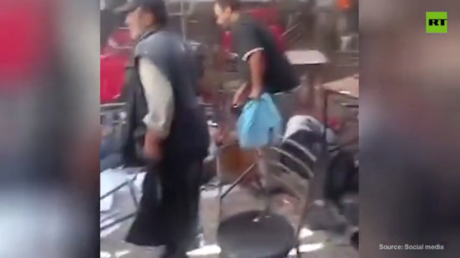
On a Tuesday afternoon that felt entirely ordinary, that fragile illusion of safety evaporated in a single, deafening flash. A blast tore through a crowded cafe in the heart of the city. The numbers reported by the wires were stark, cold, and immediate: five dead, sixteen wounded.
But numbers are a poor hiding place for tragedy. They flatten the agonizing reality of what happens when a space meant for laughter becomes a chamber of fire and iron. To understand what was stolen, one must look past the statistics and into the smoke.
The Anatomy of an Afternoon
Consider the ordinary geometry of a cafe table.
On any given day, a table holds a universe. A student crams for an engineering exam, highlighting text with a yellow marker. Two old men argue over a political point forgotten by the rest of the world. A young couple touches hands beneath the edge of the tablecloth, hiding their affection from a conservative street.
When a bomb detonates in such a space, it does not just destroy infrastructure. It shreds these quiet, human connections.
Imagine a young woman named Sarah. She is a hypothetical composite of the sixteen who survived, a representation of the collective trauma now anchoring the city’s hospitals. Sarah had just ordered a cold drink to escape the dry heat. She was looking at her phone, perhaps smiling at a message. A second later, the air itself became a weapon.
The blast wave from an explosive device moves faster than the speed of sound. It hits the human body like a solid wall, tearing eardrums and collapsing lungs before the brain can even register the noise. Then comes the shrapnel—the flying cutlery, the splintered wood, and thousands of tiny, razor-sharp shards of glass that used to be a storefront window.
The sixteen wounded are not just names on a hospital triage log. They are people who will spend the next few weeks having glass pulled from their skin. Some will never walk without a limp. Others will spend the rest of their lives flinching at the sound of a dropped plate or a car backfiring. The physical wounds heal, but the psychological architecture of their lives has been permanently altered.
The Mathematics of Grief
Five chairs are now permanently empty.
In the immediate aftermath of a tragedy, the focus is always on the chaos—the smoke rising into the pale sky, the flashing lights of ambulances navigating narrow, ancient alleys, the shouting of men covered in gray dust. But the real problem lies elsewhere. The true weight of the event settles hours later, when the dust has cleared and the families realize that a seat at the dinner table will never be filled again.
Five lives ended.
If you look at the demographics of those who frequent these central districts, those five could easily include a grandfather who walked the same route every day for forty years, or a young waiter working a double shift to pay for his mother’s medication. When you kill five people in a community-centric society like Damascus, you do not just end five narratives. You fracture dozens of others.
The ripple effect of a single blast extends across neighborhoods and generations. The mother who will continue to cook her son's favorite meal out of muscle memory. The child who will grow up hearing stories about a father who went out for a coffee and never came back. These are the invisible stakes of the conflict, the unrecorded ledger of pain that never makes it into the international news briefs.
Why the Gathering Places Matter
To understand why this specific attack feels like a knife in the chest of the city, one must understand what the cafe represents in Middle Eastern culture.
It is not Starbucks. It is not a place where people sit in isolation with noise-canceling headphones, staring at laptops. The Damascene cafe is an intensely social ecosystem. It is an equalizer. The wealthy businessman sits inches away from the penniless poet. They share the same air, the same charcoal smoke, the same ambient noise.
For years, as the country fractured around them, these spaces remained stubbornly intact. They were enclaves of sanity. Choosing to go to a cafe in a city touched by war is an act of quiet defiance. It is a statement that says: We are still here. We still talk. We still love life.
When these spaces are targeted, the message is clear. The goal is to strip away the last remaining sanctuaries of normalcy. It is an attempt to make the simple act of stepping outside feel like a gamble with mortality. The fear generated by such an act is democratic; it infects everyone who hears the echo of the blast.
The Silence That Follows
The day after the explosion, the street is quiet.
The yellow police tape flutters in the hot breeze. The smell of explosives—that acrid, chemical scent that clings to the back of the throat—lingers long after the bodies have been removed. On the pavement, mixed with the gray soot and broken glass, lies a single, overturned backgammon piece. A black checker.
People walk past the site quickly now. They do not linger. They look down, their paces hurried, their eyes darting toward any unattended bag or strangely parked motorcycle. The trust that takes decades to build in a neighborhood can be shattered in a fraction of a second.
Yet, a few doors down, another cafe opens its doors. The owner sweeps the dust from his doorstep. He sets up the plastic chairs. He lights the charcoal.
Soon, an old man walks in, takes his seat, and orders a coffee, heavy on the cardamom. His hands shake slightly as he lifts the cup, but he lifts it anyway. The defiance returns, not with a roar, but with the quiet clink of a porcelain cup against a saucer. The city refuses to let the silence win.