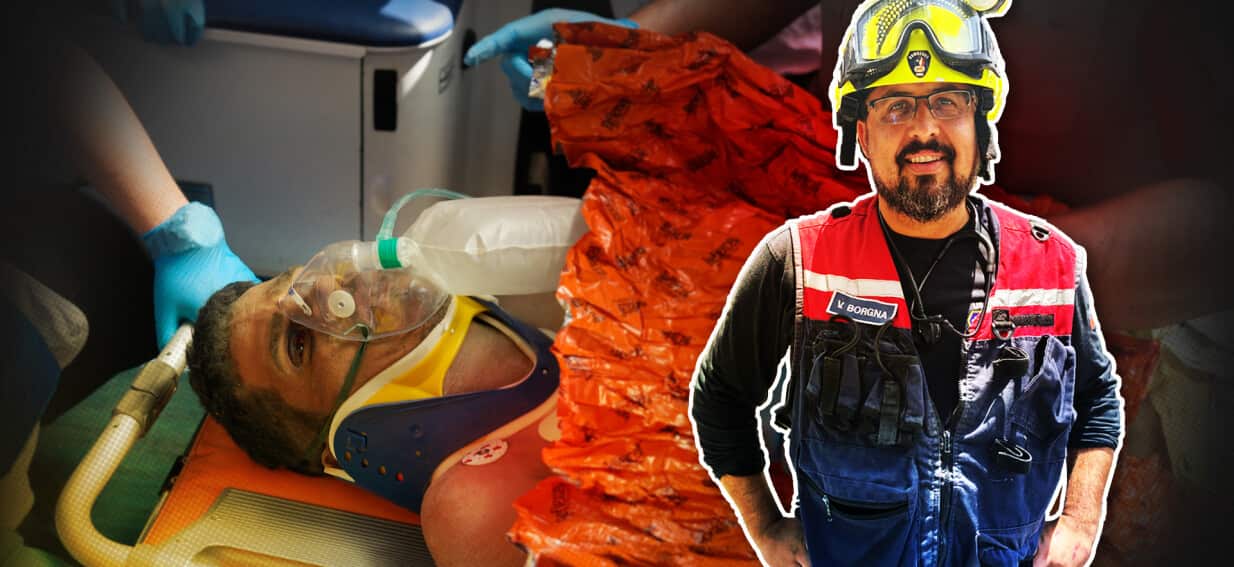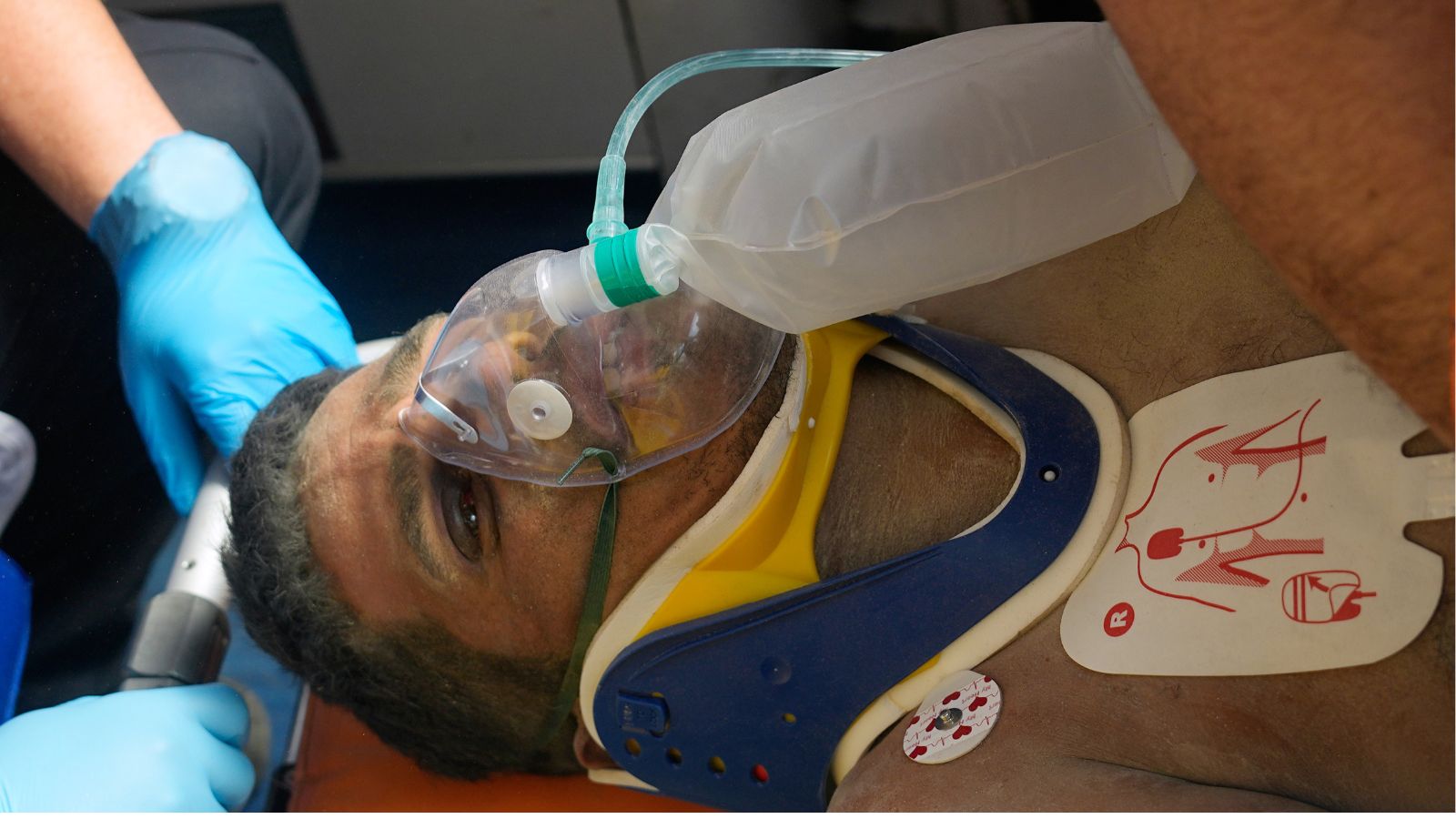
The extraction of 43-year-old night-shift security guard Hernán Alberto Gil Flores from the basement of the collapsed Galerías Playa Grande shopping center in La Guaira, Venezuela, represents a critical deviation from standard Urban Search and Rescue (USAR) actuarial timelines. Trapped for eight days (192 hours) following the back-to-back 7.2 and 7.5 magnitude earthquakes on June 24, 2026, Gil Flores survived more than double the standard 72-hour critical survival window.
While public narratives classify the outcome as anomalous, an engineering and physiological analysis reveals that his survival was the direct result of specific structural configurations, micro-environmental stability, and a highly coordinated international technical intervention. Examining the precise mechanics of this operation outlines the operational blueprint required to achieve survival expansion in catastrophic structural failures.
The Triad of Survival Variables
Extending human life expectancy beneath structural debris depends on three independent variables: structural shielding, metabolic regulation, and micro-environmental preservation. The absence of any single variable causes rapid systemic failure.
       [Structural Shielding]
         (Precast Cabin Core)
                  │
                  ▼
       [Micro-Environmental] ──► [Metabolic Regulation]
       (Passive Air Exch.)       (Exogenous Hydration)
Structural Shielding and Debris Hardening
The structural failure of the Galerías Playa Grande complex triggered a progressive collapse, shedding approximately 140 tons of concrete overhead. The primary mechanism of survival was a small, high-density precast concrete security cabin located within the basement parking lot.
When the upper floor plates failed, the load-bearing geometry of this cabin acted as a localized structural shore. It deflected the kinetic energy of the falling debris and resisted the static load of the upper slabs. This engineered enclosure prevented mechanical crushing and maintained a protective spatial void (an air pocket) approximately 29 feet beneath the primary debris field.
Micro-Environmental Preservation
The basement location provided a thermal buffer that mitigated the risks of hyperthermia and extreme fluid loss. In tropical coastal regions like La Guaira, ambient surface temperatures accelerate dehydration through perspiration. The subterranean placement insulated the void from direct solar radiation, stabilizing the internal micro-climate. Furthermore, the interstitial spaces between the fractured concrete blocks allowed for minimal but sufficient passive air exchange, preventing carbon dioxide asphyxiation within the void.
Metabolic Regulation and the Hydration Shaft
The human physiological limit without water under normal conditions rarely exceeds 100 hours. Gil Flores was trapped for 192 hours. His survival past the 96-hour mark was enabled entirely by the tactical deployment of an exogenous hydration strategy by rescue teams.
Following his acoustic detection on June 28 by the Costa Rican Red Cross, engineers drilled a narrow tactical shaft directly into the void. This puncture allowed teams to deliver water and liquid nutrients, effectively decoupling his survival timeline from his biological reserves and extending his metabolic window during the subsequent 100-hour excavation phase.
Tactical Execution of the 100-Hour Technical Extraction
The transition from a search-and-location operation to an active extraction introduces severe mechanical risks to both the victim and the personnel. The operation, coordinated by an international coalition including Chilean, Costa Rican, Mexican, and USAR teams, faced a highly volatile structural environment compounded by torrential rain and recurring aftershocks.
Structural Stabilization and Tunneling Logistics
Excavating through 140 tons of compromised concrete requires strict load management. Traditional heavy machinery could not be deployed because the vibration frequencies risk triggering secondary settling, which would crush the internal void.
Teams used a manual, highly calculated tunneling methodology. They constructed reinforced access shafts, shoring up walls with structural timber and mechanical jacks as they advanced. The team had to clear multiple partial collapses within the rescue tunnels themselves, illustrating the fluid and precarious nature of the surrounding debris mass.
Technical Surveillance and Psychological Pacing
Maintaining the psychological and physical stability of the victim during a prolonged extraction is a critical operational component. Rescuers inserted a telescopic camera through the technical shaft to establish continuous visual and auditory monitoring. This served two functions:
- Biomedical Assessment: Real-time visual monitoring allowed medical teams to assess cognitive function, physical movement, and respiratory distress.
- Tactical Debris Mitigation: During the final, high-risk phases of the breach, veteran Chilean firefighters used the audio link to direct Gil Flores to don protective goggles and a particulate mask. This protected his respiratory system and eyes from the fine concrete dust generated by the breaching tools.
Physiological Hazards of the Post-Extraction Phase
The physical removal of a patient from a prolonged collapse environment introduces acute medical risks that can be fatal if unmanaged. The primary physiological threat is systemic reperfusion injury, commonly known as Crush Syndrome.
The Mechanism of Reperfusion Injury
When skeletal muscle tissue undergoes prolonged compression, cellular ischemia occurs. This leads to the breakdown of muscle membranes and the release of myoglobin, potassium, and phosphorus into the localized tissue. While trapped, these toxins remain largely isolated.
However, when the physical pressure is removed during extraction, blood flow returns to the damaged tissue. This flashes the accumulated toxins into the central circulatory system. The sudden influx of myoglobin causes acute tubular necrosis, leading to rapid renal failure, while elevated potassium levels can induce lethal cardiac arrhythmias.
Clinical Management Protocols
To counter this specific pathology, Venezuelan Red Cross medical personnel initiated intravenous fluid resuscitation and metabolic stabilization prior to freeing Gil Flores' lower extremities from any local confinement.
By aggressively hydrating the patient and administering sodium bicarbonate, medical teams induced forced alkaline diuresis. This diluted the systemic concentration of myoglobin and prevented its crystallization within the kidneys, stabilizing his vital signs during transport to the regional medical facility.
Operational Blueprint for Urban Search and Rescue Inversions
The La Guaira extraction demonstrates that the traditional 72-hour cutoff for disaster response is an unrefined metric. Survival profiles should be evaluated based on structural and environmental inputs rather than rigid timelines.
The primary lesson for municipal crisis response is the institutionalization of micro-void analysis. When assessing collapsed high-occupancy structures, search priority must be algorithmically assigned to high-density internal nodes—such as elevator shafts, precast utility rooms, and structural security booths. These features provide the mechanical resistance necessary to survive progressive structural failure.
Furthermore, the rapid deployment of technical logistics, specifically the use of localized hydration shafts immediately upon establishing contact, must become standard operational protocol. This effectively shifts the rescue paradigm from an urgent race against biological dehydration to a deliberate, structurally sound engineering operation.