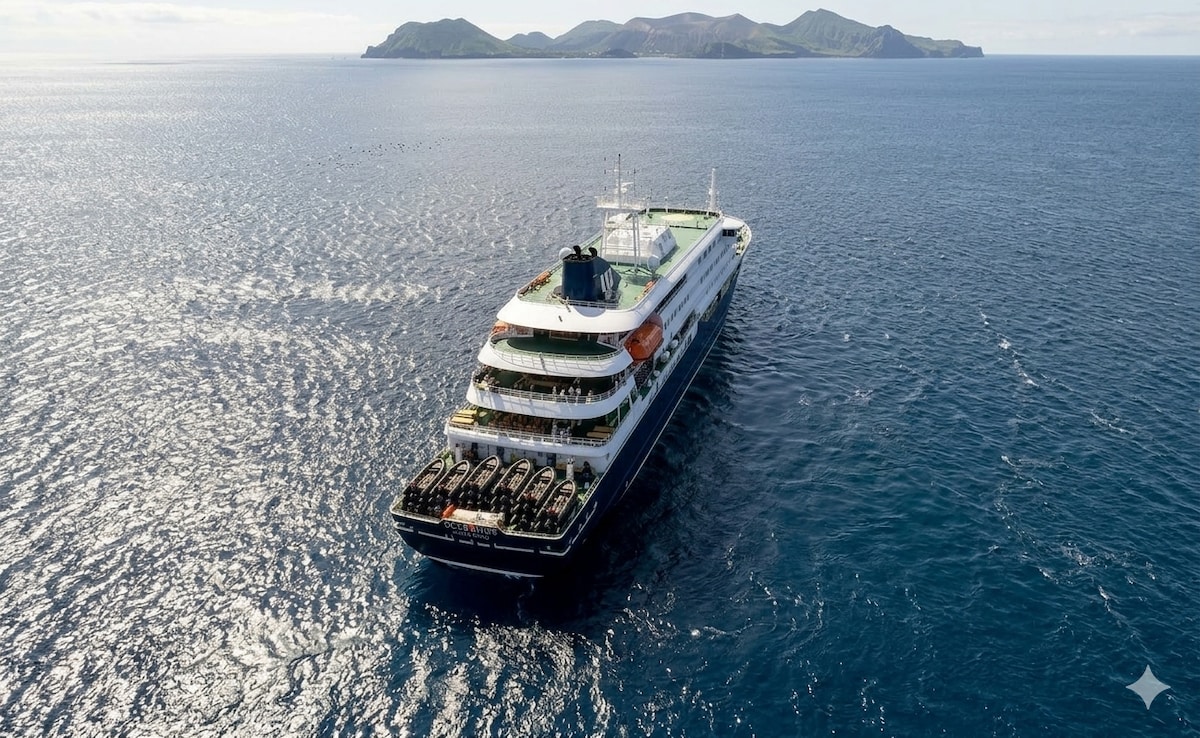
The recent outbreak aboard the Atlantic cruise liner underscores a persistent biological paradox: while the Hantaviridae family exhibits extreme genetic diversity, the transition from zoonotic reservoir to human morbidity is an evolutionary rarity. Of the 38 known species within the genus Orthohantavirus, only one—the Andes virus (ANDV)—has demonstrated a documented capacity for sustained human-to-human transmission. This concentration of risk suggests that the public health threat is not a function of viral volume, but rather a narrow set of structural and environmental filters that determine spillover success.
Understanding the Atlantic incident requires moving beyond the sensationalism of "cruise ship outbreaks" and toward a rigorous decomposition of how these viruses interact with human physiology. The danger is governed by three distinct biological vectors: viral phylogenetics, environmental stability, and the physiological interface of the human host.
The Tripartite Filter of Hantavirus Pathogenesis
The low conversion rate from "known strain" to "human pathogen" is not an accident. It is the result of a stringent sequence of evolutionary hurdles. Most hantaviruses are trapped in a specialized relationship with their specific rodent or insectivore hosts, a phenomenon known as co-speciation.
1. The Genetic Diversification Constraint
Hantaviruses are negative-sense, single-stranded RNA viruses. Their genome is divided into three segments: Small (S), Medium (M), and Large (L).
- The S Segment encodes the nucleocapsid protein.
- The M Segment encodes the envelope glycoproteins (Gn and Gc).
- The L Segment encodes the viral RNA-dependent RNA polymerase.
The primary bottleneck for human infection lies in the M segment. The glycoproteins must recognize and bind to human cellular receptors—specifically β3 integrins. Most of the 38 strains have evolved to bind only to the specific integrins of their reservoir hosts (such as the deer mouse or the long-tailed pygmy rice rat). The "Only 1 Spreads to Humans" narrative simplifies a complex reality: while several strains cause disease (Hantavirus Pulmonary Syndrome or Hemorrhagic Fever with Renal Syndrome), the molecular machinery required to jump between humans requires a secondary mutation in the glycoprotein shell that allows the virus to shed in respiratory droplets at high enough titers to survive the transition.
2. The Environmental Degradation Function
Hantaviruses are enveloped viruses, meaning they are wrapped in a lipid membrane derived from the host cell. This makes them exceptionally fragile outside of a living organism. On a cruise ship, the environmental variables—relative humidity, UV exposure, and surface pH—act as a natural disinfectant.
The virus is typically transmitted via the aerosolization of rodent excreta. In a maritime environment, the high salt content in the air and the rigorous HVAC filtration systems on modern vessels create a hostile "Cost Function" for the virus. To successfully infect a passenger, the virus must achieve a critical threshold of "Minimum Infectious Dose" (MID) before the lipid envelope desiccates. The Atlantic outbreak represents a failure of environmental containment, likely due to a localized reservoir in the ship’s dry-storage areas where humidity levels were stabilized.
3. The Physiological Host Response
Once inhaled, the virus targets the vascular endothelium. In humans, the hantavirus does not kill the cells directly. Instead, it triggers an "Immunological Overreaction." The body’s attempt to clear the virus results in increased vascular permeability.
- Hantavirus Pulmonary Syndrome (HPS): Fluid leaks into the lungs, causing respiratory failure.
- Hemorrhagic Fever with Renal Syndrome (HFRS): Vascular leakage occurs in the kidneys, leading to acute renal failure.
The rarity of human-to-human transmission is linked to the fact that humans are "dead-end hosts." The virus typically fails to reach the salivary glands or the upper respiratory tract in a form that allows for efficient shedding.
Quantifying the Risk: Mechanism Over Volume
Data from the Centers for Disease Control and Prevention (CDC) and the World Health Organization (WHO) consistently show that the number of hantavirus cases remains low compared to influenza or coronaviruses, despite the high number of strains. This is because the "Spillover Probability" is a product of three variables:
$$P(s) = R \times E \times H$$
Where:
- $R$ (Reservoir Density): The concentration of infected rodents in proximity to humans.
- $E$ (Exposure Intensity): The duration and concentration of aerosolized particles in a confined space.
- $H$ (Host Susceptibility): The presence of specific cellular receptors in the exposed individual.
In the Atlantic case, the $R$ variable was likely elevated due to the ship's docking history in regions where rodent populations are endemic carriers of the virus. The $E$ variable was maximized by the closed-loop ventilation systems common in older vessel architectures.
The Sin Nombre and Andes Distinction
To understand why "only one" spreads to humans efficiently, we must contrast the Sin Nombre virus (SNV), prevalent in North America, with the Andes virus (ANDV), found in South America. Both cause HPS, but their transmission dynamics are fundamentally different.
SNV requires a direct leap from rodent to human. There is zero evidence of human-to-human transmission of SNV. In contrast, ANDV has demonstrated the ability to spread through close contact, likely through saliva or respiratory droplets. The structural reason for this is found in the Gn/Gc glycoprotein complex. A specific amino acid sequence in the ANDV envelope allows it to remain stable in human fluids longer than SNV.
This creates a "Transmission Barrier" that most hantavirus strains cannot cross. The Atlantic outbreak serves as a stress test for these barriers. If the strain involved is identified as an ANDV-like variant, the containment protocol must shift from "pest control" to "stringent quarantine." If it is an SNV-like variant, the risk to the broader public is virtually non-existent once the source of the rodent infestation is neutralized.
Logistics of Containment in Maritime Environments
The management of a hantavirus outbreak on a cruise ship requires a departure from standard Norovirus protocols. While Norovirus is a "fecal-oral" and "surface-contact" pathogen, Hantavirus is an "aerosol-respiratory" pathogen with a specific animal vector.
Operational Bottlenecks in Disinfection
Standard bleach solutions are effective, but the application method is critical. Sweeping or vacuuming contaminated areas actually increases the risk by re-aerosolizing the virus. High-Efficiency Particulate Air (HEPA) filtration is the only mechanical defense against the viral particles, which typically range from 80 to 120 nanometers in diameter.
The second bottleneck is the incubation period. Hantavirus has an incubation window of one to eight weeks. This means the 38 passengers currently symptomatic on the Atlantic cruise represent a "Lagging Indicator." The true scope of the exposure will not be known for at least 60 days. This timeline creates a massive liability for the cruise line, as passengers who appear healthy today may develop life-threatening symptoms long after disembarking.
Structural Vulnerabilities in Global Health Surveillance
The focus on the "38 strains" obscures a more dangerous reality: our surveillance systems are reactive rather than predictive. The majority of these strains are monitored only after a spillover event occurs.
There is a significant "Information Gap" regarding the virome of urbanized rodents in port cities. As global trade increases, the movement of rodents via shipping containers creates a "Genetic Melting Pot." When two different hantavirus strains infect the same rodent, they can undergo reassortment—exchanging entire genomic segments to create a new hybrid strain. This process is significantly faster than point mutation and represents the most likely path for a new human-transmissible strain to emerge.
Strategic Mitigation Framework
The current strategy of treating hantavirus as a series of isolated incidents is insufficient. A data-driven approach requires a shift toward "Vector-Centric Intelligence."
- Sentinel Monitoring: Implementation of PCR-based testing of rodent populations in major international ports to identify "Hot" strains before they enter the maritime supply chain.
- HVAC Redesign: Transitioning from recirculated air systems to single-pass air systems with integrated UV-C irradiation in high-density areas of passenger vessels.
- Bio-Signature Profiling: Developing rapid diagnostic tests that can distinguish between "Dead-End" strains and "Human-Transmissible" variants within the first six hours of symptom onset.
The Atlantic outbreak is a warning of the increasing intersection between wildlife reservoirs and high-density human environments. The fact that only one strain currently spreads between humans is a temporary biological grace period, not a permanent state of affairs. The focus must remain on the structural integrity of the viral envelope and the evolutionary pressure for reassortment in global trade hubs.
The immediate operational priority for maritime authorities is the total isolation of the vessel's ventilation zones and a transition to wet-decontamination protocols to prevent further aerosolization. Any strategy that ignores the specific molecular mechanics of hantavirus stability is doomed to fail.