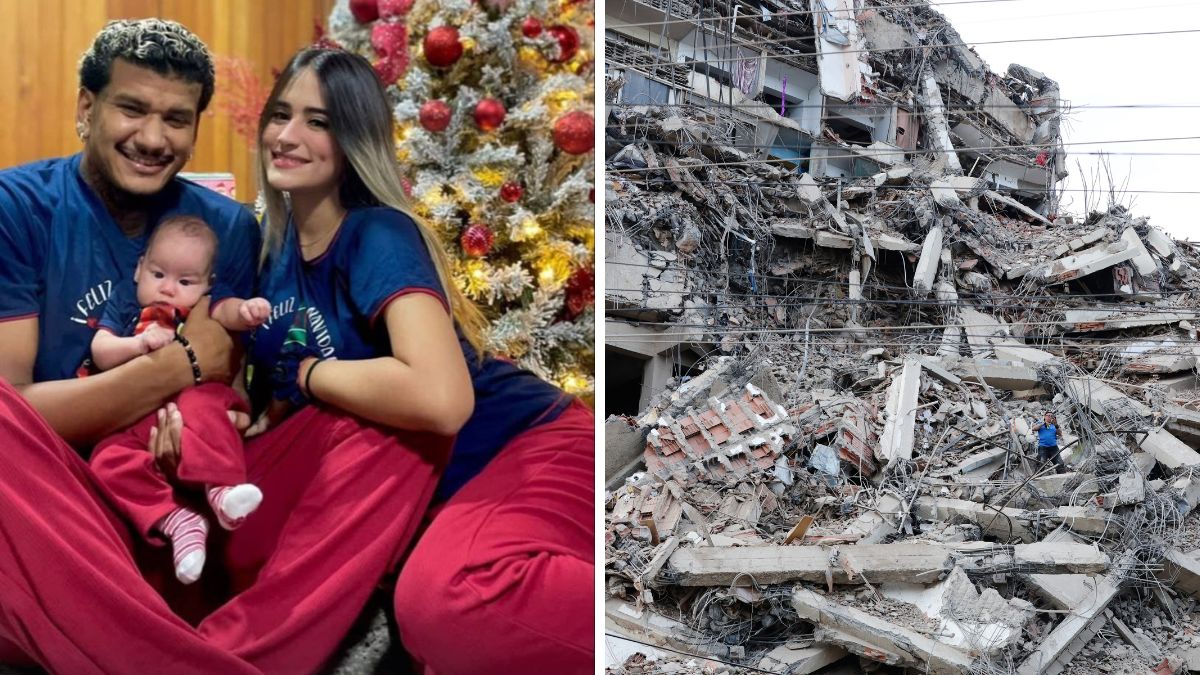
The intersection of professional sports management and catastrophic risk exposure requires a systematic framework that goes beyond standard human resources protocols. When a crisis occurs—such as the fatal earthquake involving the family of Venezuelan footballer Héctor Bello—the immediate operational strain shifts from standard athletic performance management to high-stakes crisis mitigation. Sports organizations frequently operate under the assumption that financial liquidity equates to risk insulation. This assumption fails during acute systemic disruptions, where structural preparation determines the efficacy of the response.
Evaluating this event requires breaking down the core operational vulnerabilities that professional athletes and their families face during localized environmental disasters, the structural failure points in club support frameworks, and the quantifiable impact of sudden psychological trauma on institutional assets.
The Dual-Layer Risk Profile of Expatriate Athletes
Professional athletes operating in international leagues present a distinct risk profile that standard corporate frameworks are poorly equipped to handle. This vulnerability can be categorized into two primary operational vectors: geographic displacement and infrastructure dependency.
Geographic Displacement and Isolation
Expatriate athletes frequently relocate families to regions with unfamiliar emergency infrastructure. When seismic events or localized crises occur, the absence of an established local support network amplifies the severity of the impact.
- Communication Bottlenecks: During a natural disaster, cellular networks experience immediate saturation or structural failure. Foreign nationals often lack secondary, localized communication redundancies, delaying the flow of critical information to the home club and emergency services.
- Bureaucratic Friction: Navigating emergency medical services, structural recovery, and legal documentation in a foreign jurisdiction introduces significant operational delays. This friction slows down execution times for repatriation and immediate medical interventions.
Infrastructure Dependency
High-income earners often reside in modernized, supposedly secure residential zones. However, macroeconomic factors in specific regions can result in hidden structural deficits. Building code compliance, soil stability, and proximity to primary emergency response units are variables that sports agencies and clubs rarely audit prior to player placement. The assumption of safety based entirely on real estate valuation creates a false sense of security that collapses during a high-magnitude seismic event.
The Three Pillars of Institutional Crisis Response
When a catastrophic event impacts an asset's immediate family, the club's response capability relies on three distinct operational pillars. A failure in any single pillar undermines the structural integrity of the entire organization's support mechanism.
                  ┌────────────────────────────────────────┐
                  │ Institutional Crisis Response Framework│
                  └───────────────────┬────────────────────┘
                                      │
         ┌────────────────────────────┼────────────────────────────┐
         ▼                            ▼                            ▼
┌──────────────────┐        ┌──────────────────┐        ┌──────────────────┐
│   Logistical     │        │    Financial     │        │  Psychological   │
│   Redundancy     │        │    Liquidity     │        │  Infrastructure  │
└──────────────────┘        └──────────────────┘        └──────────────────┘
1. Logistical Redundancy
Logistical redundancy defines an organization's capacity to deploy immediate physical assistance independent of local public infrastructure. In the immediate aftermath of a natural disaster, standard transit corridors are compromised. Clubs that maintain active protocols with private security, emergency aviation, and localized medical providers can bypass public system failures.
The primary metric of success here is the Time-to-Extraction. Delays in extracting surviving family members—such as the daughter saved in this specific event—exponentially increase the risk of secondary trauma and medical complications.
2. Financial Liquidity and Jurisdictional Agility
While professional football clubs possess substantial capital, capital utility is constrained by international banking regulations, currency controls, and corporate governance structures. Immediate crisis mitigation requires frictionless, unhedged financial deployment.
The second limitation is bureaucratic; traditional corporate disbursement protocols cannot match the speed required for emergency medical evacuations or cross-border repatriation of remains. Institutional agility requires pre-approved emergency funds carved out from standard operating budgets, accessible via simplified verification protocols.
3. Psychological Infrastructure
The sudden loss of a spouse under traumatic circumstances introduces a catastrophic disruption to an athlete's cognitive and physiological capability. The institutional response must move past reactive counseling to an active, long-term stabilization framework.
- Acute Phase (Days 1–7): Deployment of specialized trauma specialists to manage immediate shock and preserve the cognitive stability of both the athlete and surviving dependents.
- Intermediate Phase (Weeks 1–12): Structural adjustment of the player's professional obligations. Attempting a premature return to competitive play introduces significant injury risk due to cognitive distraction and altered physiological stress responses.
- Extended Phase (Months 1–12+): Gradual integration backed by objective psychological metrics rather than subjective self-reporting by the athlete.
Quantifying the Downstream Impact on Club Assets
From a pure sports science and asset management perspective, the trauma experienced by an athlete cascades directly into their physical and economic valuation. Failing to account for these variables leads to poor squad management and compounding institutional losses.
Cortisol Dynamics and Injury Susceptibility
Prolonged psychological stress elevates systemic cortisol levels, directly impairing muscle tissue repair, sleep architecture, and neurological reaction times.
$$Systemic Stress \propto \frac{\text{Cortisol Load}}{\text{Recovery Velocity}}$$
This physiological imbalance significantly increases the probability of soft-tissue injuries during training and competitive matches. A club that forces a narrative of "returning to normalcy" via physical exertion accelerates this breakdown, transforming a psychological crisis into a long-term physical asset impairment.
Squad Velocity and Contractual Obligations
The sudden alteration of an athlete's personal life requires a total reassessment of squad architecture. A club must evaluate the long-term availability of the player without creating a culture of alienation. Legal and contractual frameworks must adapt swiftly, utilizing compassionate leave clauses that protect the player's financial security while allowing the front office to adjust short-term registration rosters or secure emergency transfer targets if windows permit.
Actionable Strategy for Sports Organizations
To prevent systemic failures during unexpected personal tragedies, professional sports organizations must implement a predictive, audit-driven safety protocol. Relying on reactive sympathy notes and public relations statements is an obsolete operational model.
Complete the Asset Protection Audit
Clubs must conduct annual geographic and infrastructural audits for all contracted staff, prioritizing foreign players. This audit must map residential structural integrity, proximity to tier-one trauma centers, and regional environmental risk factors (e.g., seismic fault lines, flood plains).
Establish Pre-Vetted Global Vendor Networks
Organizations must secure active service-level agreements with international medical extraction firms and private security agencies. These networks must be capable of autonomous deployment upon notification of a localized crisis, bypassing standard corporate approval loops.
Decouple Performance Evaluation from Trauma Recovery
Front offices must establish clear, data-driven parameters for returning to play following catastrophic family loss. This protocol must require independent neurological and psychological clearance, neutralizing the athlete's natural impulse to override recovery protocols during acute grief.
The final strategic move requires restructuring the standard player liaison role. This position must transition from a basic concierge service into a certified risk and crisis management office, explicitly trained to navigate complex international emergencies under intense pressure.