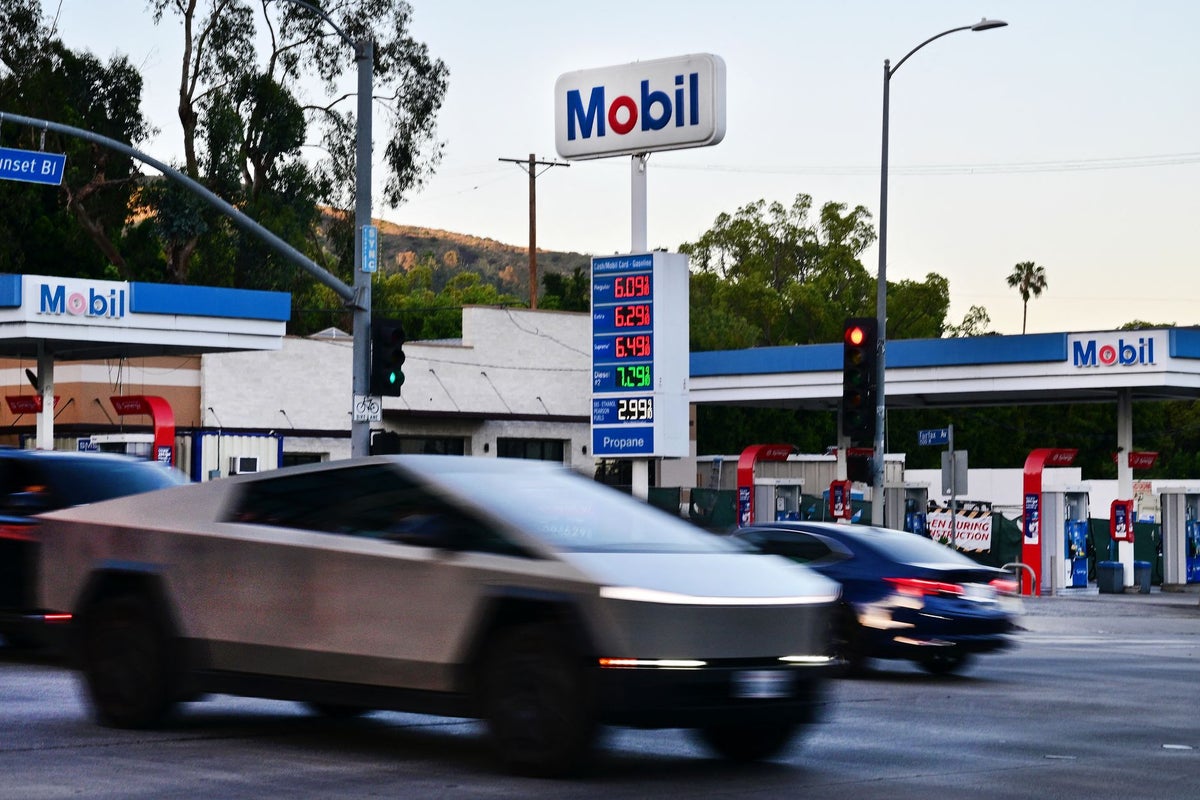
The immediate collapse of oil futures following a geopolitical de-escalation in the Middle East represents a speculative correction rather than a shift in consumer-level retail costs. While the Brent Crude and West Texas Intermediate (WTI) benchmarks react in milliseconds to headlines of an Iranian ceasefire, the physical supply chain operates on a delayed logarithmic decay model. Retail gas prices do not track crude oil in a linear 1:1 ratio; they are governed by a three-tier lag system involving replacement cost accounting, logistical lead times, and regional competitive friction.
The Triple Friction Model of Price Adjustment
The duration required for a ceasefire to manifest as lower costs at the pump is determined by three distinct structural bottlenecks.
1. Inventory Replacement Cycles and Accounting Lag
Most retail fuel stations operate on a "First-In, First-Out" (FIFO) or weighted average cost basis. The gasoline currently underground at a local station was purchased at wholesale prices established days or weeks prior. A station owner who purchased a 10,000-gallon delivery at a high-risk premium cannot immediately lower prices to match a crashing crude market without incurring a direct capital loss. The retail price begins to move only when the station requires a refill, forcing the lower-cost inventory into the system. In high-volume urban centers, this turnover occurs every 24 to 48 hours. In rural or low-traffic areas, the lag extends to 7 or 10 days.
2. Refining Spread and Crack Spreads
Crude oil is a raw material, not a finished product. The "Crack Spread"—the differential between the price of crude oil and the petroleum products extracted from it—often remains elevated even if crude prices drop. If global refining capacity is constrained or if seasonal maintenance is underway, the benefits of an Iranian ceasefire are trapped at the refinery level. A reduction in geopolitical risk lowers the floor for crude, but if the demand for finished gasoline remains inelastic or if refinery utilization is near 95%, the retail price will decouple from the raw material cost.
3. Asymmetric Price Transmission (Rockets and Feathers)
Economic literature consistently identifies the "Rockets and Feathers" phenomenon: prices rise like rockets when crude spikes but drift down like feathers when crude falls. This is not merely a product of corporate greed but a rational response to volatility. Retailers face extreme uncertainty during geopolitical shifts. If a ceasefire appears fragile, retailers will maintain higher margins as a hedge against a potential "snapback" in crude prices. They wait for a sustained "lower low" in the wholesale market before committing to a downward price trend.
Quantifying the Transmission Timeline
Historically, the interval between a major geopolitical de-escalation and a measurable decrease in national average gas prices follows a predictable decay curve.
- Phase 1: 0–48 Hours (The Speculative Flush): Crude oil futures drop significantly. Retail prices remain static or may even rise slightly as previous wholesale hikes finally reach the pump.
- Phase 2: 3–7 Days (The Wholesale Filter): Rack prices—the price paid by tankers at the terminal—begin to reflect the new, lower crude reality. Large-scale warehouse clubs and high-volume discounters begin aggressive price cuts to capture market share.
- Phase 3: 10–21 Days (The Retail Equilibrium): The broader market stabilizes. By the third week, approximately 60% to 70% of the crude oil price drop has been "passed through" to the consumer.
The total duration for a full correction typically spans 14 to 28 days, assuming no secondary disruptions in the Suez Canal or Strait of Hormuz.
The Iranian Variable and Global Supply Elasticity
An Iranian ceasefire influences the cost function through two primary mechanisms: the removal of the "Risk Premium" and the potential for increased physical flow.
The Risk Premium is an intangible cost added to every barrel of oil to account for the probability of a supply shock. Analysts estimate this premium at $5 to $10 per barrel during periods of active tension. A ceasefire eliminates this overnight. However, the physical return of Iranian barrels to the global market is a slower, more bureaucratic process. Iran’s ability to export is still governed by international sanctions regimes and the logistical readiness of their tanker fleet.
The market prices in the expectation of supply immediately, but the actual supply increase—which provides the physical downward pressure on prices—takes months to materialize. If the ceasefire does not include a roadmap for formal sanction relief, the price drop is capped by the existing global supply-demand imbalance.
Regional Variance and Infrastructure Bottlenecks
Geography dictates the speed of the ceasefire’s impact. The United States is not a monolithic market; it is a collection of isolated "energy islands."
- The Gulf Coast (PADD 3): Near the heart of U.S. refining, these states see the fastest price transmission. The supply chain is short, and transport costs are low.
- The West Coast (PADD 5): Historically isolated from the rest of the country due to a lack of pipelines crossing the Rockies, California and Washington rely on local refining and imports. High state taxes and stringent environmental blending requirements (summer vs. winter blends) often act as a buffer, preventing global crude drops from reaching the consumer quickly.
- The East Coast (PADD 1): Highly dependent on the Colonial Pipeline and maritime imports. Any disruption in shipping lanes—even if cleared by a ceasefire—requires time for the "flotilla" of tankers to reach Atlantic ports and offload.
Strategic Market Signals for Consumers and Operators
To determine when gas prices have reached their floor following a ceasefire, one must monitor the Wholesale-to-Retail Spread. In a stable market, this spread typically hovers around $0.30 to $0.40 per gallon. Immediately after a ceasefire, this spread will balloon to $0.60 or higher as retail prices lag behind the falling wholesale costs.
The most effective strategy for high-consumption fleet operators or price-sensitive consumers is to delay non-essential bulk fuel purchases for 12 days post-ceasefire. This allows the "feather" effect to settle and ensures that the initial speculative volatility has been replaced by physical supply reality. Watching the price actions of "market leaders"—typically high-volume retailers like Costco or regional gas chains—provides the first signal that the wholesale savings have finally breached the retail barrier.
The cessation of hostilities in the Middle East provides the psychological catalyst for lower energy costs, but the physical infrastructure of the petroleum industry ensures that the "peace dividend" is paid out in installments rather than a lump sum.