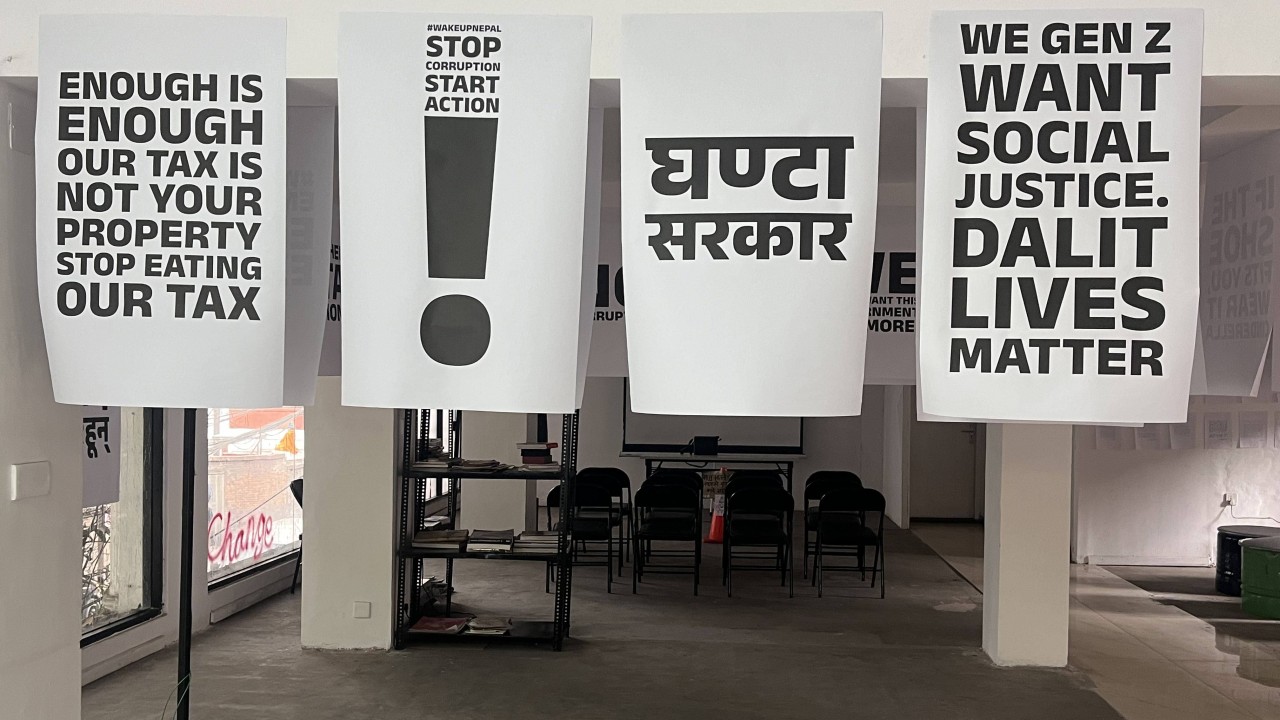
The democratization of Nepal has reached a critical bottleneck where the demographic weight of a youthful population—nearly 40% of whom are aged 16 to 40—collides with a rigid, gerontocratic leadership structure. While the 2023-2024 political cycle has been framed as an "uprising" of youth sentiment, the underlying mechanics suggest a more complex systemic failure. The primary obstacle to governance reform is not merely the age of the incumbents, but the "Cartelization of the Center," a process where established parties prioritize internal patronage networks over external market-driven or performance-based policy outcomes. To understand why young Nepalis are demanding a departure from "same old patterns," one must analyze the institutional barriers preventing the entry of new political capital.
The Mechanism of Political Gatekeeping
The dominance of Nepal's established political parties—primarily the Nepali Congress, CPN-UML, and CPN-Maoist Centre—is maintained through a closed-loop system of resource allocation. This gatekeeping operates via three distinct channels:
- Patronage-Based Vertical Integration: Leadership positions within traditional parties are rarely contested through open primaries. Instead, they are distributed based on historical loyalty dating back to the 1990 movement or the civil war era. This creates a high barrier to entry for technocratic or youth-led movements that lack legacy credentials.
- The High Marginal Cost of Campaigning: In the absence of strict campaign finance enforcement, the "cost per vote" in Nepali elections has inflated. This effectively disenfranchises candidates who rely on grassroots crowdfunding rather than industrial or contractor-backed financing.
- Institutional Memory as a Shield: Incumbents frequently cite their roles in the transition from monarchy to republic as a permanent mandate. This "struggle capital" is used to delegitimize the policy-focused critiques of younger candidates who prioritize digital infrastructure, economic migration management, and ease of doing business over historical revolutionary narratives.
The Economic Drivers of Political Alienation
The frustration of the Nepali youth is fundamentally an economic grievance expressed through a political lens. The "Youth Bulge" in Nepal is currently a liability rather than a dividend due to the state’s inability to create high-value employment.
The Migration Safety Valve
Nepal’s economy is heavily dependent on remittances, which account for roughly 25% of the GDP. This creates a perverse incentive for the political elite: exporting labor reduces domestic pressure for reform. When the most productive and vocal segment of the population is working in the Gulf or East Asia, the domestic political pressure for systemic change is diluted. The "patterns" young voters hope to shun are specifically those that treat human capital as an export commodity rather than a domestic resource.
The Productivity Gap
There is a massive misalignment between the skills of the "Digital Native" generation and the legislative priorities of the aging leadership. While the global economy shifts toward AI and remote service exports, Nepal’s regulatory environment remains bogged down in bureaucratic tape that stifles the IT sector. This creates a "brain drain" loop:
- Lack of local opportunity leads to migration.
- Migration generates remittances.
- Remittances inflate real estate prices.
- Inflated prices make it impossible for local entrepreneurs to afford overhead.
- The cycle repeats, further alienating the youth who remain.
The Rise of Independent and Alternative Frameworks
The 2022 local and general elections served as a proof-of-concept for a new political model. The success of candidates like Balendra Shah in Kathmandu and the emergence of the Rastriya Swatantra Party (RSP) signaled a shift from ideology-based voting to performance-based voting. This transition can be analyzed through the Competency vs. Connection Matrix.
Historically, voters chose "Connections" (party affiliation). The new cohort is prioritizing "Competency" (measurable technical skill). However, these new movements face their own structural risks. Without a clear ideological anchor or a robust organizational hierarchy, independent movements often struggle with "Legislative Fragmentation." They can win seats, but they often lack the numbers to pass comprehensive bills or form stable coalitions without compromising with the very entities they sought to replace.
Identifying the Bottlenecks in the Electoral System
The current Proportional Representation (PR) system in Nepal was designed to ensure inclusivity, but it has been co-opted as a backdoor for party elites. Instead of elevating marginalized voices or young experts, the PR lists are frequently populated by high-ranking party loyalists or their relatives who failed to win direct elections. This "PR Dilution" is a primary target for youth-led reform.
Furthermore, the lack of a "No Vote" (None of the Above) option that can trigger a re-election remains a significant gap in the democratic framework. Without a mechanism to formally reject all presented candidates, the youth vote is forced into a "lesser of two evils" calculation, which sustains the status quo.
The Digital Literacy Divide in Policy Making
A significant friction point exists in the understanding of the modern economy. The senior leadership’s focus remains on traditional infrastructure (roads, bridges, and hydropower), which, while necessary, is often prone to "Contractor-Politician Collusion." In contrast, the youth demographic is pushing for "Soft Infrastructure":
- Cybersecurity Laws: Modernizing the legal framework to protect data and digital assets.
- Payment Gateways: Resolving the persistent issues with international transactions (e.g., PayPal/Stripe integration) that hamper the freelance economy.
- Climate Resilience: Addressing the specific economic threats posed by melting glaciers to Nepal’s hydropower and tourism sectors—a long-term threat that short-term political cycles ignore.
Strategic Trajectory for Reform-Oriented Candidates
For new candidates to successfully "shun same old patterns," they must move beyond populist rhetoric and adopt a professionalized campaign architecture. This involves:
- Data-Driven Voter Segmentation: Utilizing localized data to address specific ward-level issues rather than relying on broad, nationalistic slogans.
- The Shadow Cabinet Model: Independent and alternative parties must present a "Cabinet-in-waiting" comprised of subject matter experts. This builds public confidence that they are prepared to govern, not just protest.
- Cross-Border Economic Integration: Formulating clear policies on how Nepal will navigate the "India-China Pivot." Young voters are increasingly interested in how Nepal can capitalize on its geography to become a transit hub, rather than a buffer state.
The current political volatility in Nepal is not a sign of democratic failure, but a sign of democratic evolution. The friction between the "Old Guard" and the "Youth Uprising" is a necessary correction to a system that has been stagnant for three decades. The success of this transition will depend on whether the new movements can institutionalize their gains.
The final strategic move for those seeking to disrupt the status quo is the mobilization of the "Non-Voter." A significant portion of the youth demographic is registered but disillusioned. Capturing this untapped "Political Alpha" requires a platform that offers more than just the absence of corruption—it requires a quantified roadmap for domestic industrialization that makes the "Migration Safety Valve" unnecessary. The candidates who can convincingly articulate the transition from a remittance-dependent state to a production-oriented economy will be the ones who successfully break the cyclical patterns of the past thirty years.