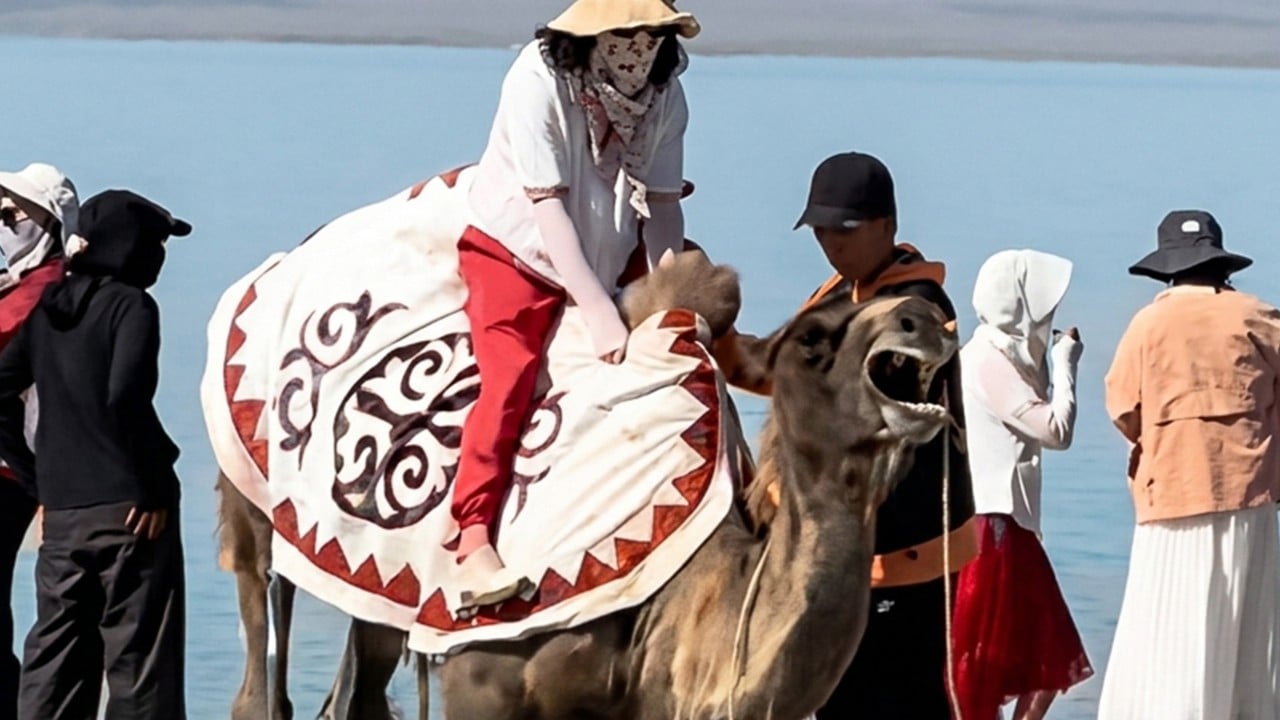
The operational collapse of animal-based tourism assets manifests not as an isolated ethical failure, but as a predictable consequence of misaligned economic incentives and unmanaged peak demand. When a viral video captured a severely distressed camel forced to its feet under the weight of tourists at the Mingsha Mountain and Crescent Spring scenic area in Dunhuang, China, public outrage focused heavily on the moral dimension. However, an objective operational analysis reveals a structural bottleneck: the systemic over-allocation of biological capital against an inelastic demand curve.
To understand why these failures occur systematically across high-density tourism hubs, the issue must be deconstructed through the lens of capacity constraints, economic forcing functions, and the regulatory voids that govern working animal welfare. Don't forget to check out our recent article on this related article.
The Tri-Particle Conflict in Working Animal Logistics
The operations of an animal-driven tourism enterprise rely on three competing vectors. When these vectors are forced out of equilibrium by macroeconomic factors—such as a sudden surge in domestic travel—the system defaults to systemic strain.
                  [1. Maximization of Throughput]
                                / \
                               /   \
                              /     \
                             /       \
 [2. Biological Maintenance] --------- [3. Fixed Capital Constraints]
- Maximization of Throughput: The primary financial driver for local operators. In the Dunhuang ecosystem, camel rides represent a high-margin, high-volume experiential product. Operators face a narrow seasonal window to capture the majority of their annual revenue, creating a powerful incentive to maximize daily rides per animal.
- Biological Maintenance Minimums: Unlike mechanical assets, working animals require non-negotiable downtime for caloric intake, metabolic recovery, and thermoregulation. For a Bactrian camel (Camelus baccarianus), this includes specific rest-to-work ratios, protection from extreme surface heat, and joint decompression intervals.
- Fixed Capital Constraints: The local population of trained camels cannot be scaled dynamically to meet real-time demand fluctuations. Breeding, training, and integrating a camel into a commercial string requires years. When tourist volume spikes rapidly, the asset supply remains fixed, forcing operators to compress biological maintenance windows to handle the excess demand.
The Dunhuang incident occurred because the system attempted to treat a highly inelastic biological asset as an infinitely scalable utility. When daily visitor numbers at Mingsha Mountain exceeded tens of thousands, the demand-side pressure overrode the biological limits of the camel herd. To read more about the background here, National Geographic Travel provides an excellent breakdown.
The Cost Function of Biological Depletion
Operating an animal-based transit system involves a distinct cost-benefit trade-off where short-term revenue gains directly accelerate asset depreciation.
$$\text{Total System Output} = f(\text{Asset Volume}, \text{Utilization Rate}) - \text{Depreciation Cost}$$
In standard industrial engineering, accelerating a machine increases maintenance costs but stabilizes output until a part fails. In a biological system, exceeding the threshold of physical endurance introduces non-linear risks: acute metabolic failure, structural musculoskeletal damage, and unpredictable behavioral shifts that endanger tourists.
The failure mechanism observed in Dunhuang follows a specific progression:
Phase 1: Thermal and Mechanical Overload
Bactrian camels are highly adapted to desert environments, but their evolutionary advantages are designed for self-pacing and energy conservation. Under commercial tourism conditions, camels carry external loads often exceeding 100 kilograms (rider plus tack) across shifting sand dunes that increase mechanical strain on their joints. When forced to operate during peak ambient temperatures without adequate hydration intervals, their core thermal regulation is compromised.
Phase 2: Compulsory Postural Transition
The viral footage highlighted a camel exhibiting respiratory distress being forced to transition from a recumbent (kneeling) position to a standing position. Structurally, the act of rising with a heavy load requires immense hind-limb leverage and core strength. Forcing a fatigued or injured animal to execute this maneuver repeatedly causes micro-trauma to the hock and stifle joints, leading to acute failure.
Phase 3: The Operator Complacency Loop
Because camel owners in these regions are frequently structured as independent contractors or small family cooperatives, their immediate survival is tied to daily cash flow. The long-term depreciation of the animal’s health is discounted against the immediate liquidity of a paid ticket. This creates a classic tragedy of the commons within the scenic area: individual operators overwork their specific assets to capture market share before the regulatory body intervenes or the season closes.
Regulatory Realities and the Illusion of Enforcement
Public backlash typically forces a temporary shutdown or a publicized investigation by local tourism bureaus. Following the Dunhuang incident, management authorities paused camel ride operations, citing the need to adjust schedules and address dust mitigation and animal rest. However, these interventions address the symptoms rather than the underlying structural causes.
The fundamental weakness lies in the lack of precise, quantifiable metrics within local tourism mandates. Standard animal welfare laws in many developing or rapidly commercializing tourism economies lack the specific operational teeth required to regulate high-throughput ecosystems.
Effective regulation requires moving away from vague mandates like "ensure proper care" toward hard, verifiable operational boundaries:
- Maximum daily tonnage per animal: Capping the cumulative weight a single camel can transport per shift.
- Biometric gating: Utilizing RFID tags and digital tracking to log every camel's active hours, enforcing a hard lockout from the track once a daily trip limit is reached.
- Mandatory thermal shutdowns: Suspending operations automatically when ambient temperatures or sand surface indices reach critical thresholds, independent of customer queue length.
Without automated, data-driven gating mechanisms, the pressure of a physical queue of paying customers will almost always override manual oversight by understaffed municipal agencies.
Supply-Chain Diversification as a Mitigation Framework
To permanently remove the systemic stress on animal assets, tourism authorities must restructure the destination's experiential portfolio. Relying on a single, high-friction activity like camel riding to anchor a major scenic area creates a single point of failure for both reputation and operations.
The strategic solution requires a phased decoupling of destination revenue from biological asset exploitation.
Implementing Dynamic Demand Shifting
Scenic areas can utilize surge pricing and timed-entry ticketing to smooth the demand curve. By aggressively pricing camel rides during peak mid-day hours and discounting non-animal experiences (such as dune trekking, historical exhibitions, or nighttime stargazing events), managers can redistribute the human load across alternative infrastructure.
Substituting Mechanical Capacity
A portion of the transit demand can be absorbed by low-impact, specialized mechanical transport designed for arid environments, such as electric sand-shuttles or monitored cable systems. This shifts the primary transportation burden away from animals, repositioning the camel experience as a premium, low-volume cultural interaction rather than a mass-transit utility.
Contractual Realignment for Operators
To break the operator complacency loop, the compensation model for camel handlers must be overhauled. Instead of a piece-rate system (pay-per-ride), scenic management should transition to a managed cooperative pool. Operators receive a stable base salary tied to strict animal health KPIs—monitored by independent veterinary audits—with financial penalties for any asset showing signs of preventable exhaustion or injury. This aligns the handler's financial survival directly with the longevity and well-being of the animal.
The optimization of high-density tourism environments cannot coexist with unmonitored biological exploitation. As global traveler scrutiny intensifies, destinations that fail to transition from crude throughput-driven models to sophisticated, asset-constrained operational frameworks will face severe reputational disinvestment and inevitable regulatory shutdowns. The path forward requires replacing emotional reactions with cold, structural engineering that protects the biological foundation of the enterprise.


