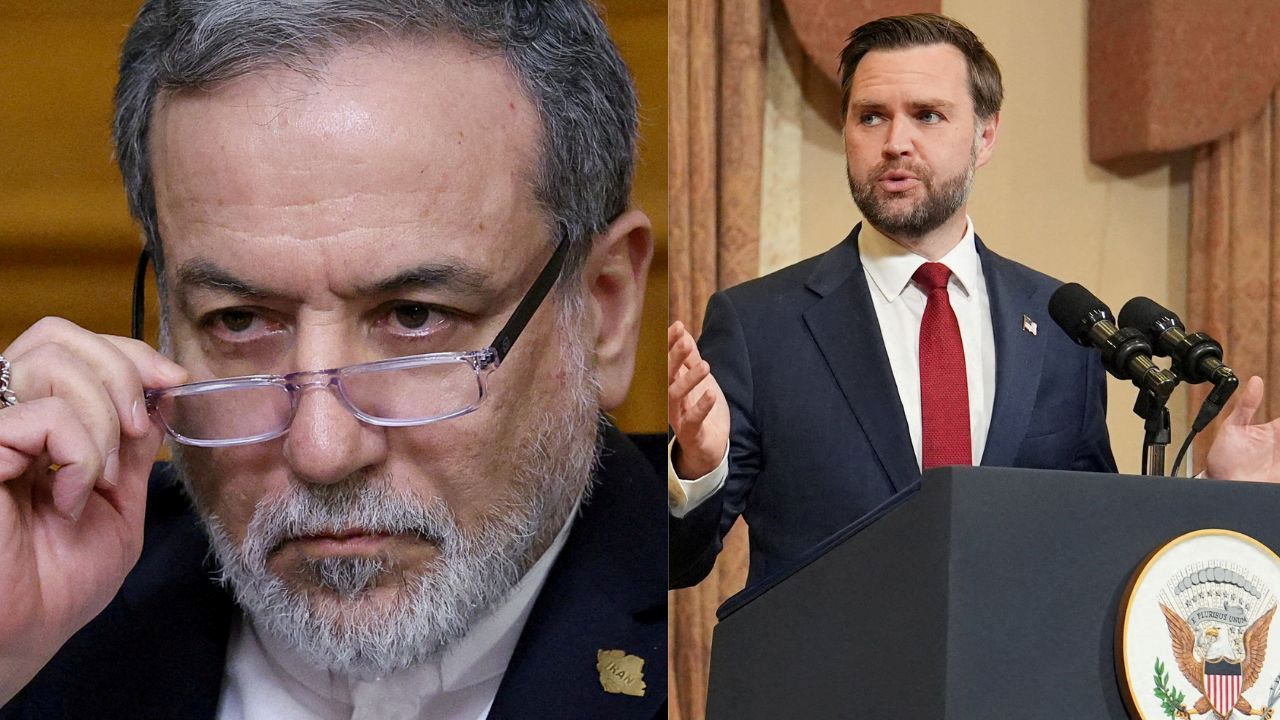
The persistent reports of impending diplomatic talks between the United States and Iran represent a ritualized management of friction rather than a pursuit of resolution. While public discourse focuses on the "where" and "when" of these meetings, the underlying mechanics are governed by a rigid cost-benefit matrix where both parties prioritize risk mitigation over breakthrough agreements. This negotiation cycle functions as a pressure valve, designed to prevent regional escalation into kinetic warfare while maintaining the domestic political leverage required by both Washington and Tehran.
The Tripartite Framework of Current US-Iran Relations
To understand why these talks recur without reaching a definitive treaty, one must analyze the three structural pillars currently dictating the boundary conditions of the relationship.
1. The Proliferation Threshold
The primary driver for US engagement is the "breakout time"—the duration required for Iran to produce enough weapons-grade uranium for a single nuclear device. Washington operates under a policy of containment, seeking to keep this window wide enough to allow for a military or political response. Iran, conversely, uses its enrichment levels as a fluctuating asset. By increasing or decreasing purity levels (specifically at the 20% and 60% marks), Tehran creates a "negotiation tax" that the US must pay via sanctions waivers or frozen asset releases just to return to the status quo.
2. The Regional Proxy Equilibrium
Talks are never limited to nuclear capabilities. They are inextricably linked to the "Gray Zone" conflicts across the Levant and the Arabian Peninsula. For the US, the objective is the decoupling of Iranian state diplomacy from the actions of non-state actors. For Iran, these groups represent "strategic depth." The talks serve as a signaling mechanism to calibrate the intensity of proxy attacks. When talks are active, the frequency of low-level kinetic friction often drops, acting as a temporary non-aggression pact without the legal burden of a signed document.
3. The Domestic Survival Function
Both administrations face internal veto players. The US executive branch must navigate a divided Congress and an electorate wary of "forever wars" or perceived weakness. The Iranian leadership must balance the pragmatic need for sanctions relief against the hardline revolutionary ideology that views direct engagement with the "Great Satan" as a compromise of state identity. Consequently, the preferred output of any meeting is a "non-paper" or an informal understanding—agreements that provide the benefits of a deal without the political cost of a formal ratification process.
The Logistics of Neutrality and Venue Selection
The "venue yet to be finalized" is not a minor administrative detail; it is a critical component of the signaling process. The choice of location dictates the level of third-party mediation and the degree of deniability.
- Oman (The Discrete Channel): Historically the preferred site for "proximity talks." Muscat provides a low-profile environment that allows for the exchange of messages via intermediaries, reducing the political risk of a leaked face-to-face photograph.
- Qatar (The Financial Clearinghouse): Doha often hosts talks when the primary focus is the technicality of asset transfers or prisoner exchanges. Using Qatar signals a focus on "transactional diplomacy" rather than "transformational diplomacy."
- Switzerland or Austria (The Multilateral Signal): Selecting a European venue usually indicates an attempt to reintegrate the P5+1 framework, signaling to global markets that a broader return to the JCPOA (Joint Comprehensive Plan of Action) or a successor framework is under consideration.
The Economic Elasticity of Sanctions
A core failure in standard reporting is the assumption that sanctions are a binary "on/off" switch. In reality, the US utilizes a "calibrated enforcement" model. The effectiveness of sanctions is subject to diminishing returns; as Iran builds "Resistance Economy" infrastructures and strengthens "Oil-for-Goods" barters with non-Western powers, the marginal utility of additional sanctions decreases.
The current talks are likely focused on the Oil Export Delta. Iran’s current export volume to specific markets remains a variable that the US can tighten or loosen without formal legislative changes. By signaling a "thaw," Washington allows for a certain volume of "leakage" in the sanctions regime, providing Iran with the liquidity required to prevent total economic collapse, in exchange for a freeze on higher-level enrichment. This is a maintenance strategy, not a solution.
The Strategic Bottleneck of Decoupling
The most significant obstacle to a sustainable agreement is the inability to decouple the nuclear file from regional ballistic missile development and maritime security. The US seeks a "longer and stronger" deal that addresses all three; Iran insists on a narrow interpretation of the 2015 framework.
This creates a Deadlock Logic:
- Iran's Position: "We will not discuss regional influence until the economic benefits of the nuclear deal are guaranteed and irreversible."
- The US Position: "We cannot guarantee long-term economic reintegration while regional assets are under threat from Iranian-aligned groups."
Because neither side can offer a credible commitment—the US cannot guarantee the policy of a future administration, and Iran cannot fully abandon its regional network without losing its primary defensive layer—the talks remain confined to "crisis management."
Mathematical Modeling of the De-escalation Spiral
If we define $V$ as the value of the diplomatic outcome, $C$ as the domestic political cost, and $R$ as the risk of regional war, the current negotiation strategy follows a specific optimization:
$$Max(V) \text{ subject to } C < \text{Threshold and } R \approx 0$$
In this model, "success" is defined not by a signed treaty, but by the absence of a catastrophic $R$. If the probability of war increases, the "Cost" (C) that leaders are willing to pay for diplomacy also increases. The reports of a new round of talks suggest that the current $R$ value has reached a level where both parties believe the cost of silence is higher than the cost of a potentially failed meeting.
The Failure of Incrementalism
The "step-for-step" approach favored by recent diplomatic efforts faces a transparency problem. For an incremental deal to work, both sides must have perfect information regarding the other's compliance. However, the IAEA’s (International Atomic Energy Agency) limited access to certain Iranian sites and the opaque nature of US sanctions-exemption letters create an environment of "mutual suspicion."
When one side takes a step (e.g., Iran slowing enrichment), the other side often views it as a temporary tactic rather than a sincere gesture. When the US issues a waiver, Iran views it as a delayed obligation rather than a concession. This prevents the "virtuous cycle" required for a comprehensive settlement.
The Pivot to "Non-Agreement Agreements"
We are entering an era of "Unwritten Understandings." The upcoming talks will likely focus on three tactical objectives:
- The Enrichment Ceiling: Maintaining Iran's 60% stockpile below a specific mass threshold to avoid triggering the "snapback" of UN sanctions.
- The Regional "Quiet for Quiet" Pact: A mutual understanding that US bases in Iraq and Syria will not be targeted in exchange for the US refraining from seizing Iranian oil tankers in international waters.
- The De-icing of Assets: The technical roadmap for moving specific tranches of Iranian funds from restricted accounts in third countries to monitored accounts for humanitarian purchases.
These are not the components of a peace treaty; they are the rules of engagement for a cold war.
Strategic Recommendation for Market and Political Analysts
Observers should ignore the rhetoric of "rejoining the deal" or "stopping the bomb." These phrases are designed for public consumption. Instead, monitor the following high-signal indicators to gauge the true direction of the talks:
- The IAEA Verification Gap: Watch for any changes in the frequency of "unexplained" uranium particles or the re-installation of monitoring cameras. This is the only hard metric of Iranian intent.
- The Shadow Banking Discount: Monitor the exchange rate of the Iranian Rial in the "free market" versus the official rate. If the gap narrows, it indicates that private actors anticipate an influx of hard currency via backchannel sanctions relief.
- The Maritime Freight Insurance Premiums: Increases or decreases in insurance costs for tankers in the Strait of Hormuz often precede official announcements of diplomatic "breakthroughs" or "setbacks," as intelligence regarding proxy activity filters through the private sector first.
The goal of this week's talks is not to change the map of the Middle East. It is to ensure that the current map does not catch fire. Expect a vague joint statement or, more likely, no statement at all, followed by a slight, unannounced reduction in regional kinetic activity. This is the optimal "holding pattern" for two powers that are too intertwined to ignore and too divided to reconcile.