Professional football operates as a high-stakes information economy where the primary currency is tactical intent. At the FIFA World Cup, every physical gesture is a data point for opposing analysts, lip-readers, and broadcast cameras. The practice of players covering their mouths while speaking—frequently criticized by traditionalists as an aesthetic or cultural annoyance—is actually a calculated defensive maneuver designed to mitigate the risks of information leakage. This behavior is a direct response to the democratization of high-definition broadcast technology and the professionalization of tactical surveillance.
The Information Security Framework of Pitch Communication
Communication on the pitch serves three primary functions: immediate tactical adjustments, psychological management of teammates or officials, and strategic redirection. When a player covers their mouth, they are implementing a primitive but effective form of encryption. The necessity of this "analog encryption" stems from three distinct threat vectors:
- Tactical Espionage: Modern coaching staffs include dedicated analysts who monitor broadcast feeds in real-time. Identifying a specific instruction regarding a set-piece variation or a shift in defensive shape allows for near-instantaneous counter-adjustments.
- Reputational Exposure: The ubiquity of lip-reading experts hired by tabloids and digital media outlets means that any exchange with an opponent or referee can be transcribed and publicized within minutes. This creates a liability for players who may use aggressive language or reveal internal team friction.
- The Metadata of Performance: Even without a full transcription, the visible tension in a player’s jaw or the specific direction of their gaze during speech provides cues about their physical fatigue or mental state.
The Evolution of the Broadcast Gaze
The shift from standard definition to 4K and 8K broadcast standards has fundamentally altered the privacy landscape of the stadium. During the 20th century, the distance between the camera lens and the player provided a natural blur that protected verbal exchanges. Today, ultra-motion cameras and high-magnification lenses allow for granular visual capture from hundreds of feet away.
This technological progression creates a "Panopticon Effect" where players must assume they are being watched at all times. The reflex to cover the mouth is not an affectation; it is an adaptation to a high-surveillance environment. If a player fails to obscure their speech, they effectively hand a transcript of their private tactical discussions to the world.
The Three Pillars of Tactical Obfuscation
To understand why players prioritize this behavior, we must analyze the specific components of on-field communication that require protection.
Variable Protection in Set-Piece Coordination
During a corner kick or free kick, the attacking team often uses coded signals. These might be numerical (e.g., "Option 2") or name-based. If an opponent identifies that "Option 2" consistently results in a near-post run, the strategic advantage of the set-piece is neutralized. Covering the mouth prevents the opposition from linking a verbal command to a specific physical outcome, maintaining the element of surprise.
Arbitrator Influence and Conflict Management
Interactions with referees are a psychological chess game. Players often attempt to influence an official's perception of a foul or a previous booking. By covering their mouths, players can exert pressure or express frustration without providing the visual evidence necessary for a retroactive disciplinary action or a public relations crisis. It allows for a level of "controlled aggression" that is shielded from the scrutiny of the Video Assistant Referee (VAR) in non-sporting contexts.
Inter-Team Psychological Warfare
Communication between opponents is rarely polite. It often involves attempts to "break" the concentration of a rival. Obscuring these comments prevents the broadcast from capturing unsporting behavior, while still allowing the player to execute the psychological tactic. This creates a zone of deniability that is essential for maintaining a clean public image while engaging in the "dark arts" of elite competition.
The Cost Function of Communication Barriers
While covering the mouth secures information, it introduces a physical cost. Effective communication requires clarity of sound and the integration of facial expressions to convey urgency.
- Acoustic Attenuation: Placing a hand over the mouth muffles the voice, requiring the player to expend more energy to be heard over crowd noise, which can reach levels exceeding 100 decibels in World Cup venues.
- Visual Signal Loss: Teammates often rely on peripheral vision to gauge a leader's intensity. Masking the face removes these vital non-verbal cues, potentially leading to hesitation in high-speed transition moments.
- Cognitive Load: The habit requires a conscious motor action. In a sport where split-second decisions dictate outcomes, the requirement to raise a hand to the face adds a fractional delay to the communication cycle.
The persistence of the behavior indicates that the perceived value of information security consistently outweighs these physical and cognitive costs.
Historical Precedents and the Professionalization of Lip Reading
The rise of lip-reading as a tool for sports journalism reached a tipping point in the mid-2010s. In several high-profile European league incidents, players were sanctioned based on televised evidence of their speech. This shifted the player's perspective from seeing the camera as a bridge to the fans to seeing it as a witness for the prosecution.
The World Cup amplifies this because the linguistic diversity of the audience increases the likelihood that someone, somewhere, can translate the specific dialect or slang used on the pitch. National teams now include media training that specifically addresses camera awareness, treating the pitch as a "live" environment where no word is private.
Technological Solutions and Future Countermeasures
As AI-driven lip-reading software becomes more sophisticated, the manual act of covering the mouth may prove insufficient. Standard computer vision models can now interpret speech with high accuracy even from skewed angles. This suggests a future where tactical communication must move away from verbal cues entirely.
We are likely to see an increase in:
- Physical Coded Gestures: Complex hand signals similar to those used in American baseball or volleyball to dictate play.
- Haptic Communication: The potential for wearable technology (though currently restricted by FIFA for real-time coaching) that provides tactile signals to players.
- Sub-vocal recognition: Future integrations where players use bone-conduction or micro-microphones to communicate without visible mouth movement, though this remains in the realm of theoretical development for professional sports.
The Structural Logic of the Red Card Rumors
The suggestion that governing bodies should "red card" or penalize players for covering their mouths is a misunderstanding of the fundamental rights to privacy and the mechanics of the game. From a regulatory standpoint, enforcing such a rule would be impossible.
How would an official distinguish between a player wiping sweat, adjusting a mouthguard, or intentionally obscuring speech? Any attempt to legislate against this behavior would create a secondary layer of subjective officiating that would further complicate the game's flow. The "offense" is purely aesthetic and does not violate the Laws of the Game regarding sporting integrity.
Strategic Recommendation for Technical Directors
Technical directors and head coaches should stop viewing mouth-covering as a player quirk and start treating it as a formal component of the team’s Information Security (InfoSec) protocol.
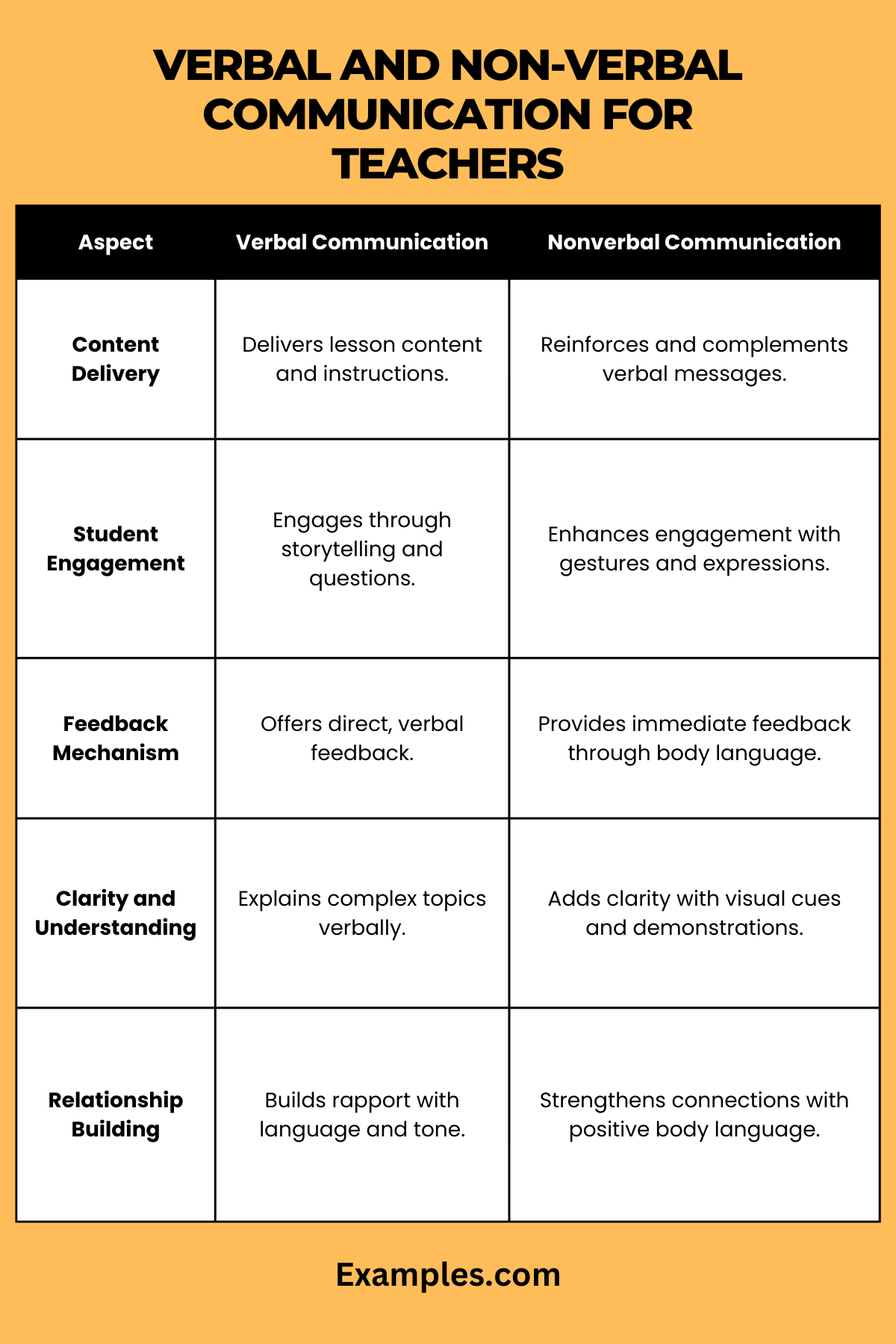
- Standardize Non-Verbal Coding: Develop a comprehensive library of hand signals and body triggers for every phase of play. This reduces the reliance on verbal commands that require masking.
- Conduct "Broadcast Audits": Review match footage not just for player movement, but for "visibility gaps." Identify which players are most prone to revealing tactical instructions through their speech.
- Optimize Proximity Communication: Train players to deliver instructions while moving, using the back of the head or the shoulder as a natural shield against primary camera angles.
The pitch is an arena of total visibility. In such an environment, the hand over the mouth is the only "blind spot" a player can create for themselves. Until the technology of the broadcast changes, or the stakes of information leakage are lowered, the practice remains a vital, albeit unrefined, tool for maintaining a competitive edge. Expect the frequency of this behavior to increase as the data-mining capabilities of opposing teams continue to evolve. Managers who fail to formalize these "dark" communication channels risk losing the tactical narrative of the match to an opponent who is better at reading between the lines—and the lips.