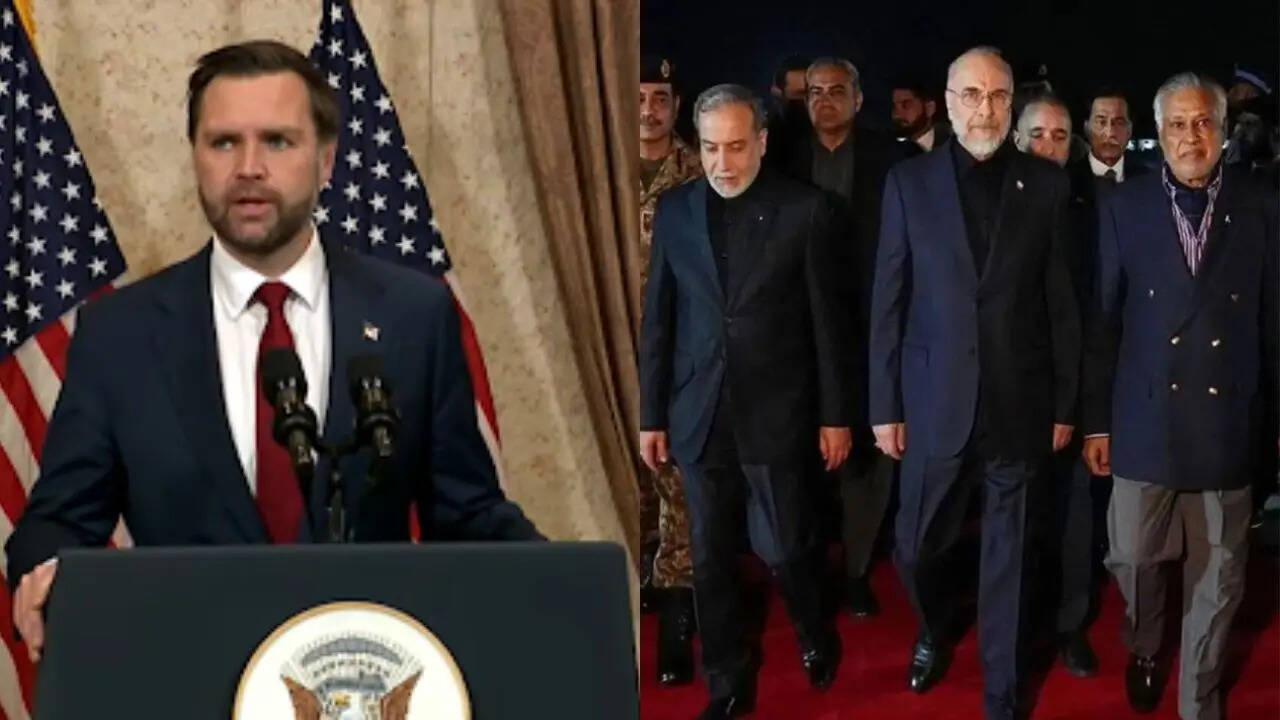
The collapse of the 21-hour marathon session in Islamabad between Iranian and United States intermediaries was not a failure of will, but an inevitable byproduct of misaligned escalation scales. When diplomatic actors engage in high-stakes mediation without a shared definition of "status quo," the duration of the talk serves only to amplify the sunk-cost fallacy rather than bridge ideological gaps. The Islamabad session reached a terminal bottleneck because the parties attempted to trade tangible security concessions for intangible political promises—a fundamental breach of transactional symmetry.
The Triad of Failed Mediation
To understand why the dialogue dissolved after nearly a full day of continuous negotiation, we must categorize the friction points into three distinct structural pillars. Each pillar represents a layer of the negotiation that remained unresolved, creating a cumulative weight that the mediation framework could not sustain.
- Asymmetric Verification Requirements: The U.S. demand for "immediate, verifiable cessation" of proxy enrichment activities encountered the Iranian requirement for "prioritized, irreversible sanctions relief." This creates a temporal paradox where neither party is willing to be the first mover due to the perceived risk of a "compliance gap"—a period where one side has fulfilled its obligation while the other maintains its leverage.
- The Sovereignty-Security Trade-off: The Islamabad framework attempted to de-link regional maritime security from nuclear enrichment levels. However, for Tehran, these variables are functionally interdependent. They view regional influence as a defensive perimeter; to reduce one is to compromise the structural integrity of the other.
- Third-Party Intermediary Friction: While Pakistan provided the physical venue, the absence of a guarantor with sufficient economic or military weight to enforce the terms of a "handshake agreement" meant the talks lacked an enforcement mechanism. Without a "stick" to penalize backsliding, the "carrots" offered remained speculative.
The Cost Function of the 21-Hour Marathon
Diplomatic endurance is often mistaken for progress. In reality, the length of the Islamabad session increased the "political price of failure" for both administrations. As the hours passed, the domestic audiences in Washington and Tehran grew more entrenched.
The U.S. delegation faced a "Hardline Constraint." Every hour spent at the table without a signed memorandum was interpreted by domestic rivals as a sign of weakness or "appeasement." Conversely, the Iranian delegation operated under a "Revolutionary Mandate," where prolonged engagement with the "Great Satan" requires a visible, immediate victory to justify the optics of the meeting. When the 15-hour mark passed without a breakthrough on the central issue of central bank asset unfreezing, the marginal utility of remaining in the room dropped below the political cost of being seen to "give in."
Logic of the Escalation Ladder
The failure in Islamabad can be modeled through the lens of an escalation ladder where both sides are attempting to move down, but their rungs are unevenly spaced.
- Rung 1: Rhetorical De-escalation. Both sides succeeded here, tempering official statements in the weeks leading up to Islamabad.
- Rung 2: Technical Transparency. This is where the collapse began. The U.S. required access to specific hardened sites that Iran categorizes as "non-nuclear military infrastructure."
- Rung 3: Economic Normalization. Iran demanded a "Snap-Back Immunity" clause—a guarantee that sanctions would not be re-applied for at least 48 months regardless of political shifts in Washington. The U.S. executive branch cannot constitutionally provide such a guarantee to a non-treaty agreement, creating a legal impasse that no amount of "marathon" talking can resolve.
This structural misalignment means that the talks did not fail because of a specific argument or personality clash. They failed because the U.S. was negotiating within a Legal-Rational Framework (constrained by domestic law and institutional checks), while Iran was negotiating within a Geopolitical-Existential Framework (prioritizing regime survival and regional depth). These two systems do not share a common currency of exchange.
The Buffer Zone Dilemma
A significant portion of the 21 hours was reportedly dedicated to the "Buffer Zone" concept—a geographical and digital space where both nations would agree to cease hostile operations. The technical breakdown occurred over the definition of "hostile."
The U.S. definition includes cyber-espionage and the funding of non-state actors in the Levant. The Iranian definition focuses almost exclusively on physical military presence in the Persian Gulf and economic "maximum pressure" tactics. Because the parties could not agree on the boundaries of the "conflict theater," they could not define what "ceasefire" actually entailed. This led to a situation where a "ceasefire" in one domain (naval) would be viewed as an "opening for aggression" in another (cyber), leading to a net-zero gain in perceived security.
Quantifying the Islamabad Breakout
The primary metric used by analysts to judge these talks is "breakout time"—the duration required for Iran to produce enough fissile material for a weapon. However, the Islamabad talks shifted the focus to "Breakout Trust."
- Trust Decay Constant: For every year an agreement is absent, the "Security Premium" (the amount of extra concession required to prove sincerity) increases by an estimated 15-20%.
- Verification Latency: The time between a suspected violation and an international inspection. The U.S. pushed for a 24-hour window; Iran held at 14 days. The 13-day delta represents a "sovereignty gap" that functioned as the final nail in the coffin for the Islamabad draft.
Regional Ripple Effects and Proxy Feedback Loops
The collapse in Islamabad immediately reverberates through the regional security architecture. Non-state actors who were in a "holding pattern" during the 21-hour session now view the stalemate as a green light for renewed kinetic activity. This creates a feedback loop: increased proxy activity makes it harder for Washington to return to the table, which in turn forces Tehran to rely more heavily on its proxy "deterrent."
The second limitation of the Islamabad model was the exclusion of regional stakeholders—specifically Riyadh and Tel Aviv—from the immediate proximity of the talks. While the dialogue was bilateral in spirit, the shadow of these third parties dictated the "Floor" and "Ceiling" of what the U.S. could offer. Washington could not offer a "Security Guarantee" to Iran that would simultaneously be viewed as a "Betrayal" by its regional allies. This "Triangular Constraint" meant the U.S. negotiators were essentially handcuffed before they entered the room.
The Strategic Pivot toward "Managed Friction"
Since a comprehensive "Grand Bargain" has proven mathematically impossible under current domestic constraints in both nations, the strategy must pivot. The Islamabad collapse signals the end of the "Comprehensive Agreement" era. The move now is toward "Fractional Stabilization"—small, disconnected agreements that do not require a central "Trust" pillar.
Future engagements must abandon the "Marathon" format. Long sessions create a pressure-cooker environment that favors emotional fatigue over rational calculation. Instead, a "Disaggregated Negotiation" model is required:
- Isolate the Maritime Channel: Establish a direct military-to-military de-confliction line in the Gulf that operates independently of nuclear or economic talks. This treats the symptom (potential accidental war) without needing to cure the disease (ideological enmity).
- Dollar-for-Compliance Tranches: Move away from "Sanctions Relief" (which is binary and hard to reverse) to "Escrow Access." Funds are released into third-party accounts (e.g., in Qatar or Oman) and are accessible only for humanitarian purchases upon verified technical milestones. This removes the "Snap-Back" legal hurdle.
- Digital Non-Aggression Pacts: Formalize a "Below-Threshold" understanding on cyber activities. This involves defining specific civilian infrastructure targets as "Off-Limits," similar to the Cold War-era understandings regarding nuclear command and control.
The failure in Islamabad was a necessary clarification of the limits of traditional diplomacy in an era of multi-domain conflict. The 21 hours proved that "staying in the room" is not a substitute for "reducing the variables." To move forward, the objective must shift from "solving the conflict" to "quantifying the competition." Only by defining the exact costs of escalation can both parties begin to build a framework that survives the volatility of their respective internal politics.