The maritime artery that sustains the modern world is currently under a self-imposed tourniquet. While Western diplomatic cables describe an "extended ceasefire," the reality on the water in the Strait of Hormuz is a chaotic theater of gunfire, seizures, and strategic defiance. Iran has effectively signaled that the waterway will remain impassable, citing what it calls systematic breaches of the truce by U.S. and allied forces. This is not merely a diplomatic spat; it is the physical manifestation of a total breakdown in trust that has pushed Brent Crude toward the $100 mark and left 20,000 seafarers caught in a high-stakes game of chicken.
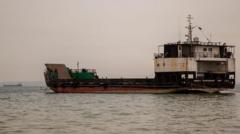
Tehran’s refusal to reopen the Strait hinges on a fundamental dispute over what a "ceasefire" actually entails. To the U.S. administration, the extension announced this Tuesday was a window for peace talks in Islamabad. To the Islamic Revolutionary Guard Corps (IRGC), it was a "ploy to buy time" while the U.S. Navy maintains a suffocating blockade on Iranian ports. This disconnect reached a breaking point on Wednesday when IRGC gunboats fired upon and seized the Panama-flagged MSC Francesca and the Liberia-flagged Epaminondas.
The Anatomy of a Failed Truce
The current crisis traces back to the February 28 joint strikes and the subsequent naval blockade. While a 10-day ceasefire was intended to facilitate humanitarian aid and diplomatic movement, both sides have spent that time reinforcing their positions rather than de-escalating. The Iranian leadership argues that the U.S. seizure of an Iranian cargo ship in the Gulf of Oman last weekend was the first domino to fall.
In Tehran’s view, you cannot have a ceasefire while a blockade is active. It is an oxymoron that the IRGC has used to justify its "maritime violations" enforcement. By seizing tankers under the guise of legal infractions, Iran is not just retaliating; it is asserting sovereign control over a chokepoint that handles 20% of the world's oil and gas.
The Broken Islamabad Pipeline
The second round of peace talks, which were supposed to feature Vice President JD Vance in Pakistan, has effectively evaporated. Sources within Tehran suggest that the Iranian negotiating team now sees "no prospect" of attending further sessions. The internal power struggle in Iran has paralyzed their ability to compromise. While some politicians might seek an exit strategy to alleviate the brutal economic pressure, the military wing—specifically figures like Vahidi and Zolghadr—has reportedly vetoed any concessions.
For the global market, this is the worst-case scenario. We are no longer dealing with a singular government, but a fractured state where the naval commanders on the coast have more influence over global energy prices than the diplomats in the capital.
The Economic Toll of a Restricted Strait
Before the conflict ignited, roughly 138 ships moved through the Strait daily. Today, that number has plummeted to an average of five or six, most of which have direct ties to Iranian interests. The consequences are staggering:
- Energy Paralysis: QatarEnergy has declared force majeure on LNG exports, a move that has sent shockwaves through European markets already reeling from the suspension of Russian gas.
- The Caloric Crisis: The Gulf Cooperation Council (GCC) states rely on the Strait for 80% of their food imports. A "grocery supply emergency" has seen staples airlifted into the region, causing price spikes of up to 120%.
- Insurance No-Mans-Land: War risk premiums have made commercial transit through the Gulf of Oman a financial impossibility for all but the most desperate or state-backed operators.
Weaponizing the Waterway
The IRGC's tactics have shifted from simple harassment to sophisticated, targeted intervention. On Wednesday morning, the master of a container ship reported an IRGC boat closing in and opening fire on the bridge. This wasn't a warning shot; it was a disabling strike designed to force a surrender.
This level of aggression suggests that Iran has moved beyond using the Strait as a bargaining chip. They are now using it as a primary weapon of war. By keeping the Strait closed, Tehran believes it can inflict enough global economic pain to force the U.S. to lift its port blockade without Iran having to make a single nuclear or missile concession. It is a brutal calculation that ignores the collateral damage to neutral shipping and the sailors currently stranded in the crossfire.
The Undersea Threat
There is a growing concern among intelligence analysts that the escalation won't stop at the surface. IRGC-linked media have begun dropping hints about the vulnerability of undersea internet cables in the Persian Gulf. If the "ceasefire" continues to be interpreted as a one-sided restriction, the physical infrastructure of global communication could be the next target in the IRGC’s "military response" to the siege.
The Mirage of Diplomacy
The U.K. has convened a 30-country military conference to plan for a "forced reopening" of the Strait. This is a dangerous pivot. History shows that clearing the Strait of Hormuz is not a weekend operation; it involves months of mine-clearing and constant protection against asymmetrical drone swarms and shore-to-ship missiles.
The U.S. extension of the ceasefire was intended to show "strategic patience," but in the eyes of the IRGC, patience is just another word for hesitation. While Washington waits for a "unified proposal" from Tehran, the Iranian navy is busy rewriting the rules of maritime law one seizure at a time. The ceasefire is not being breached; it is being redefined as a permanent state of low-intensity conflict.
The global economy cannot survive a long-term closure of this corridor. If the Islamabad talks are truly dead, the next phase won't be another ceasefire extension—it will be a direct, kinetic confrontation to decide who actually owns the water. Every day the Strait remains closed, the likelihood of a diplomatic solution fades, replaced by the cold logic of naval engagement. The "invisible" ceasefire has failed because it tried to ignore the reality that, in the Strait of Hormuz, you are either in control or you are a target.
Monitor the price of Brent Crude and the movement of the U.S. 5th Fleet. Those are the only two metrics that matter now. Forget the press releases from Islamabad; the real story is written in the smoke rising from the bridges of seized tankers.


