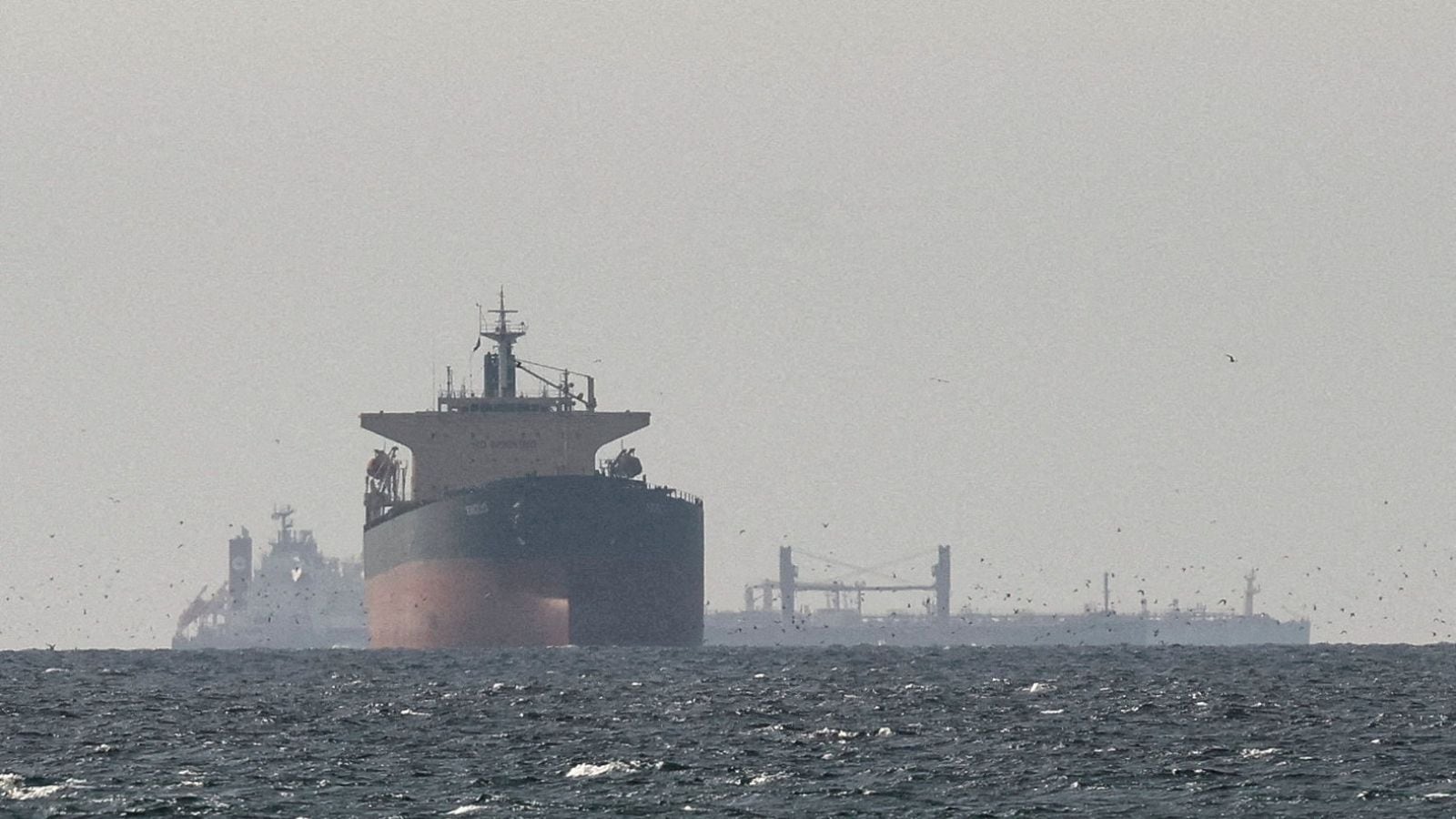
The maritime ping-pong between Washington and Tehran just hit a dangerous new peak. After a few hours of hopeful headlines on Friday suggesting the Strait of Hormuz was "completely open," the reality on the water has shifted back to a state of high-tension gridlock. By Saturday morning, Iran's Islamic Revolutionary Guard Corps (IRGC) pulled the rug out from under the global energy market, declaring that the waterway has returned to its "previous state" of strict military management.
If you're wondering why oil prices are twitching, look at the timeline. President Trump spent Friday night on Air Force One essentially telling reporters that while the strait might be open for some, the U.S. naval blockade on Iranian ports is staying put "in full force." He even floated the possibility of "dropping bombs again" if a final deal isn't reached by the time the current ceasefire expires next Tuesday. Iran's response was predictable and swift. They basically said if their ships can't move, nobody's ships are moving comfortably.
The Mirage of an Open Waterway
The confusion started when Iranian Foreign Minister Abbas Araghchi claimed the passage was open for commercial vessels. It looked like a win for global trade. Even Trump hopped on Truth Social to celebrate the news in all caps. But the honeymoon lasted about as long as a typical layover.
The core of the problem is the U.S. blockade. Trump is using it as his primary "transactional" leverage. He wants a 100% completed deal—including the total removal of Iran's enriched uranium—before he lets a single Iranian tanker breathe. Tehran sees this as a direct violation of the existing truce. On Saturday, we saw the consequences of this rhetorical collision. The IRGC didn't just issue a statement; they reportedly put boots and gunboats back into active interference patterns.
- Reports of Gunfire: At least two merchant vessels, including an Indian-flagged supertanker, had to reverse course after encountering Iranian gunboats.
- Strict Management: The IRGC’s "previous state" means they are once again demanding explicit clearance for ships to pass through specific corridors near Larak Island.
- The Blockade Factor: As long as the U.S. Navy maintains its wall around Iranian ports, Iran will likely keep its hand on the throat of the world's most important oil artery.
What Trump Means by Full Force
When Trump says "full force," he's not just talking about sanctions. He's talking about a physical naval presence that has effectively halted Iranian maritime trade for weeks. To Trump, this is "Art of the Deal" on a global scale. He told CBS News that Iran has "agreed to everything," but he's not lifting the pressure until the enriched uranium is physically out of the country.
I've seen this play before. The U.S. administration is betting that the Iranian economy is too fragile to sustain a prolonged blockade. But Iran has a history of using the Strait of Hormuz as their only real counter-lever. If they can't sell oil, they make sure the cost of shipping everyone else's oil becomes prohibitively expensive or physically dangerous.
Why a Deal is Still Such a Mess
The "transaction" Trump keeps talking about is supposedly being hammered out with help from mediators in Egypt and Pakistan. But there's a massive disconnect. Trump claims the uranium removal is a settled point; Iranian state media is concurrently reporting that their "sacrosanct" right to enrich uranium isn't going anywhere.
You've got two sides claiming victory while the actual situation on the ground—or the water—deteriorates. The 10-day truce in Lebanon between Israel and Hezbollah is technically holding, but the U.S.-Iran ceasefire is on a much shorter leash. It expires this Tuesday, April 22.
The Immediate Impact on Global Shipping
Don't let the diplomatic talk fool you. For a ship captain in the Persian Gulf right now, the situation is a nightmare.
- Insurance Premiums: Expect war-risk insurance to stay at record highs. No insurer is going to lower rates while the IRGC is firing "warning shots" at tankers.
- Alternative Routes: There aren't many. About 20% of the world's oil flows through that narrow gap. You can't just bypass it without massive infrastructure changes that don't exist yet.
- Escalation Risk: With U.S. service members already killed in previous weeks of this conflict, the margin for error is zero. A single stray shell or a misunderstood maneuver by a gunboat could end the ceasefire before the Tuesday deadline.
What to Watch Over the Next 72 Hours
Forget the social media posts. Watch the vessel trackers. If the supertankers that turned around Saturday don't start moving again by Sunday night, we're headed for a violent Tuesday.
Keep an eye on the Islamabad talks. If Trump actually flies to Pakistan for a signing ceremony, the blockade might ease. If he stays in D.C. and keeps talking about "dropping bombs," the Strait of Hormuz will remain a military zone, not a trade route. Honestly, the smartest move right now is to assume any "opening" of the strait is temporary until the U.S. Navy physically backs off from the Iranian coastline.
Check the price of Brent crude on Monday morning. If it spikes back above $95, the market has already decided that Trump’s "full force" and Iran's "previous state" mean the war isn't over yet. Stay clear of shipping stocks tied to the region until the Tuesday deadline passes without a renewal of hostilities.