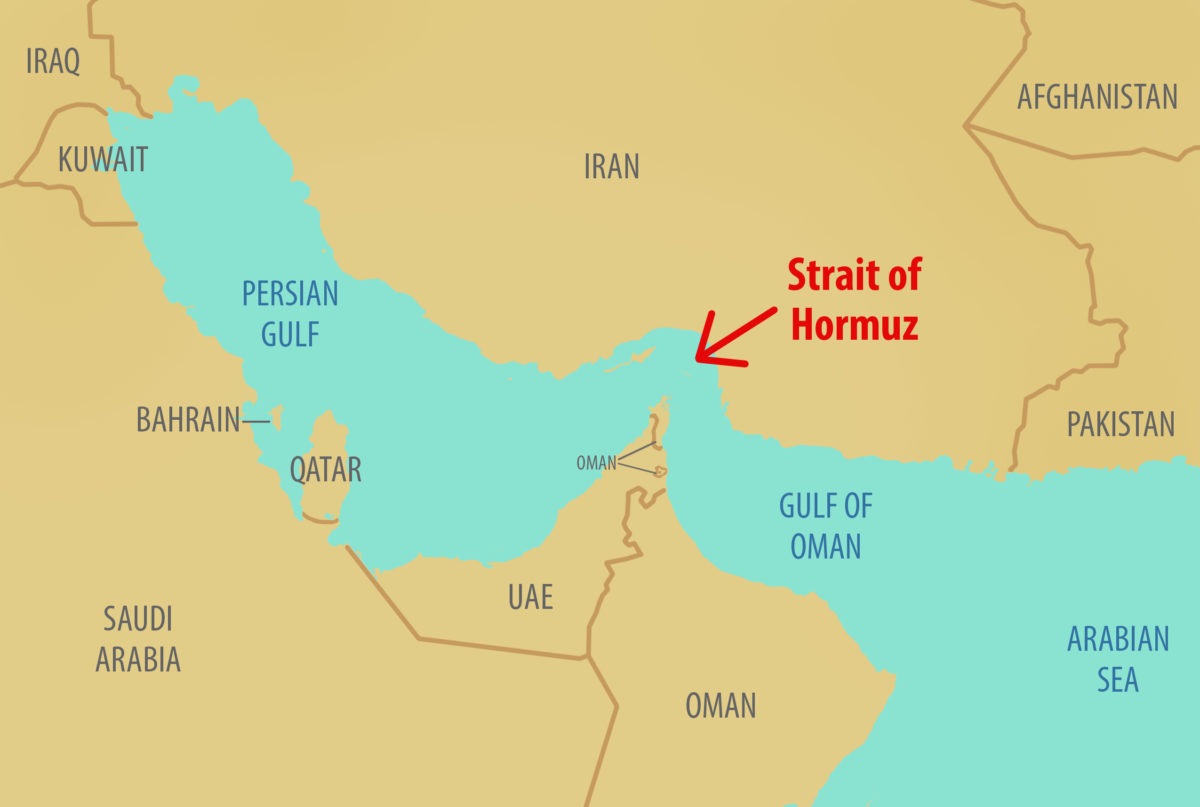
The Iranian Ministry of Foreign Affairs recently asserted that the Strait of Hormuz remains "open" to all commercial traffic, provided that such vessels coordinate directly with Iran's naval forces. This statement, delivered by Foreign Minister Abbas Araghchi, represents a shift from raw blockade rhetoric toward a more sophisticated model of administrative sovereignty. By demanding coordination as a prerequisite for passage, Tehran is attempting to codify its role as the de facto regulator of a chokepoint that handles approximately 21 million barrels of oil per day—roughly 21% of global petroleum liquid consumption.
The strategic pivot here is not the threat of closure, but the imposition of a compulsory coordination framework. This framework forces global shipping entities to choose between recognizing Iranian jurisdictional authority or risking kinetic intervention. Expanding on this topic, you can find more in: The Adani Indictment Collapse and the Fragile Future of Foreign Bribery Law.
The Dual-Axe Logic of Maritime Chokepoints
To understand the implications of the NDTV report, one must analyze the Strait of Hormuz through the lens of the Chokepoint Elasticity Model. Most analyses treat the Strait as a binary (open or closed) system. In reality, it operates on a spectrum of friction.
- Kinetic Friction: Physical harassment, seizure of vessels, or mining of waters. This is high-cost for the initiator and triggers immediate international military responses.
- Administrative Friction: The requirement for "coordination," radio check-ins with the Islamic Revolutionary Guard Corps Navy (IRGCN), and the sharing of manifest data.
By emphasizing the latter, Iran seeks to achieve "sovereign normalization." If commercial fleets comply with Iranian naval directives to ensure safe passage, they implicitly validate Iran’s legal claim to manage the waterway's traffic. This creates a precedent that bypasses the United Nations Convention on the Law of the Sea (UNCLOS), specifically the right of transit passage through international straits. Observers at Bloomberg have shared their thoughts on this matter.
The Cost Function of Vessel Coordination
For a global shipping firm, "coordination with naval forces" is not a simple radio call. It introduces a variable cost structure that impacts the entire energy supply chain.
The Information Asymmetry Risk
When a vessel coordinates with a regional naval power under tension, it surrenders operational data. This includes precise GPS telemetry, cargo specifics, and destination details. In a high-friction environment, this data becomes a targeting asset. The risk is that "coordination" today provides the intelligence for "interdiction" tomorrow.
Insurance Premium Volatility
Lloyd’s Market Association and the Joint War Committee (JWC) price risk based on the predictability of passage. The requirement for coordination introduces a human element—Iranian naval discretion—into the transit equation. This unpredictability is a primary driver of War Risk Surcharges. Even if the Strait remains "open," the cost of insuring a VLCC (Very Large Crude Carrier) increases the moment passage is contingent on the approval of a non-neutral actor.
The Speed-Consumption Tradeoff
Mandated coordination often involves specific routing instructions or "holding zones" for inspection. For a tanker, any deviation from the optimal transit speed (typically 13-15 knots) or the established Traffic Separation Scheme (TSS) increases bunker fuel consumption and delays downstream delivery. A 24-hour delay at the mouth of the Strait can cost an operator between $50,000 and $100,000 in daily hire rates alone, excluding fuel.
Structural Bottlenecks in the Transit Passage Doctrine
The Iranian position exploits a specific legal ambiguity in the UNCLOS framework. While UNCLOS Part III establishes the right of transit passage, Iran has signed but not ratified the treaty. Tehran maintains that it is only bound by the "innocent passage" regime, which allows a coastal state to temporarily suspend passage if it is deemed prejudicial to its peace, good order, or security.
By framing coordination as a safety and security requirement, Iran is effectively attempting to downgrade the Strait’s status from an International Waterway to a Contiguous Security Zone.
- The Verification Gap: There is no neutral third party to verify if a ship’s "non-coordination" is a legitimate security threat or a political pretext.
- The Enforcement Loop: Once a naval force establishes a "requirement" for coordination, any vessel failing to comply is technically "non-compliant," providing a legalistic veneer for seizure.
The Triad of Regional Energy Vulnerability
The demand for coordination impacts three distinct categories of stakeholders, each with different degrees of maneuverability.
1. The Rentier States (Saudi Arabia, UAE, Kuwait)
These nations are captive to the geography of the Persian Gulf. While Saudi Arabia has the East-West Pipeline (Abqaiq-Yanbu) with a capacity of roughly 5 million barrels per day, and the UAE has the ADCOP pipeline to Fujairah, these bypasses cannot handle the aggregate volume of the region. The majority of their sovereign wealth is still subject to the "coordination" fee imposed by Tehran.
2. The Asian Demand Centers (China, India, Japan, South Korea)
Approximately 80% of the oil flowing through Hormuz is destined for Asian markets. For these nations, coordination is a matter of energy security. China, in particular, maintains a strategic partnership with Iran, which may exempt its flagged vessels from the more stringent "coordination" hurdles faced by Western-aligned fleets. This creates a Bifurcated Transit Market where certain flags enjoy lower administrative friction than others.
3. The Global Shipping Conglomerates
Companies like Maersk or MSC operate on thin margins and high volumes. The logistical burden of naval coordination—communicating with the IRGCN while simultaneously adhering to Western sanctions regimes—creates a "Compliance Paradox." Interacting with certain Iranian entities to ensure ship safety could, in theory, trigger secondary sanctions violations for Western firms.
Measuring the Impact of Naval Oversight
To quantify the effect of this policy, analysts must track the Delta of Transit Duration. If the average transit time for a tanker through the Strait increases by even 15% due to "coordination procedures," the global tanker supply effectively shrinks.
Ships spending more time in the Strait are ships not available for the next loading cycle. This creates a "phantom" supply shortage. The market reacts not to a physical lack of oil, but to the decreased velocity of the global tanker fleet.
The Strategic Play: Diversification vs. De-escalation
The NDTV report signals that Iran is moving toward a "Management of Friction" strategy. They are not looking to start a war that would destroy their own port infrastructure at Bandar Abbas; rather, they are looking to tax the world's patience and the world's wallet.
The tactical response for energy importers and shipping firms involves three specific actions:
- Flag-State Arbitrage: Utilizing flags that maintain high diplomatic standing with Tehran to minimize the likelihood of "administrative inspections."
- Expansion of Circumvention Infrastructure: Investing in the "Omega" projects—pipelines that bypass Hormuz entirely. However, the current throughput capacity of these pipelines is less than 40% of the total Gulf output.
- Shadow Fleet Utilization: The continued use of non-transparent shipping networks that operate outside Western insurance and regulatory circles, which are already accustomed to "coordinating" with Iranian authorities.
The insistence on coordination is a move to transform the Strait of Hormuz from a shared global resource into a controlled Iranian asset. The "open" status is a conditional reality, subject to a geopolitical toll that is paid in data, recognition, and diplomatic concession. Stakeholders must now price the "Coordination Surcharge" into every barrel of Brent or Murban crude produced behind the chokepoint. The era of frictionless passage in the Persian Gulf has been replaced by a system of managed volatility.