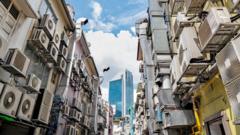
The global media loves a predictable narrative. They land at Changi, feel the humidity hit them like a wet wool blanket, and immediately start typing the same tired script: Singapore is "addicted" to air conditioning. They frame it as a moral failing, a luxury habit that a "responsible" city-state needs to break. They point at the glass towers of the CBD and see an environmental crime scene.
They are dead wrong.
Air conditioning isn't an addiction in Singapore. It is the fundamental infrastructure that makes high-density equatorial civilization possible. Calling a Singaporean "addicted" to AC is like calling a Londoner "addicted" to heating in January or a fish "addicted" to water. It is the basic requirement for cognitive function and economic output in a region where the "wet-bulb temperature" frequently flirts with the limits of human endurance.
The lazy consensus suggests we can simply "design our way out" with cross-ventilation and ceiling fans. That is a fantasy sold by people who spend their afternoons in climate-controlled offices in London or New York.
The Productivity Tax of the Tropics
Let’s talk about the biological reality that the "anti-AC" crowd ignores. Human cognitive performance isn't static. It’s tied to thermoregulation. When your body is fighting to dump heat in 90% humidity, your brain isn't focused on writing code, managing global supply chains, or performing surgery. It’s focused on not dying.
Studies from institutions like the Harvard T.H. Chan School of Public Health have shown that students in non-air-conditioned buildings perform significantly worse on cognitive tests during heatwaves than those in cooled environments. In Singapore, it is effectively a "heatwave" 365 days a year.
To suggest that Singapore should dial back its cooling is to suggest that Singapore should accept a permanent 15% reduction in GDP. I’ve watched regional firms try to "go green" by raising the server room temperatures or cutting the lobby cooling. What happens? Error rates climb. Absenteeism rises. The "energy saving" is instantly eaten by the cost of human inefficiency.
The Passive Cooling Myth
The most frequent "solution" offered by critics is a return to traditional architecture. They point to the "Black and White" colonial bungalows with their high ceilings and wide verandas.
Here is the inconvenient truth: Those houses were designed for a tiny elite living on massive plots of land with zero surrounding heat islands.
You cannot apply the physics of a 1920s bungalow to a 2026 vertical city. When you have 6 million people living on a small island, the Urban Heat Island (UHI) effect is a physical wall. The concrete, asphalt, and glass absorb solar radiation all day and bleed it out all night. Cross-ventilation doesn't work when the air outside is 31°C and stagnant. You aren't "ventilating"; you’re just moving hot, wet air around a room.
The critics argue that AC units contribute to the UHI effect by dumping waste heat outside. This is true. But the solution isn't to turn them off and suffer; the solution is to move toward District Cooling Systems (DCS).
Singapore is already doing this in Marina Bay. Instead of 50 individual chillers on 50 roofs, you have one massive, hyper-efficient underground plant. It’s 40% more efficient. It’s industrial-scale survival. That is the "nuance" the "addiction" narrative misses. We don't need less cooling; we need more sophisticated, centralized cooling.
The Efficiency Paradox
People love to cite the "25°C Rule." They say if everyone just set their thermostats to 25°C, the energy crisis would vanish.
This is a classic case of focusing on the wrong metric. Setting a thermostat to 25°C in a leaky, poorly insulated building is far more wasteful than setting it to 21°C in a high-performance, airtight envelope.
The real enemy isn't the temperature setting; it's the thermal bridge. It's the cheap aluminum window frames and the single-pane glass that permeate older HDB blocks and office buildings. If we want to talk about "crises," let’s talk about the construction industry's refusal to adopt triple-glazing or vacuum-insulated panels because they "cost too much."
We are subsidizing cheap building materials with high electricity bills. If you want to fix the energy crisis, stop blaming the person holding the remote and start suing the developer who built a glass box in the tropics.
Thermal Comfort is Subjective, Survival is Not
There is a strange, borderline-puritanical streak in the environmental movement that views physical comfort as a vice. They frame the "18°C office" as a sign of decadence.
I’ll give the critics one point: The "Arctic Office" syndrome is real and stupid. Over-cooling a space to the point where employees need parkas is a failure of engineering and sensor placement. But that is a technical calibration issue, not a moral one.
The "addiction" terminology is used to shame a population for utilizing the very technology that allowed their country to leapfrog from a developing port to a global financial hub in two generations. Lee Kuan Yew famously called air conditioning the most important invention of the 20th century for the tropics. He wasn't joking. Without it, the "Singapore Miracle" would have been a physical impossibility.
The "Natural" Fallacy
"Why can't we just use fans?"
Because of physics.
$Heat Index$ is a better measure of the human experience than raw temperature. At 32°C with 80% humidity, the heat index is roughly 45°C. A fan works via evaporative cooling—it moves air across your skin to help sweat evaporate. But at 90% humidity, the air is nearly saturated. Sweat doesn't evaporate. It just sits there. The fan becomes a convection oven, blowing warm, moist air over a body that can no longer cool itself.
Relying on fans in a Singaporean April is not "living with nature." It’s a recipe for heat exhaustion.
The Real Path Forward
If we are going to be honest about the energy crisis, we have to stop the performative gestures.
- Mandatory Retrofitting: Stop building new "green" buildings and start fixing the 20-year-old towers that are leaking cold air like sieves. The energy lost through poor seals in the CBD alone could likely power a small city.
- Heat Recovery: Every BTU of heat dumped into the street by an AC unit is wasted energy. We should be using that waste heat to provide hot water for the buildings, yet we still see electric water heaters in every apartment. That is the real inefficiency.
- Data-Driven Cooling: We are still using 1950s logic for 2026 problems. Most office buildings cool the entire floor because three people are working late. Using occupancy sensors and localized "comfort bubbles" is the technological leap we are ignoring while we argue about thermostat settings.
The "energy crisis" isn't a reason to abandon AC. It’s a mandate to stop being amateurish about how we apply it.
The idea that we should "learn to live with the heat" is a regressive fantasy. It’s a call to return to a state of lower productivity, poorer health, and diminished ambition. We didn't "addict" ourselves to the internet, or electricity, or clean water—we integrated them because they made life better. Air conditioning is no different.
The next time some travel writer laments the "chilly" malls of Orchard Road, remind them that those malls represent the triumph of human engineering over a hostile climate.
Stop apologizing for the thermostat. Start demanding better windows.
Build better. Cool smarter. Stop whining.