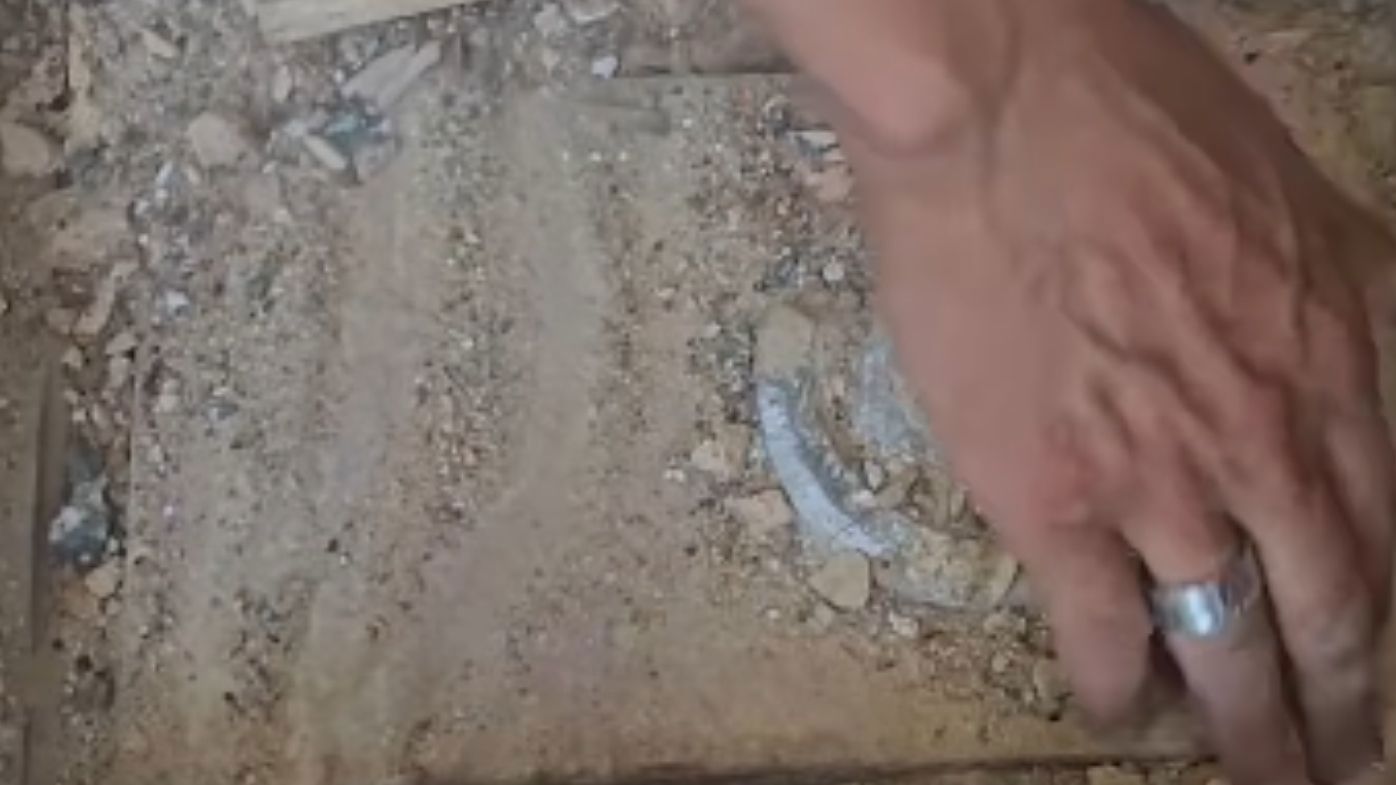
The internet loves a "time capsule" story. You’ve seen the headlines: tradies rip up a floorboard in a Victorian terrace and find a 1920s newspaper, a dusty bottle of gin, or a child’s leather shoe. The comments section erupts into a collective gasp of nostalgic wonder. We treat these finds like sacred relics, proof of a "simpler time" when things were built to last.
It’s all nonsense. Also making headlines in this space: Why Your Best ROI After 60 Has Nothing To Do With The Stock Market.
What the "hidden secret" narrative fails to mention is that most of these items aren't treasures. They are literal trash. Back in the day, the space beneath the floorboards was the 19th-century equivalent of a junk drawer, or worse, a landfill. We aren't uncovering "long-forgotten secrets." We are cleaning up after lazy builders who couldn't be bothered to walk to the bin.
The Myth of the Intentional Time Capsule
Most people assume that when a workman left a cigarette packet behind a skirting board in 1945, he was sending a message to the future. He wasn't. He was finishing his break and didn't want to carry his rubbish home. Further information on this are detailed by ELLE.
By framing these discoveries as "secrets," we ignore the actual mechanics of historical construction. In my twenty years in the trade, I’ve pulled everything from mummified rats to rusted tins of lead-based paint out of residential subfloors. It isn’t magic; it’s a lack of site hygiene.
When you treat a pile of Victorian debris as a museum exhibit, you overlook the structural and health implications of what is actually happening under your feet. That "vintage" newspaper is often just a wick for rising damp. That "charming" old boot is likely stiff with a century’s worth of mold spores.
Your House is a Data Set, Not a Fairytale
If you want to actually understand a building, stop looking for the "human story" and start looking at the material transitions. The real value in a subfloor find isn't the item itself, but what it tells you about the failure points of the era.
- Airflow Obstruction: Most "finds" are found near joists where they’ve been trapped. If rubbish is accumulating, air isn't moving. Stagnant air leads to dry rot.
- Pest Highways: Every gap left for a "secret" is a doorway for rodents.
- Hazardous Material Storage: We act shocked when we find asbestos, yet we celebrate finding old jars of unidentified fluids. Both are contaminants.
The industry needs to stop the "discovery" porn and start talking about Subfloor Integrity.
I’ve seen homeowners delay a $50,000 structural repair because they were too busy taking photos of a rusty penny they found in the dirt. They prioritize the anecdote over the asset. This is a fundamental failure of property management. If you find something under the floor, your first thought shouldn't be "What is this worth on eBay?" It should be "Why was there a hole big enough for this to fall through?"
The "Simpler Times" Fallacy
The competitor articles always lean on the idea that these finds connect us to a better past. Let’s look at the logic. If a modern tradie leaves a McDonald’s wrapper and a half-empty Monster energy drink under your floor today, you’d sue the contractor. You’d post a scathing review about their lack of professionalism.
Yet, if that wrapper is 100 years old, it’s suddenly "history."
This double standard is a cognitive bias known as Declinism—the belief that a society or institution is tending towards decline. We assume the past was higher quality, so we imbue their garbage with meaning. In reality, the builders of 1890 were often cutting corners just as much as the "cowboys" of 2024. They used toxic materials, ignored ventilation, and treated the cavities of your home like a bin.
The Hidden Cost of "Preserving" the Find
Let’s talk about the business of renovation. When a crew stops to marvel at a "find," the clock is ticking.
- Labor Hours: A crew of four standing around a 1930s milk bottle for twenty minutes costs the client money.
- Safety Delays: Distraction on a job site is a hazard.
- Misleading Inspections: Focusing on the "treasure" distracts from checking the termite shielding or the condition of the damp-proof course.
I once worked on a site where the homeowner insisted on keeping a "historic" brick pile they found under the kitchen. They thought it added soul. Two years later, that pile was the nesting ground for a massive termite colony that bypassed the modern chemical barrier because the "historic" bricks provided a bridge.
The soul of your house is its structural health, not its trash.
How to Actually Handle a "Secret" Discovery
If you are renovating and you find something, stop the romanticism. Follow a professional protocol that prioritizes the building’s longevity over a Facebook post.
- Document and Discard: Take a photo if you must, then bag it and bin it. Do not leave old organic material (paper, leather, wood) under a floor. It is food for rot.
- Inspect the Breach: Ask how the item got there. Is there a gap in the floorboards? A hole in the masonry? A missing vent cover?
- Check for Contamination: If you find old tins or containers, do not open them. Lead, mercury, and banned pesticides were common household items.
- Clear the Cavity: A clean subfloor is a functional subfloor. Your goal should be maximum airflow and zero debris.
The Problem with "People Also Ask"
People often ask: "Should I leave a message for future owners?"
No. If you want to help the next owner, leave a digital folder containing the plumbing schematics, the paint codes, and the warranty for the HVAC system. Leaving a "time capsule" is just leaving a mess for the next person to clean up. It’s an act of ego, not an act of preservation.
Another common question: "What is the rarest thing found under floorboards?"
The rarest thing found under floorboards is a perfectly dry, clean, and structurally sound joist system that hasn't been compromised by decades of "charming" debris.
The Commercial Reality of the "Hidden Secret"
Media outlets run these stories because they are low-effort engagement bait. They rely on the "lottery logic"—the idea that you might be sitting on a fortune without knowing it. This keeps people from looking at the boring, expensive realities of home maintenance.
It is easier to dream about finding a bag of gold coins than it is to face the fact that your subfloor needs $20,000 of underpinning. The "secret under the floor" is a sedative for the middle class.
I’ve been in the crawl spaces. I’ve seen the "secrets." Usually, the secret is that the house is held together by habit and luck, and the "historical artifacts" are just more weight on a failing system.
Stop looking for a connection to the past in the dirt. The past is gone. Your house is a machine for living, and every piece of old junk you leave under the floor is a grain of sand in the gears.
Clean your site. Respect the physics. Throw the "treasure" in the skip.
Don't be a curator of 19th-century litter; be a steward of 21st-century engineering.