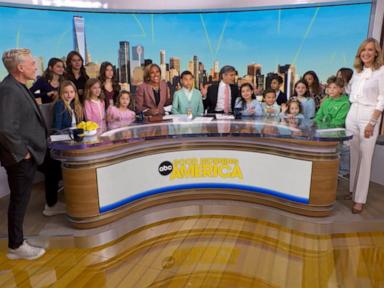
The lights are too bright. The teleprompters are scrolling at speeds no ten-year-old should care about. A child in an oversized blazer sits behind a desk worth more than their college fund, mimicking the serious nod of a seasoned anchor.
Every year, Good Morning America and its broadcast peers roll out the "Kids Take Over the Studio" segment. It is framed as wholesome content. It is sold as a glimpse into the future of media. You might also find this connected story insightful: The Anatomy of Live Performance Disruption Operational Vulnerabilities in High Stakes Cultural Production.
It is actually a white flag.
By turning the newsroom into a playground, networks are admitting that the gravitas of broadcast journalism has eroded so significantly that a fifth-grader can "perform" the job with a three-minute rehearsal. This isn’t about inspiring the next generation; it’s about a desperate grab for relatability in an era where trust in mass media is cratering. As highlighted in latest coverage by Rolling Stone, the results are notable.
The Performance of Competence
The "lazy consensus" suggests that these segments are harmless fun that humanizes the giants of the industry. We are told it shows the "human side" of the anchors.
The reality is far more cynical.
Broadcasting is a technical discipline. It requires an understanding of pacing, vocal modulation, and the ability to process breaking information in real-time while a producer screams in your earpiece. When a network replaces a professional with a child, they are signaling to the audience that the role is merely aesthetic. If a kid can sit there and read the "news" about a local bake sale or a viral cat video, why should the audience respect the anchor who does it the other 364 days a year?
I have spent years behind the scenes of high-stakes productions. I have watched crews scramble to make these "takeovers" look effortless. The amount of professional labor required to make a child look like a competent broadcaster is staggering. We are burning billable hours and technical resources to create a parody of our own profession. It is a race to the bottom of the intellectual barrel.
The Myth of the "Inspirational" Segment
"But it inspires them to be journalists!"
No, it doesn’t. It inspires them to want to be famous.
There is a massive distinction between the craft of journalism and the glamour of being on camera. Real journalism is grueling. It is hours of FOIA requests, verifying sources, and sitting in municipal meetings that smell like stale coffee. It is not sitting in a climate-controlled studio in Times Square wearing makeup.
By highlighting the "fun" part of the job—the part that is 90% performance—we are lying to these kids about what the industry actually requires. We are feeding the influencer pipeline under the guise of career development. If you want to inspire a child to be a journalist, give them a notebook and tell them to go find out why the local park’s budget was slashed. Don’t put them in a swivel chair and tell them they’re a "star."
The Economic Desperation of Cute
Let’s talk about the data the networks don't want to show you. Social media engagement for "cute" content spikes briefly but has zero retention value.
- The Bounce Rate Problem: People click to see a kid mess up a word. They stay for fifteen seconds. They do not subscribe to the newsletter. They do not watch the 7:00 PM broadcast.
- The Brand Dilution: When you mix hard news—war, inflation, political instability—with a segment where a toddler predicts the weather, you create cognitive dissonance. You are telling your viewer that the news is just another form of light entertainment.
- The Resource Drain: A "Kids Takeover" segment often costs more in production hours than a deep-dive investigative piece. We are prioritizing fluff because it’s "safe" for advertisers.
Imagine a scenario where a major law firm or a surgical center had a "Kids Takeover Day" where children performed mock trials or appendectomies for the cameras. We would call it absurd. We would call it dangerous. Yet, in the "Fourth Estate," we treat it as a mandatory annual tradition. This is how we lost our authority.
The Exploitation of the "Mini-Me"
There is a darker undercurrent to the celebrity-child-in-the-studio trope. It reinforces a nepotistic cycle that is already strangling the media industry.
When you see the "Kids of GMA" taking over, you aren't seeing a diverse cross-section of the American youth. You are seeing the children of the elite. You are watching a soft-launch for the next generation of "nepo babies" who will occupy these seats not because of their investigative prowess, but because they grew up comfortable in the glow of a studio ring light.
This isn't a "takeover." It's a coronation.
The Solution: Real Stakes or No Stakes
If the industry actually cared about the "next generation," we would stop the dress-up sessions.
Stop putting kids on camera. Start putting them in the field with a boom mic. Make them sit through a three-hour edit session. Show them the stress of a factual error. Show them the weight of the responsibility they are asking to carry.
The "Takeover" is a facade. It’s a sanitized, corporate version of reality that serves the network's PR department and nobody else. It treats the audience like children and the children like props.
Broadcast news is dying because it stopped being essential. It became a variety show that occasionally mentions the news. Every time a kid "takes over" the desk, another nail goes into the coffin of the industry's credibility.
Get the kids out of the studio. Put the journalists back to work. Stop pretending that a high-definition playground is a newsroom.

:max_bytes(150000):strip_icc()/high-angle-view-of-black-widow-spider-on-plant-681958901-5b4607d346e0fb0037bf3962.jpg)