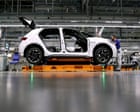
The European automotive lobby is on its knees again, begging Brussels for another stay of execution. They are terrified of the post-Brexit Rules of Origin tariffs on electric vehicles. They want you to believe that a 10% tariff on EV trade between the UK and the EU will spark an industry-wide apocalypse. They claim it will destroy consumer demand, wipe out manufacturing margins, and hand the entire market to Chinese competitors on a silver platter.
They are entirely wrong. You might also find this connected coverage interesting: The Invisible Ceiling Keeping Crude Oil From Shaking the Global Economy.
The industry’s collective panic over these tariffs is a masterclass in corporate codependency. For years, European legacy original equipment manufacturers (OEMs) have treated deadlines like mild suggestions. They treat supply chain localization like a chore to be pushed off to the next fiscal year. This endless lobbying for delays is not protecting the European EV transition; it is suffocating it.
I have watched automotive executives burn hundreds of millions of euros on stock buybacks and half-hearted compliance vehicles while completely ignoring the hard engineering required to build a localized battery ecosystem. If you keep moving the finish line, nobody actually runs. The looming tariff deadline is not an existential threat. It is the only mechanism left to force European carmakers to do their jobs. As discussed in latest articles by The Wall Street Journal, the results are significant.
The Tariff Lie: What the Lobbyists Won't Tell You
The conventional narrative says that if the EU and the UK enforce the Rules of Origin—requiring 45% of an EV's value and 50% to 60% of its battery cells or materials to originate from the region—the cost of EVs will skyrocket, pricing regular drivers out of the market.
Let us look at the actual math.
A 10% tariff on an electric vehicle crossing the English Channel does not mean the price of the car rises by 10% for the consumer. It means 10% on the wholesale factory gate price. In automotive retail, gross margins, dealer margins, and marketing budgets absorb significant portions of the final sticker price.
More importantly, automakers routinely discount vehicles by 10% to 15% to move inventory during a slow quarter. To claim that a comparable tariff percentage is an unmitigated disaster is intellectually dishonest.
The underlying fear isn't that the consumer cannot afford the car. The fear is that European legacy brands will have to eat the cost because their internal cost structures are bloated. They are terrified of adjusting their internal margins to account for their own strategic failures in securing regional battery supply chains.
The Illusion of the "Chinese Threat"
The most cynical argument used by the automotive lobby is that tariffs will give Chinese EV makers an unfair advantage. The logic is dizzying: “If you tax our unlocalized cars, the Chinese will win.”
The reality is exactly the opposite. Chinese manufacturers like BYD and Geely are not winning because of a 10% trade friction variance across the English Channel. They are winning because they spent the last fifteen years vertically integrating their battery supply chains from lithium mines to cell manufacturing. They have a structural cost advantage that dwarfs a 10% tariff.
If the EU continues to delay Rules of Origin enforcement, it signals to local manufacturers that they can continue relying on imported Asian battery cells indefinitely. This paralyzes domestic battery investment. Investors will not fund multi-billion-euro European gigafactories if legacy OEMs can just import cheaper cells from Asia and build cars with zero trade penalties.
By delaying the tariffs, Europe is actively subsidizing its own technological dependence.
The High Cost of Regulatory Welfare
I admit there is a massive downside to enforcing these rules immediately. It will hurt.
Automakers who gambled on compliance delays will see their margins compressed. Some plants will see temporary production slowdowns as supply lines rearrange. Stock prices for sluggish legacy OEMs will drop.
But this pain is necessary. It is structural shock therapy.
Consider the alternative: corporate welfare via regulatory inertia. When Brussels grants an extension, it punishes the few companies that actually invested early in local production. It rewards bad behavior, lazy engineering, and short-term financial engineering.
To build a resilient industrial base, you must let the laggards suffer the consequences of their inaction.
Why Your Supply Chain Strategy is Broken
Most automotive procurement teams are asking the wrong question. They are asking: “How can we lobby the government to change the rules?”
They should be asking: “How do we redesign our platforms to radically reduce cell costs so tariffs become irrelevant?”
- The Fallacy of Scale: Carmakers assume that just building bigger factories solves the problem. It does not. If your cell chemistry relies on raw materials sourced entirely outside the free trade zone, scaling up a factory in Germany or the UK just scales your compliance failure.
- The Localization Myth: Packaging imported cells into a battery pack inside Europe does not meet the Rules of Origin threshold. You must localize the chemical synthesis and cell manufacturing.
The Brutal Truth Behind the Panic
When you strip away the public relations fluff, the panic over the Brexit EV tariffs exposes a deeper truth about the European auto industry: it has lost its competitive edge. It has become an industry of assembly plants rather than technological innovators.
They want the government to protect them from the market realities of the transition they claimed they wanted. They want to sell high-margin SUVs while relying on global supply chains that are increasingly weaponized by geopolitics.
If Europe wants a viable, independent automotive sector in 2030, the tariffs must land. The market needs the pain of compliance to flush out the dead weight.
Stop asking for another year. Stop issuing warnings about consumer harm. Build the batteries locally, optimize the engineering, absorb the temporary margin hit, or step aside for competitors who will.