The air inside the theater didn't smell like popcorn. It smelled like expensive leather, hairspray, and the sharp, metallic tang of anxiety.
I remember sitting in the third row, watching the flickering previews of Mortal Kombat II. On screen, blood sprayed across ancient stone temples in high-definition glory. Characters with names like Sub-Zero and Kitana traded blows that sounded like falling timber. It was loud. It was aggressive. It was everything the traditional box office wisdom says a blockbuster should be.
But then, the screen went dark. A familiar, rhythmic clicking sound echoed through the Dolby surround-sound speakers. Click. Click. Click. The sound of a Manolo Blahnik heel hitting marble.
In that moment, the collective breath of the audience hitched. We weren't waiting for a dragon or a sorcerer. We were waiting for a woman in a perfectly tailored coat to tell us that our lives were mediocre.
The numbers are in now, and they tell a story that Hollywood’s data scientists are likely scrambling to decode. The Devil Wears Prada 2 didn't just compete with the high-octane carnage of Mortal Kombat II this weekend. It dismantled it. In the cold, hard currency of ticket sales, the cerulean sweater beat the spiked mace.
This isn't just about a sequel outperforming a reboot. This is about a fundamental shift in what we crave when we sit in the dark.
The Power of a Soft-Spoken Terror
Consider the stakes of your average action movie. Usually, it’s the end of the world. A portal is opening in the sky, or a dark god is rising from the pits of some forgotten hell. If the hero fails, everyone dies. It is the ultimate pressure, and yet, for the average person sitting in a suburban multiplex, it’s entirely unrelatable. I have never had to save Earth from a four-armed monster.
Now, consider the stakes of The Devil Wears Prada 2.
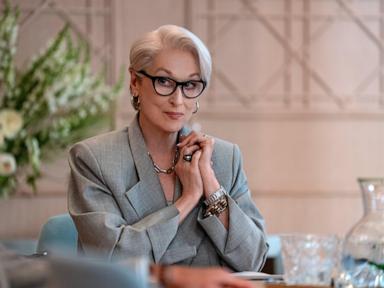
Miranda Priestly enters a room. She doesn’t say a word. She looks at an assistant’s choice of belt—a belt that the assistant worked fourteen hours to find—and she purses her lips. That’s it. That is the entire "attack."
But for anyone who has ever had a boss, a parent, or a mentor whose approval felt like oxygen, that pursed lip is more terrifying than a Fatality.
We watched Andy Sachs—now a titan in her own right, facing a changing media landscape—navigate the wreckage of a dying print industry. We watched her grapple with the terrifying realization that she has become the very thing she once mocked. The monster doesn't live in another dimension. The monster lives in the mirror.
That is the human element that Mortal Kombat II lacks. You can upgrade the CGI blood. You can make the bones snap with more bass. But you cannot manufacture the stomach-turning dread of a disappointing performance review.
The Business of Relatable Aspiration
The industry calls it "counter-programming," but that feels like a dismissal. It suggests that the success of a fashion-centric drama is a fluke, a weird pivot from the "real" movies involving capes and swords.
The reality? People are exhausted by the spectacular.
When we look at the box office receipts, we see a clear divide. Mortal Kombat II relied on nostalgia and a specific brand of visceral thrill. It did well. It hit its targets. But The Devil Wears Prada 2 tapped into something far more lucrative: the desire to see our own struggles reflected in high-gloss.
The film captures a specific, modern agony. It’s the feeling of being "on" 24/7. It’s the "always-available" culture where a notification chime on an iPhone sounds like a death knell. By centering the story on the professional and personal cost of excellence, the filmmakers turned a "fashion movie" into a corporate horror story that every millennial and Gen Z worker feels in their marrow.
The battle for the box office wasn't fought with CGI fireballs. It was fought with dialogue that cut like a scalpel. While the fighters in Mortal Kombat were shouting "Finish him!", Miranda Priestly was whispering, "That's all."
The latter stayed with us long after we left the parking lot.
The Myth of the "Male" Market
For decades, the prevailing myth in executive suites was that "boys buy tickets, girls follow." It’s the logic that gave us twenty years of superhero dominance. But the triumph of this sequel proves that the "female-led" drama is no longer a niche or a "chick flick." It is a juggernaut.
But look closer. It wasn't just women in those seats.
Men, too, were there in droves. Because the struggle for identity within a crushing hierarchy isn't gendered. The fear of being replaced by someone younger, faster, and cheaper isn't gendered.
I watched a man in his fifties, dressed in a nondescript fleece vest, lean forward during a scene where Miranda questions the relevance of her own legacy. He wasn't there for the handbags. He was there because he, too, wondered if the world was moving on without him.
Mortal Kombat II offers an escape from reality. The Devil Wears Prada 2 offers a way to process it.
A Masterclass in Narrative Tension
Let’s look at the "invisible stakes."
In a fighting game adaptation, the stakes are external. If Sub-Zero loses, he’s frozen or shattered. It’s binary. Success or death.
In a narrative like Prada, the stakes are internal and compounding. Every choice Andy makes to get ahead is a piece of her soul she trades away. The tension doesn't come from whether she will survive the day—it comes from whether she will like the person she sees in the mirror at the end of it.
The script treats a gala seating chart with the same intensity that a thriller treats a bomb deactivation. One wrong move, and the social fabric of this world unravels. It’s brilliant because it’s a hyper-inflated version of our own social anxieties. We’ve all been at a dinner party where we felt like we were wearing the wrong thing or saying the wrong word. We’ve all felt the "Runway" effect.
The film's victory suggests that audiences are ready for "adult" stories again—stories where the conflict is verbal, emotional, and psychological. We are tired of the world ending. We are much more interested in how we survive the Monday morning meeting.
The Ghost in the Machine
There is a scene halfway through the film that perfectly encapsulates why it won.
There are no stunts. No green screens. Just Andy and Miranda in the back of a car. The silence is deafening. You can hear the hum of the tires on the Parisian pavement. Miranda mentions a detail about Andy’s personal life—a failure Andy thought she had hidden.
It’s a tiny moment. A flick of a finger.
In Mortal Kombat, that would be a punch to the jaw. Here, it’s a devastating revelation of power. It reminds the audience that information is the only true currency. In a world of digital noise and "content," the person who knows the truth is the person who wins.
The box office numbers aren't just a win for a studio. They are a mandate. They tell us that we still care about the "why" more than the "how." We want to see people fail, struggle, and occasionally, find a way to keep their integrity while wearing four-thousand-dollar boots.
The Final Cut
As the lights came up after the screening, I noticed something. People weren't rushing for the exits. They were lingering. They were talking.
They weren't talking about the special effects. They were talking about their own careers. They were talking about that one boss they had in 2014 who made them cry in the breakroom. They were talking about the cost of ambition.
Mortal Kombat II provided a roar of excitement that faded the moment the air hit our faces in the parking lot. The Devil Wears Prada 2 provided a cold, sharp chill that followed us home.
The dragon was slain, but not by a hero with a sword. It was stepped on by a heel. And frankly, it was a much more satisfying kill.
We don't need more gods. We need more monsters who look like us.
The era of the mindless spectacle is beginning to tarnish. In its place, we are finding the beauty in the brutal, the fashion in the fray, and the terrifying truth that sometimes, the greatest battle you will ever fight is just trying to get through a Tuesday without losing your mind.
The box office has spoken. The dragon is dead. Long live the Queen.
That’s all.