The convergence of high-density seasonal foraging and increasing recreational foot traffic in the Kananaskis Valley creates a volatile intersection of biological necessity and human risk. While casual observers categorize grizzly bear sightings as aesthetic or "cool" events, a structural analysis reveals these encounters are the result of specific ecological pressures and predictable mammalian behaviors. Understanding the grizzly’s presence in the Alberta Rockies requires moving beyond anecdotal observation and into a framework of caloric requirements, territorial overlap, and the mechanics of habituation.
The Caloric Compulsion Framework
Grizzly bear activity is governed by a strict energy-in vs. energy-out ratio. In the Kananaskis region, the Ursus arctos population operates under a compressed hyperphagia window—a period of intense eating to prepare for hibernation.
- The Foraging Bottleneck: High-quality protein sources are geographically fixed. Grizzlies prioritize riparian zones and avalanche paths where succulent vegetation and berry crops (notably Shepherdia canadensis or buffaloberry) are abundant.
- The Slope Interface: Human trail systems often mirror these exact corridors because they follow the path of least resistance through mountainous terrain. This creates a structural overlap where human transit lanes bisect primary grizzly dining rooms.
- The Metabolic Cost of Avoidance: A bear that is forced to flee from a group of hikers loses critical kilocalories. If these interruptions occur frequently, the bear faces a nutritional deficit, leading to two possible outcomes: physiological decline or a shift toward habituation where the bear stops fleeing, increasing the probability of a close-quarters conflict.
The Habituation Gradient
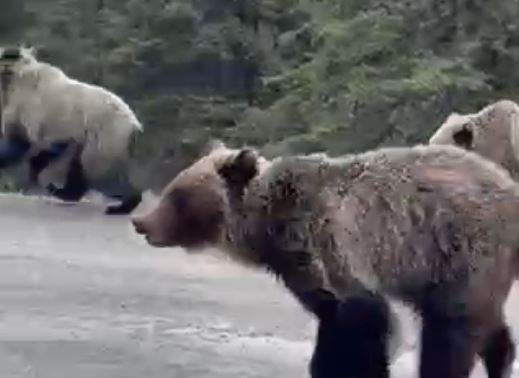
The images captured by hikers in Kananaskis often depict bears that appear "calm" or indifferent to the camera. This is not docility; it is the physical manifestation of the habituation gradient.
- Neutral Stimulus: Initially, a bear views humans as a predatory threat or a neutral variable.
- Desensitization: Repeated exposure to hikers who do not cause harm leads to a thinning of the bear’s "flight zone."
- The Proximity Trap: As the bear allows humans to get closer, the "buffer of safety" vanishes. When a surprise encounter happens within the bear's critical space (typically 50 meters or less), the animal’s response shifts from avoidance to defense.
The danger of "cool" imagery is that it reinforces a false perception of safety. A bear that is comfortable enough to be photographed at 30 meters is a bear that has lost its natural wariness, making it a higher risk for a sudden, defensive attack if startled.
Mechanical Drivers of Human-Wildlife Conflict
Conflict is rarely random. It is a function of environmental variables and human behavior patterns.
The Acoustic Failure Point
Hiking in groups and using bear spray are standard recommendations, but the "acoustic failure" remains the primary cause of surprise encounters. In Kananaskis, high-velocity winds and the sound of rushing water (common in Highwood Pass or Peter Lougheed Provincial Park) can mask the sound of approaching hikers. When humans move quietly or rely on "bear bells"—which have been shown to have insufficient decibel levels to penetrate ambient mountain noise—they effectively blindside a bear.
Scent Architecture
Grizzlies possess an olfactory sense that far exceeds that of a bloodhound. The "attractant management" strategy is often misunderstood as simply "don't leave trash." In reality, the scent of human sweat, flavored hydration tabs, and even certain sunscreens can act as novel stimuli. While these may not be food sources, they pique the curiosity of a desensitized bear, drawing it toward the trail.
The Economics of Trail Closures
Provincial authorities often implement "Annual Seasonal Closures" or "Borealis Closures." These are not arbitrary restrictions but are based on a data-driven understanding of the Core Security Area.
A Core Security Area is defined as a contiguous block of habitat where a bear can meet its daily requirements without encountering a human. In Kananaskis, the fragmentation of habitat by roads (Highway 40) and trail networks has reduced the size of these blocks. When a bear is pushed out of its core area by human presence, it enters a "Sink Habitat"—an area where its mortality risk increases due to vehicle strikes or defensive kills by conservation officers.
Quantifying the "Cool" Factor: The Social Media Feedback Loop
The democratization of high-quality mobile photography has created a dangerous incentive structure.
- The Proximity Incentive: Digital engagement on social media platforms is disproportionately higher for "close-up" wildlife shots. This encourages hikers to breach the recommended 100-meter distance.
- Normalization of Risk: When a photo of a grizzly near a trail goes viral, it resets the baseline for what the public considers "safe." If 5,000 people see a bear 10 meters from a hiker and nothing happens, the 5,001st person assumes the risk is negligible.
- The Displacement Effect: High-traffic sightings lead to "bear jams." This concentrated human presence can trap a bear between a road and a cliff, forcing a "fight" response simply because the "flight" path is blocked by onlookers.
Strategic Mitigation for High-Density Wildlife Zones
To navigate Kananaskis safely, the practitioner must adopt a tactical mindset that prioritizes "Bear Awareness" over "Bear Sightings."
- Dynamic Sound Projection: Instead of intermittent talking, hikers must utilize rhythmic, high-volume vocalizations ("Hey Bear") specifically when approaching blind corners or dense brush. The goal is to provide the bear with enough time to move off-trail without an adrenaline spike.
- The Two-Canister Rule: In high-density areas, a single 225ml canister of bear spray is a thin margin of error. Wind speed and direction (the "Aerosol Drift Variable") can reduce the effectiveness of a spray by 50% or more. Carrying a backup canister and knowing the wind direction is a basic operational requirement.
- The 100-Meter Mandate: If a bear is visible, the objective is to maximize distance immediately. Using a telephoto lens from a distance is a sustainable practice; moving closer for a "better shot" is a violation of the animal's security requirements and a gamble on its current threshold for stress.
The long-term viability of the Kananaskis grizzly population depends on the maintenance of "Human-Aversion." Every time a hiker prioritizes a "cool" image over maintaining distance, they contribute to the habituation that eventually leads to a bear’s relocation or destruction. The most successful wildlife encounter is the one where the bear never feels the need to acknowledge the human's presence.
Immediate action for hikers: Check the Alberta Parks "Advisories and Public Safety" portal before every departure to identify active "Bear Warnings" (where bears are in the area) versus "Bear Closures" (where the risk is deemed unmanageable). If a bear is encountered, the priority is not the camera; it is the steady, backward retreat that signals to the animal that its territory is being respected. Prioritize the bear's caloric intake over your own digital content.