An 18-year-old university student lies bleeding on a cold pavement in Southampton, gasping for air. He tells the responding police officers he cannot breathe. He tells them he has been stabbed. Instead of receiving immediate medical care, Henry Nowak is pulled up, handcuffed, and informed he is under arrest for assault.
The reason? His killer, 23-year-old Vickrum Digwa, stood nearby spinning a calculated, wicked lie. Digwa claimed he was the actual victim, spinning a narrative that Nowak had pulled off his turban and hurled racial slurs.
The horrifying bodycam footage released by Hampshire Police has sent shockwaves through the UK. It is not just about a brutal murder; it is about how easily institutional panic over suspected racism completely blinded officers to a dying teenager.
The Wicked Lie and the Fatal Deception
On December 3, 2025, Henry Nowak was walking home after a night out with his university football teammates. He crossed paths with Digwa on Belmont Road. Moments before the violence escalated, Nowak recorded a brief video on his phone where Digwa can be heard saying, "I am a bad man."
Digwa, who had trained with weapons since age 12 and slept in a bedroom described by prosecutors as an arsenal, drew a massive 21cm blade. He stabbed the unarmed finance student five times, including two heavy blows to the back of his legs and a fatal thrust directly into his heart.
As neighbors woke up to Nowak’s desperate screams that he was dying, Digwa’s mother, 53-year-old Kiran Kaur, rushed to the scene. Her first instinct was not to help the dying boy, but to scrub the crime scene. She removed the dagger, sheath, and belt before police arrived.
When the police turned up, Digwa played the victim card perfectly. He pointed at his bruised eye, claimed his religious clothing was targeted, and successfully diverted the officers. Blinded by the accusation of a racially aggravated assault, police handcuffed Nowak.
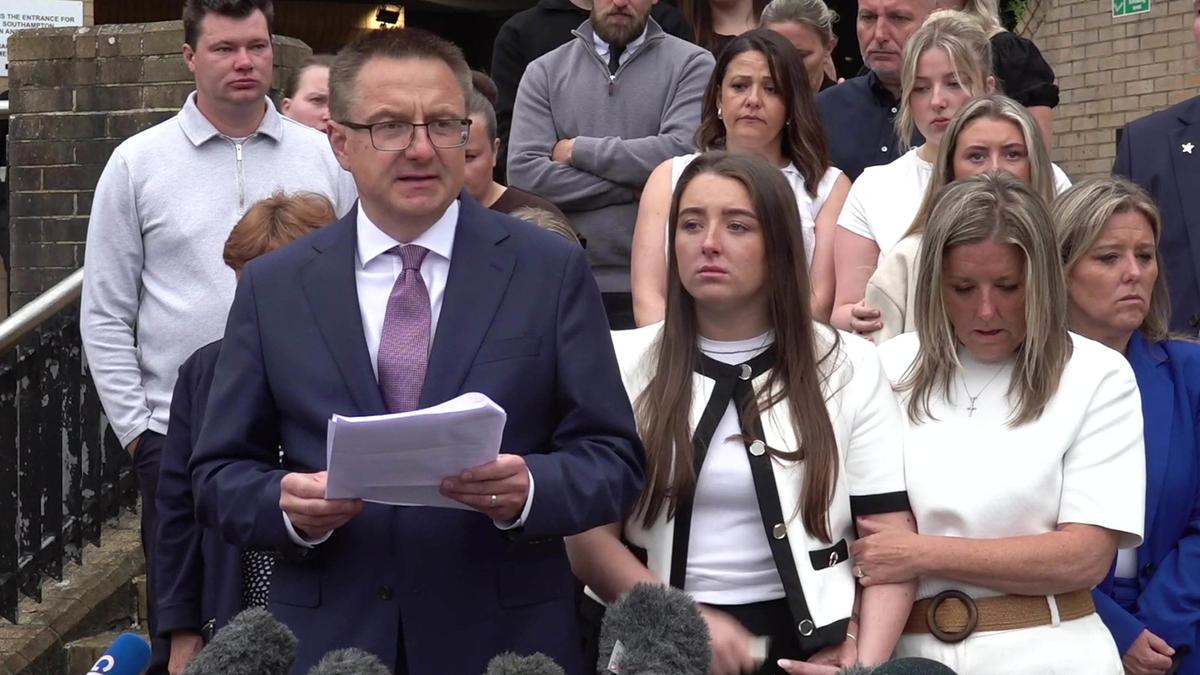
"Henry did not die with dignity," his father, Mark Nowak, stated outside Southampton Crown Court. "He lost consciousness before anyone believed him. The way he was treated was inhumane and degrading."
When Ideology Blinds Basic Policing
The public outrage focusing on Hampshire Police is immense, and honestly, it is entirely justified. The body-worn camera footage reveals a terrifying failure of basic situational awareness.
When a bleeding person tells you they have been stabbed and cannot breathe, checking for wounds takes precedence over everything else. Instead, an officer is heard on camera dismissively telling Nowak, "Don't think you have, mate."
This failure has reignited a fierce political debate over what critics call two-tier policing. Figures like Reform UK leader Nigel Farage have weaponized the case, calling for "pure cold rage" and claiming that an accusation of a racial slur was treated more seriously than an act of murder. Former Justice Secretary Robert Jenrick openly called for the arresting officer to be prosecuted for a total dereliction of duty.
The Independent Office for Police Conduct (IOPC) is investigating the incident. While Deputy Chief Constable Robert France issued a full public apology, the damage to public trust is done. The police were so terrified of being labeled racially insensitive that they accepted a killer's word at face value while ignoring physical reality.
The Kirpan Debate and the Weapon Obsession
Central to the legal fallout is the weapon itself. Under UK law, specifically the Criminal Justice Act 1988, exemptions exist allowing practicing Sikhs to carry a kirpan—a ceremonial dagger symbolizing dignity and the duty to protect the vulnerable—for religious reasons.
But prosecutors revealed a vital detail during the trial. Digwa was already wearing a small, compliant kirpan concealed under his clothes around his neck. That met his religious requirements. He deliberately chose to carry a second, massive 21cm combat-style knife on display.
The Sikh Federation UK immediately stepped in to clarify the distinction, stating that the large blade Digwa used was an offensive weapon, not a traditional kirpan. They pointed out that fully practicing Sikhs recognize the immense responsibility of carrying an article of faith. They fear the actions of a weapon-obsessed individual will bring an entire community into disrepute.
Key Differences Highlighted in Court:
- Religious Kirpan: Small, traditionally concealed, worn purely as an article of faith.
- Digwa's Weapon: A 21cm display blade carried in addition to his religious kirpan; used aggressively.
Despite the community's condemnation of the attack, political pressure is mounting. Donna Jones, the Police and Crime Commissioner for Hampshire, has written directly to Prime Minister Keir Starmer demanding a national review of religious knife exemptions.
Managing the Community Fallout
Home Secretary Shabana Mahmood has strongly pushed back against calls to strip away religious exemptions, urging politicians not to pit communities against one another. The Digwa family also released a statement through the Sikh Press Association, apologizing unreservedly to the Nowak family and stating their love for their son does not erase their horror at his actions.
If you are following this case or worried about how it impacts your local community, here is what needs to happen next:
- Demand transparency on police training: Public safety relies on triage based on medical need, not political optics. Write to your local MP to support rigorous overhaul of emergency response protocols.
- Support grassroots faith dialogues: The Sikh community has uniformly condemned this crime. Prevent fringe political groups from using this tragedy to stoke Islamophobia or anti-Sikh sentiment by backing local interfaith initiatives.
- Monitor the sentencing review: The Attorney General’s office is currently reviewing Digwa's 21-year minimum life sentence under the unduly lenient sentence scheme. Keep pressure on legal representatives to ensure justice fits the brutality of the crime.
Henry Nowak’s family has shown extraordinary dignity, explicitly asking that their son's murder not be used to spread division. Honoring his memory means fixing a broken emergency response system without destroying community cohesion.