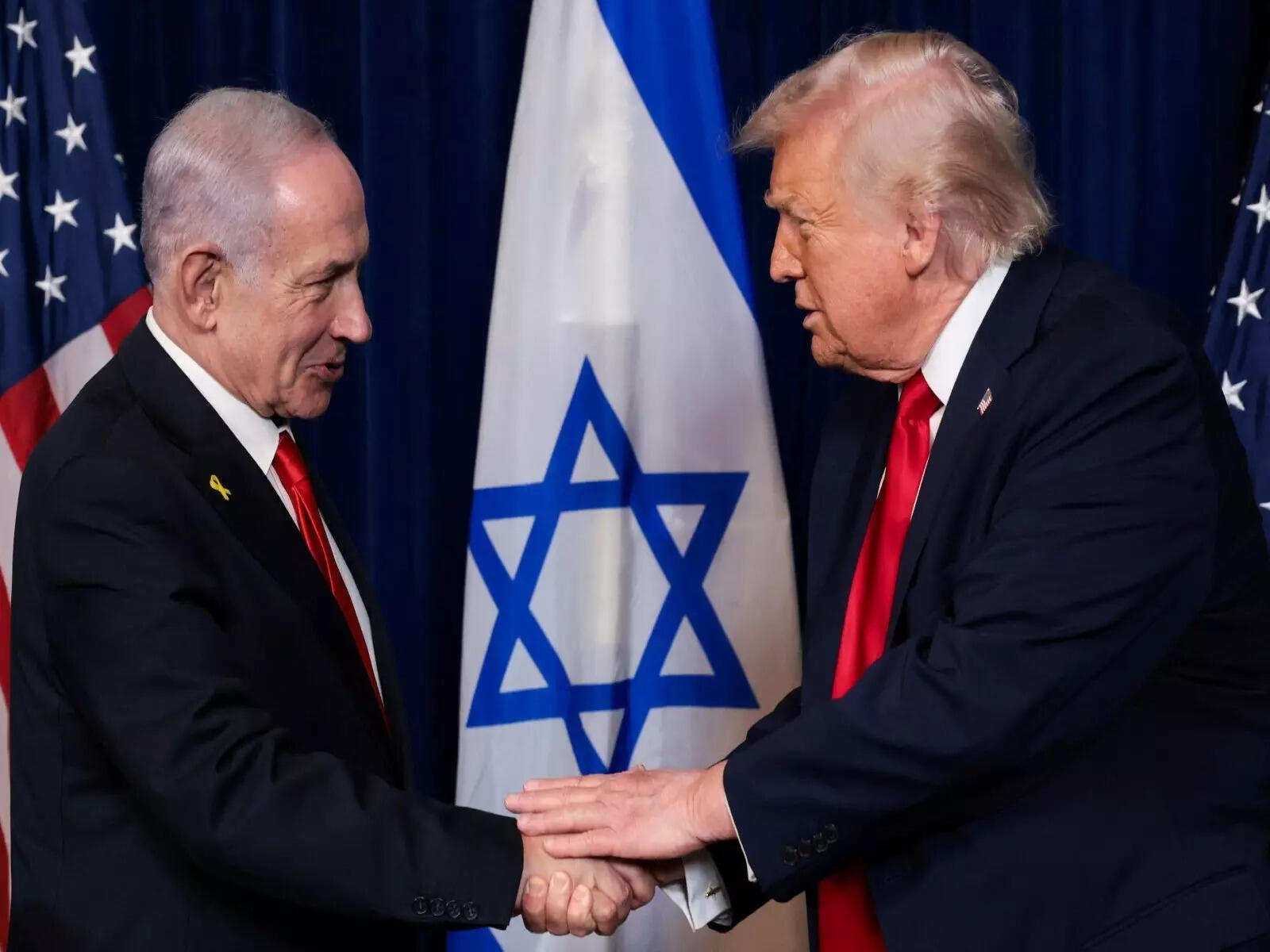
The pundits are obsessed with a lovers' quarrel. They see Donald Trump’s reported "anger" at Benjamin Netanyahu over the South Pars strike and immediately default to the most boring explanation possible: oil prices. They claim Trump is worried about a spike in Brent Crude that might mess with his economic narrative. They say Netanyahu "went rogue" on a strategic asset.
They are wrong. They are missing the structural reality of the 2026 energy corridor.
If you think this is about the price at the pump, you’re still living in 2004. The friction between Mar-a-Lago and West Jerusalem isn't about a temporary fluctuation in gas prices. It’s about the total reconfiguration of the Middle Eastern power grid. South Pars isn't just an oil field; it's the world's largest natural gas repository, a shared lung between Iran and Qatar. By hitting it, Netanyahu didn't just poke the Iranian bear—he tried to lobotomize the entire regional energy transition.
The Myth of the "Price Spike" Panic
Let’s dismantle the first bit of lazy consensus. The idea that Donald Trump—a man who spent his first term screaming "drill, baby, drill"—is terrified of a $10 jump in oil is laughable.
Trump knows the U.S. is the swing producer. He knows that every time the Middle East catches a cold, the Permian Basin gets a shot of adrenaline. High prices don't hurt a Trumpian economy; they subsidize the American energy independence he craves.
The real reason for the friction? Strategic Encroachment.
Trump views the Middle East through the lens of the Abraham Accords—a business deal where stability is the product. Netanyahu just set fire to the showroom. When Israel strikes South Pars, they aren't just targeting Iranian revenue. They are destabilizing the Qatari side of the field. Qatar, the world’s indispensable gas broker and the primary mediator for every hostage deal and ceasefire negotiation, now has its primary economic engine sitting in a literal crosshair.
Trump isn't mad that oil is expensive. He’s mad that Netanyahu is breaking the tools Trump needs to negotiate his "Deal of the Century" 2.0. You can't bully or bribe a region into submission if the main infrastructure is a smoking crater.
The South Pars Mechanics: What the "Experts" Miss
South Pars isn't some desert well. It’s a geological behemoth covering 9,700 square kilometers.
- The Iranian Sector (South Pars): 3,700 square kilometers.
- The Qatari Sector (North Field): 6,000 square kilometers.
When you drop a bunker-buster on the Iranian side, the seismic and logistical shockwaves ripple through the entire basin. For Netanyahu, this is a "decapitation strike" on Iran's internal heating and electricity. For Trump, this is a reckless endangerment of the global LNG supply chain.
I’ve spent years watching energy analysts hand-wave away the complexity of shared reservoirs. You don't just "hit" one side. You risk damaging the pressure of the entire field. If the reservoir pressure drops due to catastrophic structural damage, the Qatari side—America's "Major Non-NATO Ally"—loses billions in recoverable gas.
Netanyahu isn't just fighting a war; he's practicing economic scorched-earth tactics on a global scale. Trump’s "anger" is the reaction of a CEO watching a branch manager burn down the mall to catch a shoplifter.
The Israel-Sunni Split Nobody Admits
The media loves the narrative of the "United Front" against Iran. It’s a clean, easy story. But the South Pars strike exposed the rotting floorboards of that alliance.
The Gulf monarchies—UAE, Saudi Arabia, and especially Qatar—have spent the last decade trying to diversify away from being targets. They want to be the world’s logistics and AI hubs. They need a quiet Persian Gulf to survive.
By hitting South Pars, Israel forced the Sunni world to realize that Netanyahu is a liability to their 2030 visions. Trump sees this. He knows that his plan for a "New Middle East" requires the Gulf states to trust that the U.S. can restrain Israel. When Netanyahu acts unilaterally against a primary energy node, that trust evaporates.
Why You’re Asking the Wrong Questions
People keep asking: "Will this lead to $150 oil?"
The answer is: "Who cares?"
The better question is: "Does this strike make the U.S. dollar the only safe haven for energy investment?"
Netanyahu’s move was a desperate attempt to force the U.S. into a "hot" war with Iran by making the economic cost of peace higher than the cost of conflict. He’s trying to trap Trump into a military commitment before Trump even takes the oath of office. It’s a classic "fait accompli."
The Intelligence Failure in the Boardroom
I’ve sat in rooms where "regional experts" claim that Iran’s economy is a house of cards that one strike on South Pars will collapse. This is peak Western arrogance.
Iran has spent forty years learning how to live in the rubble. They have the most sophisticated smuggling and shadow-banking networks on the planet. You don't kill the Iranian regime by hitting a gas field; you only kill the Iranian people's access to heat, which drives them closer to the hardliners.
Netanyahu knows this. He doesn't expect a revolution. He expects a counter-strike. He wants the counter-strike. He needs a regional conflagration to ensure his own political survival and to force the U.S. Navy to do the heavy lifting in the Persian Gulf.
Trump, the ultimate transactionalist, hates being used. He hates being the "muscle" for someone else's security bill. That is the source of the "oil not well" tension. It’s not about the commodity; it’s about the sovereignty of American foreign policy.
The Brutal Reality of Energy Warfare
Let’s be clear about the physics of this. Natural gas is not oil. You cannot just put it in a truck and drive it somewhere else. It requires massive, static infrastructure—liquefaction plants, pipelines, and terminals.
When Israel targets South Pars, they are targeting permanence.
$$Investment = \frac{Resources}{Risk}$$
By skyrocketing the risk variable, Netanyahu has effectively frozen all non-Chinese investment in the region for the next decade. Who is the winner here? Not Israel. Not the U.S.
Beijing.
China is the only player willing to insure tankers in a war zone. They are the only ones with the stomach to build pipelines under fire. By "decoding" the anger as a personal rift between two leaders, we ignore the fact that the South Pars strike is the greatest gift ever given to the People's Bank of China.
Stop Looking for a "Peace Deal"
There is no "fixing" this relationship through a phone call. The divergence in interests is now fundamental.
- Israel needs a permanent state of emergency to justify its current security posture and the expansion of its borders.
- Trump needs a "Win" that looks like a ribbon-cutting ceremony for a new trade route, not a funeral for a carrier group.
The South Pars strike was Netanyahu’s declaration of independence from American strategic restraint. Trump’s anger is the realization that his "protege" has become his primary competitor for control over the Middle Eastern narrative.
The Actionable Truth
If you are an investor, stop watching the Brent Crude ticker. Watch the LNG spot prices in JKM (Japan Korea Marker). Watch the insurance premiums for the Strait of Hormuz.
If you are a policy observer, stop waiting for Netanyahu to "listen" to Washington. He isn't listening because he doesn't have to. He has calculated that the U.S. political system is too fractured to ever truly pull the plug on him, regardless of how much he disrupts the global energy flow.
The South Pars strike wasn't a military necessity. It was a hostile takeover attempt of U.S. foreign policy.
Trump isn't worried about the price of gas. He's worried about the price of his own relevance in a region that is rapidly deciding that neither he nor Netanyahu is actually in charge.
The "oil" isn't the problem. The "well" was poisoned long ago by the delusion that these two men ever had the same goal.
Grab your hedges. The regional "stabilization" you were promised is a fairy tale sold by people who don't understand how gas pressure works—or how desperate men behave when their backs are against the wall.