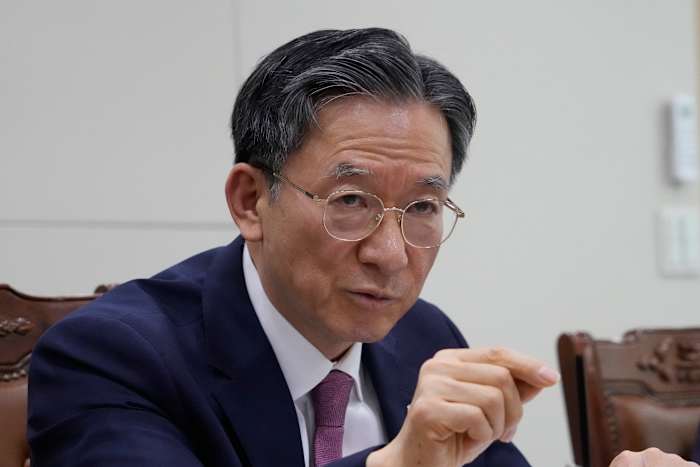
South Korea’s Justice Ministry is finally moving to overhaul the legal framework for overseas adoptees seeking the truth about their origins. For decades, the system functioned as a high-speed assembly line that prioritized the removal of children over the preservation of their identities. Now, Justice Minister Park Sung-jae has committed to expanding legal remedies for those whose records were falsified or whose human rights were ignored during the height of the country's adoption boom. This shift is not just a policy update; it is a desperate attempt to rectify a decades-long history of state-sanctioned paper-tripping and identity theft.
The Paper Trail of Erasure
Between the 1950s and the late 1990s, approximately 200,000 South Korean children were sent abroad. The majority went to the United States, followed by Europe and Australia. To the outside world, this was a humanitarian effort. Inside the borders of South Korea, it was an industry. Private agencies operated with minimal state oversight, often treating children as commodities rather than citizens with inherent rights. If you liked this article, you should read: this related article.
The core of the current crisis lies in the documentation. Thousands of adoptees have discovered that their "orphan" status was a fabrication. Many had living parents who either didn't consent to the adoption or were coerced under the pressure of extreme poverty and social stigma against unwed mothers. Agencies frequently changed names, birth dates, and family histories to make children more "marketable" or to bypass legal hurdles. This created a permanent wall between the adoptee and their biological history.
The Failure of Past Reform
While South Korea has attempted to modernize its adoption laws before—most notably with the 2012 Special Adoption Act—the legal hurdles for victims remained insurmountable. Adoptees seeking information were often met with stonewalling from agencies that claimed records were lost in fires or simply didn't exist. The legal system offered almost no recourse for those who found evidence of fraud. For another look on this event, refer to the latest coverage from The Guardian.
The new proposal by the Justice Ministry aims to bridge this gap by including adoptees in the broader category of "rights victims" who can access state-supported legal aid and discovery processes. This is a significant admission. By categorizing adoptees alongside victims of state violence or judicial error, the government is acknowledging that the adoption system itself was a site of systemic rights violations.
The Truth and Reconciliation Commission Pulls Back the Curtain
The momentum for this legal shift was fueled by the ongoing work of the Truth and Reconciliation Commission. Since 2022, the commission has been investigating hundreds of cases where adoptees allege their papers were doctored. The findings have been grim. In several instances, agencies were found to have used the "orphan hojuk" (temporary family register) to make a child appear as though they had no ties, even when the parents were actively searching for them.
This wasn't a series of isolated mistakes. It was a structural necessity for the agencies to maintain the flow of children to waiting Western parents. The commission’s work has forced the government’s hand. They can no longer pretend that the grievances of the adoptee community are merely personal or emotional. They are legal and evidentiary.
The Role of Private Agencies
For years, agencies like Holt Children’s Services and Eastern Social Welfare Society have operated as the gatekeepers of identity. Under the old system, they held more power than the state. They owned the files, managed the transfers, and controlled the narrative. When an adoptee returned to Korea to find their mother, they had to ask permission from the very entity that may have participated in their original separation.
The Justice Ministry’s new stance suggests a potential stripping of this gatekeeper power. If the state provides a direct legal path for document recovery and compensation, the agencies will finally be held to a standard of accountability that has been absent for seventy years. However, the agencies remain powerful political actors with deep pockets and international networks. They have already begun to argue that they were simply operating within the laws of the time and that "mistakes" were the result of wartime chaos or administrative oversight.
Why Legal Remedies Matter Now
Critics argue that these reforms are too little, too late. Many of the biological parents are now in their 80s or 90s. Every day that passes without a legal breakthrough is a day that a family reunion becomes impossible. The urgency is biological.
But the importance of legal remedies extends beyond reunions. It is about the right to truth. In the international community, the right to one's identity is recognized as a fundamental human right. South Korea, now a global cultural and economic powerhouse, can no longer justify the shadows in its past. The "K-brand" is tarnished every time an adoptee is deported from their host country—as has happened to several in the U.S. due to lack of citizenship paperwork—only to return to a "motherland" that doesn't recognize their legal existence.
The Counter-Argument of Social Stability
There is a quieter, more conservative pushback against these reforms. Some within the Korean government worry that opening the floodgates to lawsuits and records releases will destabilize families. They fear that the "shame" of the past will be brought into the light, causing social friction for those who have spent decades hiding the fact that they gave up a child.
This perspective prioritizes the comfort of the status quo over the justice of the individual. It ignores the reality that the "shame" was manufactured by a society that offered no social safety net for single mothers. By providing legal remedies, the government isn't just helping adoptees; it is forced to confront the systemic misogyny and classism that fueled the adoption industry.
The Hard Reality of Implementation
Promising legal remedies is one thing. Building a functional mechanism to deliver them is another. The Justice Ministry must navigate several complex hurdles:
- Data Integration: Records are currently scattered across private agency basements, government archives, and international offices. Consolidating this into a searchable, transparent database is a massive technical and legal undertaking.
- International Cooperation: Many of the violations occurred in conjunction with foreign entities. Recovering the full truth requires cooperation from governments in the U.S., Denmark, France, and elsewhere.
- Statutes of Limitations: Most of these adoptions occurred decades ago. For any legal remedy to be meaningful, the government will likely need to waive or extend statutes of limitations for fraud and rights violations related to adoption.
If the government fails to address these specific points, the Minister’s "vow" will be nothing more than a political gesture meant to quiet international activists.
A New Class of Rights Victims
The inclusion of adoptees under the "rights victims" umbrella sets a global precedent. No other major "sending" country has so explicitly linked international adoption to state-sponsored rights abuses. This move could trigger similar movements in countries like Ethiopia, Guatemala, or Vietnam, where adoption scandals have also surfaced.
It marks a transition from viewing adoption as a private family matter to viewing it as a public human rights issue. This shift is uncomfortable for many who see adoption through a purely altruistic lens, but for the victims of falsified records, it is the only framing that makes sense.
The Economic Ghost of the Past
We cannot ignore that South Korea was once a country that literally "exported" its children to save on social welfare costs. In the 1970s and 80s, the money brought in from adoption fees was a significant source of foreign currency. The state effectively outsourced its responsibility to care for its own citizens.
The current legal push is an admission of that moral bankruptcy. Providing legal aid is a form of reparations for a generation of people who were used as a fiscal tool for national development. The debt is high, and the interest has been accruing for half a century.
The Justice Ministry must now prove that this initiative is not a stalling tactic. Real justice requires more than just an expanded legal definition; it requires the mandatory opening of all private adoption files and a state-funded DNA database that is accessible to all parties without agency interference. Anything less is a continuation of the same secrecy that defined the era of erasure.
The window for reconciliation is closing as the first generation of birth parents passes away. The government's actions in the coming months will determine whether South Korea is truly ready to be a modern defender of human rights or if it will remain a nation that protects its secrets at the expense of its children.
Minister Park’s promise is the first crack in a very old, very thick wall.