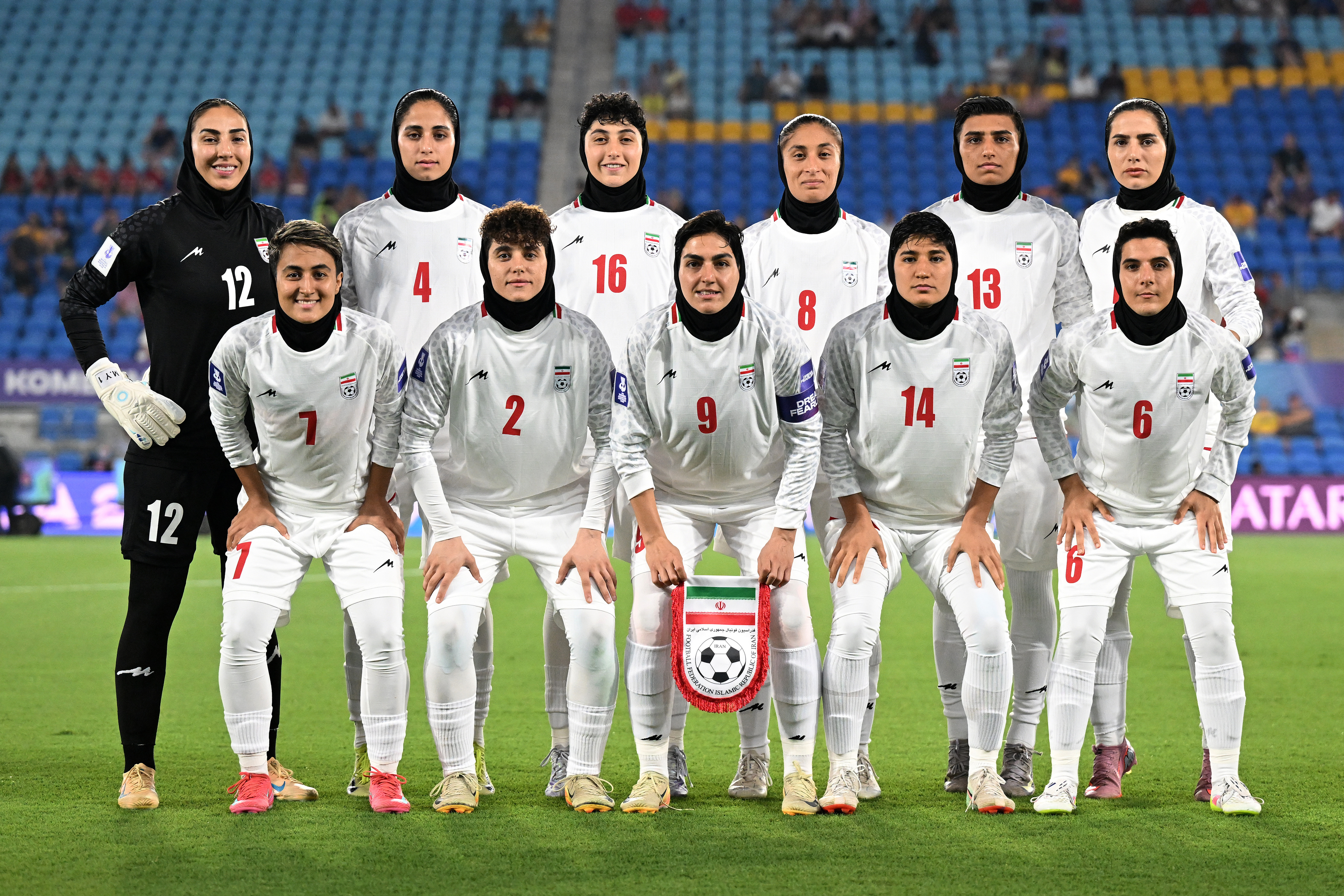
The air inside the stadium usually tastes of cheap popcorn and anticipation. But in the moments before the whistle, as the Iranian women’s national team stood on the grass of the Asian Cup, the air tasted of iron. It was heavy. It was the kind of atmosphere that precedes a lightning strike—a static charge that makes the small hairs on your arms stand upright.
Across the field, the ritual was standard. The speakers crackled to life. The first notes of the Iranian national anthem began to swell, a melody designed to evoke pride, history, and unwavering loyalty. Usually, this is the part where athletes fill their lungs, faces upturned to the lights, and roar their devotion to the rafters.
Instead, there was nothing.
The players stood like statues carved from marble. Their lips remained pressed together in a firm, unrelenting line. No one moved. No one sang. In a stadium designed for noise, their refusal to make a sound was the loudest thing anyone had ever heard.
The Weight of a Closed Mouth
To understand why a few seconds of silence matters, you have to look at the shadows behind the players. In many parts of the world, an anthem is a bathroom break or a chance to check your phone. In Iran, the anthem is a contract. For women athletes, that contract is written in fine print that dictates how they dress, where they travel, and who they are allowed to be in public.
Imagine a young girl in Tehran. Let’s call her Sahar. She grew up kicking a deflated ball against a concrete wall, dreaming of the day she would wear the national jersey. For Sahar, that jersey isn't just fabric; it’s a shield. It is the only way she is allowed to exist in the male-dominated theater of professional sports. But that shield comes with a price. Every time she puts it on, she is expected to be a billboard for a status quo that has spent decades restricting the lives of her sisters, her mother, and herself.
When the team chose not to sing, they weren't just "protesting." They were tearing up the contract in front of a global audience.
The stakes for these women are not metaphorical. They are not "keyboard warriors" shouting into the void of social media. They are individuals with families, passports, and futures that can be erased with a single signature from a government official. When they kept their mouths shut, they were inviting a storm. They knew the cameras were zooming in. They knew the officials in the VIP boxes were counting the lips that didn't move.
Yet, they stood still.
A History Written in Scars
This wasn't a random act of teenage rebellion. It was the culmination of a pressure cooker that has been whistling for years. The backdrop of this silence is a country where the simple act of a woman entering a soccer stadium as a spectator was, until very recently, a crime.
For decades, the "Blue Girl"—Sahar Khodayari—loomed over the sport. She was the fan who set herself on fire because she faced jail time for trying to watch a match. Her ghost haunts every stadium where an Iranian woman touches a ball. The players on the pitch at the Asian Cup aren't just athletes; they are the living legacy of every woman who was told that the grass was off-limits.
Consider the physics of a protest. Usually, we think of movement—marching, shouting, waving banners. But there is a specific, haunting power in a body that refuses to do what it is told. By staying silent, these players transformed themselves from performers into witnesses. They were signaling to the women back home that the grief of the streets had reached the sanctuary of the stadium.
The Invisible Script
There is a common misconception that sports and politics can be separated, like oil and water. It’s a comfortable lie we tell ourselves so we can enjoy the game without the guilt. But for these players, their very existence on the field is a political statement.
Every slide tackle is performed in a headscarf. Every goal is celebrated under the watchful eye of "morality" monitors. They live in a world where their bodies are public property, governed by laws they didn't write. When the music started and the singing didn't, the players reclaimed their voices by refusing to use them.
It is a paradox. By not using their vocal cords, they spoke more clearly than any press release or televised interview could ever manage. They spoke to the protesters who had been met with batons and tear gas. They spoke to the students who had traded their textbooks for picket signs.
They were saying: We see you. We are you.
The Calculus of Courage
What does it feel like in that moment?
The heartbeat is a drum in your ears. Your teammates are standing inches away, and you can feel the warmth of their shoulders, the slight tremble of a hand. You know that as soon as the game ends, the world changes. There will be phone calls. There will be interrogations. There will be the looming question of whether you will ever be allowed to play the game you love again.
Courage is often depicted as a roar. But real courage, the kind that changes the trajectory of a culture, is often a quiet, cold calculation. It is the decision to prioritize the truth over safety.
The technical term for what they did is "non-compliance." But that sounds too clinical, too much like a line item in a legal brief. What they did was an act of love. It was love for a version of their country that doesn't demand silence in exchange for survival. It was love for the girls like Sahar, who are still kicking balls against concrete walls, waiting for a sign that the world hasn't forgotten them.
The Echo After the Whistle
The game eventually began. The ball was kicked, the players ran, and the score was recorded in the history books. But the final tally of goals and assists is the least interesting thing about that match.
The real result was the echo.
The silence didn't stay in the stadium. It traveled. It rippled through social media feeds in London, New York, and Tokyo. It landed in the living rooms of families in Mashhad and Shiraz. It became a permission slip for others to find their own ways to say "no."
We often look to athletes to be superheroes—to run faster and jump higher than the rest of us. We want them to provide an escape from the harshness of reality. But the Iranian women’s team did something much more difficult. They refused to provide an escape. They forced the world to look at the reality they carry every day, even when they are wearing the colors of a nation that doesn't always love them back.
The music stopped. The game ended. The lights dimmed.
But in the stillness of the locker room and the long flight home, that silence remained. It is a living thing. It is a quiet fire that doesn't need oxygen to burn. It is the sound of a new world trying to be born, one closed mouth at a time.
A stadium is a place of noise, but on that day, the most important thing wasn't the cheering of the crowd or the blast of the whistle. It was the sudden, terrifying, and beautiful absence of a song.
The world is finally starting to listen to what they didn't say.
Would you like me to research the specific repercussions these athletes faced following their protest at the Asian Cup?