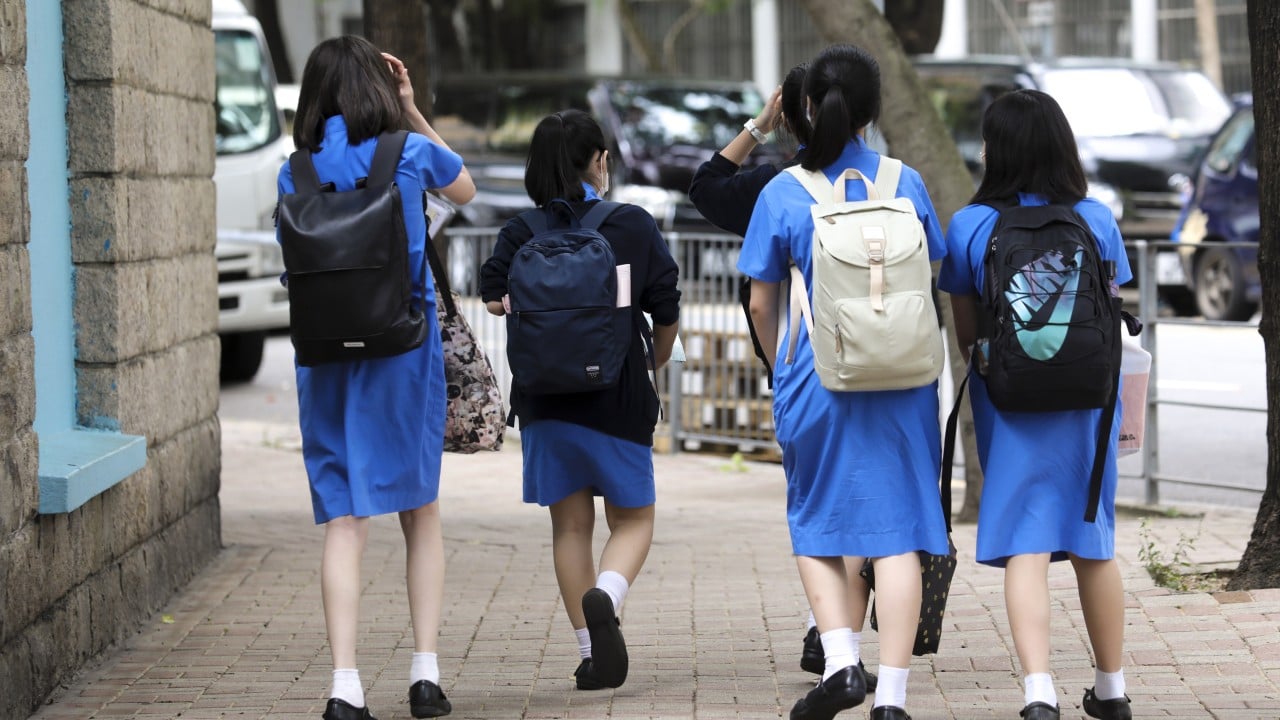
The air in a typical Hong Kong secondary school is heavy. It smells of floor wax, old textbooks, and the sharp, metallic tang of anxiety. For decades, this scent was just part of the atmosphere, as unremarkable as the humidity. Students sat in rows, spines straight, faces blank, carrying the weight of a thousand expectations without ever letting out a groan. To speak of a heavy heart was seen as a luxury the ambitious could not afford. To admit to a broken mind was a mark of shame that could stain a family for generations.
That silence is finally cracking.
Recent data from the city’s health and education bureaus suggests a startling trend: the number of students seeking help for mental health issues has surged. To a casual observer, the charts look like a warning. The lines climb steeply, mapping out thousands of new cases of depression, anxiety, and stress-related disorders. But look closer. These numbers do not necessarily mean the city is suddenly falling apart. They mean the city is finally starting to talk.
The Girl Who Stopped Hiding
Consider a student we will call Mei-ling.
Mei-ling is sixteen. She is bright, her uniform is crisp, and her grades are the kind that make parents beam at dim sum gatherings. Two years ago, Mei-ling spent her nights staring at the ceiling, her chest feeling as though a cold hand were squeezing her lungs. She didn't have a name for it. She assumed she was just weak. In the traditional narrative of a Hong Kong childhood, "mental health" was a ghost story told about other people, the ones who couldn't cut it.
In 2024, Mei-ling did something her mother would never have dreamed of at that age. She walked into the counselor’s office and said, "I can't breathe."
She is one of the thousands. The "rise" in cases is, in many ways, a census of the brave. We are seeing a generation that has decided the cost of silence is higher than the cost of stigma. When the government reports a 20% or 30% jump in psychiatric registrations among the youth, they aren't just counting illnesses. They are counting the moments someone decided to stop pretending.
The Pressure Cooker and the Valve
Hong Kong has always been a pressure cooker. The city operates on a "success or disappearance" model. Space is limited, competition is fierce, and the path to a stable life is a narrow bridge that starts with a primary school exam.
For years, the pressure was internalised. Students were taught chi ku—literally "eating bitterness." You swallow the pain, you digest the exhaustion, and you keep moving. But the human psyche isn't designed to be a bottomless pit for bitterness. Eventually, the body keeps the score.
The shift we are seeing now is the installation of a safety valve. Public awareness campaigns, once ignored or mocked, have begun to take root. Schools have increased their headcount of social workers. Peer support groups, where students can talk to one another without the judgmental gaze of an elder, have flourished.
The increase in reported cases reflects a fundamental change in the social contract. The old contract demanded perfection at the cost of the self. The new one, still under construction, suggests that the self must be preserved to achieve anything at all.
Why the Numbers Scare Us
It is uncomfortable to see a graph move upward when it represents suffering. It’s natural to want those lines to trend toward zero. When the media reports on "spiraling" mental health crises, the gut reaction is panic. We look for a singular villain. We blame social media. We blame the aftermath of the pandemic. We blame the changing political climate.
While those factors are real, they are the weather, not the climate.
The climate is the systemic shift in how we perceive the brain. For the first time, a Hong Kong teenager can tell their friend they are seeing a therapist with the same casualness they might use to describe a visit to the dentist. This transparency is messy. It creates a backlog in the public healthcare system. It stretches wait times for psychiatric clinics to months, or even years. It forces parents to confront their own repressed traumas.
The mess is progress.
A "low" number of mental health cases in the past wasn't a sign of a healthy society; it was a sign of a suppressed one. It was a basement flooded with water that no one dared to pump out because they didn't want to admit the pipes were leaking. Now, the pumps are running. The basement is still wet, and the work is exhausting, but we are no longer drowning in the dark.
The Architecture of the New Normal
Walk into a community center in Sham Shui Po or a high-end international school in Mid-Levels, and the conversation is remarkably similar. The barriers of class and geography are being eroded by a shared vocabulary of wellness.
In these spaces, the discussion has moved beyond the "black dog" of depression. Students are talking about neurodiversity, about ADHD, about the physical manifestations of chronic stress. They are challenging the idea that a "straight-A" student cannot also be a student in crisis.
This openness is not a sign of fragility. It is a sign of sophistication. It takes an immense amount of intellectual and emotional labor to identify a feeling, articulate it, and seek a remedy for it. The "snowflake" narrative—the idea that the youth are simply less resilient than their ancestors—is a lazy lie. It is far easier to stay silent and suffer than it is to stand up and demand a different way of living.
The Invisible Stakes
If we misinterpret this rise in cases as a failure, we risk shutting the door that has just been cracked open. If the government or the public reacts with "alarm" rather than "support," the stigma will crawl back into the shadows.
The stakes are not just about health statistics. They are about the future of the city's soul. A society that acknowledges its pain is a society that can heal. A society that hides its pain is a society that eventually breaks beyond repair.
We are currently in the middle of a massive, city-wide "unmasking."
This process is loud. It is expensive. It is terrifying for parents who don't know how to talk to their children about anything other than grades. But it is necessary. Every new case registered is a data point in a new story Hong Kong is telling itself: that a person's value is not measured solely by their utility to the economy, but by their inherent humanity.
The Long Walk Home
The sun sets over the harbor, casting long, orange shadows across the playgrounds. The school day is over, but for many, the second day—the tutoring, the homework, the revision—is just beginning.
Mei-ling walks to the MTR station. Her bag is heavy. Her schedule for the next week is grueling. But she is breathing. She has a bottle of medication in her bag, and she has a scheduled call with her counselor on Thursday. Most importantly, she has a group of friends who know exactly what she is going through because they are going through it too.
They aren't "cases." They aren't "statistics." They are the architects of a more honest city.
The silence hasn't just been broken; it has been replaced by a chorus of voices, some shaky, some strong, all insisting on being heard. We should not be afraid of the numbers. We should be afraid of what happens if they ever start going down for the wrong reasons. For now, every recorded struggle is a victory for the truth.
The lights of the city flicker on, one by one, millions of them, each one a life, each one a story, no longer forced to stay in the dark.