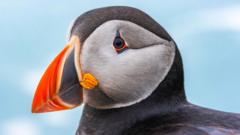
Skomer Island is currently home to nearly 43,000 puffins, a figure that shatters previous records and marks a staggering 240 percent increase since the 1980s. While most North Atlantic colonies face catastrophic declines due to warming seas and overfishing, this tiny outcrop off the Pembrokeshire coast is defying the global trend. The 2025 census confirms that for the second consecutive year, the population has reached an all-time high, cementing Skomer as one of the most successful seabird sanctuaries in the Northern Hemisphere. However, this localized success story masks a brutal reality: Skomer is an outlier in a failing ecosystem, and its current prosperity may be a temporary reprieve rather than a permanent recovery.
The Anatomy of an Outlier
To understand why Skomer is thriving while colonies in Iceland and Norway are collapsing, you have to look at the unique confluence of geography and local management. Most Atlantic puffin populations are reeling from the disappearance of sandeels, their primary food source. In the North Sea and the Arctic, rising sea temperatures have shifted sandeel spawning grounds, forcing puffins to travel further for lower-quality prey. Skomer is different.
The waters surrounding the island are part of a highly protected Marine Conservation Zone. Here, the Celtic Sea provides a stable buffet of small forage fish that has remained relatively resilient to the temperature spikes seen further north. The birds aren't just surviving; they are bringing back high-quality nutrients to their burrows, leading to high "puffling" survival rates.
Ground Level Defense
Success on Skomer isn't just about what is in the water. It is about what is absent from the land. Unlike many mainland coastal sites, Skomer remains strictly predator-free. There are no rats, minks, or feral cats to raid the subterranean burrows where puffins spend their vulnerable nesting months. The Wildlife Trust of South and West Wales maintains a biosecurity protocol that borders on the obsessive. Every bag, boat, and crate landing on the island is scrutinized.
This isolation allows the birds to concentrate in densities that would be impossible elsewhere. When you walk the cliff paths in June, the ground literally vibrates with the activity of birds underground. This density is the hallmark of a healthy colony, but it also creates a high-stakes environment where a single introduced pathogen or predator could wipe out decades of growth in a single season.
The Sandeel Politics
Behind the heart-warming imagery of puffins with beaks full of fish lies a fierce geopolitical battle over the seabed. For decades, industrial fishing fleets—primarily from Denmark—vacuumed up billions of sandeels from the UK's Exclusive Economic Zone to be ground into fertilizer and fishmeal for pig farms and salmon hatcheries. This practice essentially starved seabirds to support industrial agriculture.
In early 2024, the UK government implemented a landmark ban on sandeel fishing in English and Scottish waters. While the Welsh government followed suit, the move triggered a massive legal and diplomatic backlash from the European Union, which claimed the ban violated post-Brexit trade agreements.
The record numbers we see today on Skomer are the direct beneficiaries of these protections. The abundance of prey is not a lucky accident of nature. It is the result of a deliberate, hard-fought removal of industrial competition. The puffins are winning because, for the first time in a generation, they aren't fighting a multi-billion dollar fishing industry for their dinner.
A Sanctuary Under Pressure
The "Skomer Boom" has turned the island into a bucket-list destination for wildlife photographers and tourists. This presents a classic conservation paradox. The revenue from day-trippers funds the very wardens and researchers who protect the birds, yet the sheer volume of foot traffic threatens to degrade the fragile maritime grassland.
Puffins nest in burrows, often recycled from the island’s rabbit population. These tunnels are fragile. One stray step off a designated boardwalk can collapse a burrow, crushing an egg or a chick beneath several pounds of earth. The management team now faces the grueling task of rationing access to a public that feels entitled to see the record-breaking numbers they read about in the news.
The Hidden Threat of H5N1
While the census numbers are celebratory, a shadow hangs over the island. Highly Pathogenic Avian Influenza (HPAI) has decimated gannet and great skua populations across the UK. Puffins, because they nest underground and are more dispersed at sea for much of the year, have largely dodged the initial waves of the virus.
Biologists on the island are working in a state of constant vigilance. The record density of the colony—the very thing being celebrated—is also its greatest vulnerability. In a crowded colony, a virus spreads like wildfire. If H5N1 evolves to transmit more efficiently among alcids (the family to which puffins belong), Skomer’s record numbers won't offer safety; they will offer a larger target.
The Global Disconnect
We must resist the urge to use Skomer as proof that the Atlantic puffin is "fine." It is not. Globally, the species remains "Vulnerable" on the IUCN Red List. The success in Wales is a localized victory in a losing war.
In the Westmann Islands of Iceland, which host the world’s largest puffin colony, productivity has been in freefall for twenty years. The birds there are often found dead of starvation, or their chicks are so underweight they fail to fledge. The Skomer population represents less than 1 percent of the global population. While 43,000 birds sounds like a massive number, it is a drop in the bucket compared to the millions lost across the wider Atlantic.
The Mechanism of Growth
The surge in numbers is also driven by "recruitment." Puffins are long-lived birds, often reaching 30 years of age. They don't start breeding until they are five or six. What we are seeing now is the "recruitment" of birds born during the productive years of the late 2010s.
Why the 2025 Census Matters
- Breeding Success: The ratio of occupied burrows indicates that a higher percentage of the population is attempting to breed, a sign of extreme confidence in food availability.
- Longevity: Low adult mortality over the last three winters suggests that the birds are finding sufficient food in their secret wintering grounds in the middle of the Atlantic.
- Migration Patterns: Geolocation data shows Skomer puffins may be using different wintering strategies than their struggling northern cousins, avoiding the most depleted areas of the North Sea.
The data suggests that the Celtic Sea is currently a "climate refugia"—a place where the effects of global warming are, for now, being buffered by local currents and upwellings.
The Future of the Welsh Coast
Maintaining these numbers requires more than just watching from the cliffs. It requires a permanent commitment to the exclusion of industrial fishing and a radical approach to carbon reduction. If the Celtic Sea warms by another $1.5$ degrees, the cold-water plankton that sandeels rely on will disappear, and Skomer will inevitably follow the downward trajectory of the Scottish and Icelandic colonies.
The record count is a testament to what happens when we simply leave nature alone and protect its food source. It is an indictment of the mismanagement happening everywhere else. We have turned Skomer into a museum of what the Atlantic used to be, a crowded, noisy, thriving outpost in an increasingly silent sea.
The island’s success is a fragile victory. It proves that recovery is possible, but it also highlights the precariousness of relying on a single sanctuary to hold the line for an entire species. Protect the water, and the birds will come. Fail the water, and no amount of island wardens can save them.