Wall Street love affairs with hardware manufacturers are historically brief, intensely passionate, and financially ruinous for retail investors who arrive late to the party.
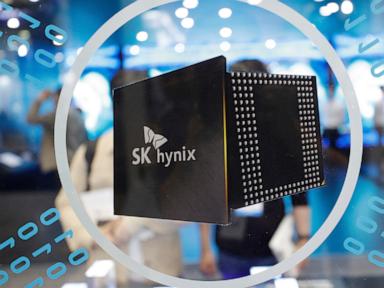
The financial press is currently tripping over itself to celebrate SK Hynix and its double-digit stock surge upon its American capital market expansion. The narrative is simple, clean, and entirely wrong. The mainstream consensus says that because artificial intelligence requires massive amounts of High Bandwidth Memory (HBM), any company producing these silicon wafers has unlocked a permanent printing press for cash. For a different perspective, consider: this related article.
They are ignoring decades of semiconductor history. They are ignoring the physics of supply gluts.
This 14% debut spike is not the start of a multi-year structural bull run. It is the classic signal of a cyclical peak. Wall Street isn't funding a revolution; it is providing an exit ramp for institutional capital at the exact moment the memory market is about to choke on its own overproduction. Related analysis on this matter has been published by Mashable.
The Myth of the Infinite AI Memory Moat
Every tech analyst covering this debut is making the same fundamental mistake: confusing a temporary supply bottleneck with a permanent competitive advantage.
Right now, Nvidia requires HBM3E chips for its accelerators. SK Hynix got there first with acceptable yields. That is a commendable engineering feat, but it is not a moat. Memory is, was, and always will be a commodity market defined by brutal price wars and capital expenditure races to the bottom.
In the semiconductor world, high margins carry a dangerous expiration date. When a specific component yields massive returns, every competitor on earth redirects their entire capital budget to clone it. Samsung is already pivoting its massive foundry footprint toward advanced HBM architectures. Micron is aggressively expanding its domestic fabrication facilities with billions in government subsidies.
Consider what happens when three global giants all build massive capacity simultaneously to serve the same handful of hyperscale buyers. The result is always the same:
- Double-ordering distortion: Hyperscalers (Meta, Microsoft, Alphabet) panic-buy more memory than they currently need to secure supply chains, creating an artificial demand spike.
- Capacity overshoot: Manufacturers misinterpret this panic-buying as permanent structural demand and build massive new cleanrooms.
- The price crash: The new fabrication plants come online all at once, supply outstrips actual consumption, and average selling prices drop by 40% in a single quarter.
I have spent years watching tech executives cycle through this exact pattern of euphoria and despair. In 2018, it was cloud data center expansion. In 2021, it was the crypto-mining boom and pandemic PC demand. Every single time, the industry proclaims that "this time is different" and that cyclicality is dead. Every single time, the laws of supply and demand return with a vengeance.
The Technical Reality of HBM Yield Liabilities
Let us look past the stock tickers and look at the actual silicon. Mainstream financial journalists write about HBM as if it is a standard microchip stamped out of a press. It isn't.
HBM3E requires stacking multiple dynamic random-access memory (DRAM) dies vertically over a base logic die, connecting them using through-silicon vias (TSVs), and bonding them with microbumps. It is an exceptionally complex packaging process.
This brings us to the hidden math of memory manufacturing: structural yield loss.
If a standard DRAM die has a manufacturing yield of 90%, stacking eight of those dies together does not mean you get a 90% yield for the finished HBM stack. The math is compounding. If even one die in the stack is defective, or if a single TSV connection fails during the thermal bonding process, the entire eight-layer stack is garbage.
[8-Layer Stack Yield Math]
Individual Die Yield: 90%
Compounded Stack Yield: 0.90^8 = ~43%
This means more than half of the silicon running through advanced packaging lines ends up in the scrap bin. Currently, the massive prices commanded by AI servers mask these inefficiencies. Hyperscalers are writing blank checks, so SK Hynix can afford to absorb atrocious yield rates and still report glowing gross margins.
But what happens when the buyers tighten their belts? The tech sector is already shifting from training massive foundational large language models to running inference on smaller, highly optimized models. Inference does not require the same staggering, unhinged memory bandwidth as training. When the demand shifts from training to inference, the premium pricing for HBM vanishes, but the structural yield liabilities remain. SK Hynix will be left with hyper-expensive, low-yield production lines that cost billions to maintain but produce a product whose market value has cratered.
Why Wall Street Liquidity is an Exit Strategy, Not an Engine
Why did SK Hynix choose this specific moment to pursue a major Wall Street listing? The common view is that they need American capital to build more factories.
The contrarian truth is simpler: Korean corporate governance and local market valuations penalize capital-intensive tech giants. The "Korea Discount" is a well-documented phenomenon where structural issues, lack of transparency, and minority shareholder vulnerabilities keep stock valuations lower on the Korea Exchange (KRX) compared to Western exchanges.
By listing in New York, corporate insiders and early institutional backers are taking advantage of a historic AI bubble to arbitrage the valuation gap. They are selling shares to American retail investors and momentum-driven index funds at a massive premium that they could never achieve in Seoul.
Imagine a scenario where a manufacturing company knows its capital expenditure requirements are about to skyrocket while its core product prices are nearing their cyclical peak. The smartest move on the board is to issue new equity in the most hyper-inflated market available, using the hype to dilute new investors at the top rather than taking on expensive debt or burning through domestic cash reserves.
This isn't a sign of operational strength; it is financial engineering at its finest. They are capitalizing on American FOMO (fear of missing out).
The Flawed Questions Investors Are Asking
If you read the investor forums and analyst notes surrounding this debut, you will see variations of the same question: How much market share can SK Hynix steal from Samsung in the next twelve months?
This is completely the wrong question to ask. It assumes that the total addressable market for high-end AI memory is a fixed, growing pie and that the only variable is who gets the biggest slice.
The real question investors should be asking is: What happens to SK Hynix when the underlying architecture of AI computing changes to bypass HBM entirely?
The semiconductor industry hates expensive, hot, power-hungry components. HBM is all three. Already, hardware startups and stealth-mode researchers are working on alternative computing architectures that eliminate the memory wall entirely:
- Neuromorphic computing: Processing data inside the memory cells themselves (compute-in-memory), eliminating the need to constantly move data across high-bandwidth buses.
- Algorithmic optimization: Quantization techniques that compress 16-bit models down to 4-bit or 2-bit models, allowing complex AI workloads to run on standard, dirt-cheap commodity DRAM or even onboard SRAM.
- Alternative substrates: Shifting away from silicon interposers to optical interconnects that route data using light, rendering the current stacking methodologies obsolete.
When these architectural shifts hit production over the coming years, the massive, specialized HBM factories SK Hynix is building today will become the modern equivalent of expensive vacuum tube factories on the eve of the transistor revolution.
The Actionable Reality for Tech Capital
If you are an investor or an executive looking at this market, do not chase the 14% pop. Do not buy into the narrative that memory has suddenly transformed into a high-margin software business with infinite runway.
The play here is to wait for the inevitable capital expenditure overhang. Within the next eighteen to twenty-four months, the market will realize that too many factories have been built, that AI infrastructure spending has slowed from a frantic sprint to a disciplined marathon, and that memory prices are plummeting. The very same analysts currently writing glowing profiles of the company will publish frantic downgrades. The stock will crater, just as Micron, Western Digital, and Seagate have cratered during every single down-cycle for the last forty years.
That is when you buy. You buy memory companies when they are losing money, when their factories are running at 60% capacity, and when the consensus says the industry is dead. You do not buy them when they debut on Wall Street to the sound of roaring applause and artificial valuation premiums.
The party is already loud, the room is packed, and the exits are narrow. Smart capital is already quietly walking toward the door.