Europe is currently losing a silent war against an invasive predator that is rewriting the continent’s medical geography. For decades, the Chikungunya virus was a distant tropical concern, confined to sub-Saharan Africa and Southeast Asia. Today, it is a localized reality in the Mediterranean and creeping steadily toward the Rhine. This isn't just about a degree or two of warming. It is about the complete failure of urban planning and biological surveillance to stop the Aedes albopictus, or the Asian tiger mosquito, from establishing a permanent foothold in European soil.
While headlines often focus on abstract climate targets for 2050, the biological reality of 2026 is that the vector for Chikungunya is already here. The virus moves through the bloodstream of travelers and finds a ready, waiting army of mosquitoes in the backyards of Rome, the suburbs of Paris, and the industrial parks of Stuttgart. When a local mosquito bites an infected traveler, the cycle of indigenous transmission begins. We are no longer talking about "imported cases." We are talking about outbreaks that start and end within European borders.
The Biology of a Territorial Takeover
The Asian tiger mosquito is a master of adaptation. Unlike the native European mosquitoes that prefer dusk and dawn, the tiger mosquito is an aggressive daytime feeder. It doesn't hum around your ear at night; it hits your ankles while you are having lunch on the patio.
This species has exploited the "urban heat island" effect—the phenomenon where concrete and asphalt trap heat, keeping cities significantly warmer than the surrounding countryside. This extra warmth allows the mosquito to survive winters that would have previously killed off its larvae. It doesn't need a swamp to breed. A discarded bottle cap, a clogged gutter, or the tray under a potted plant provides enough water for hundreds of eggs.
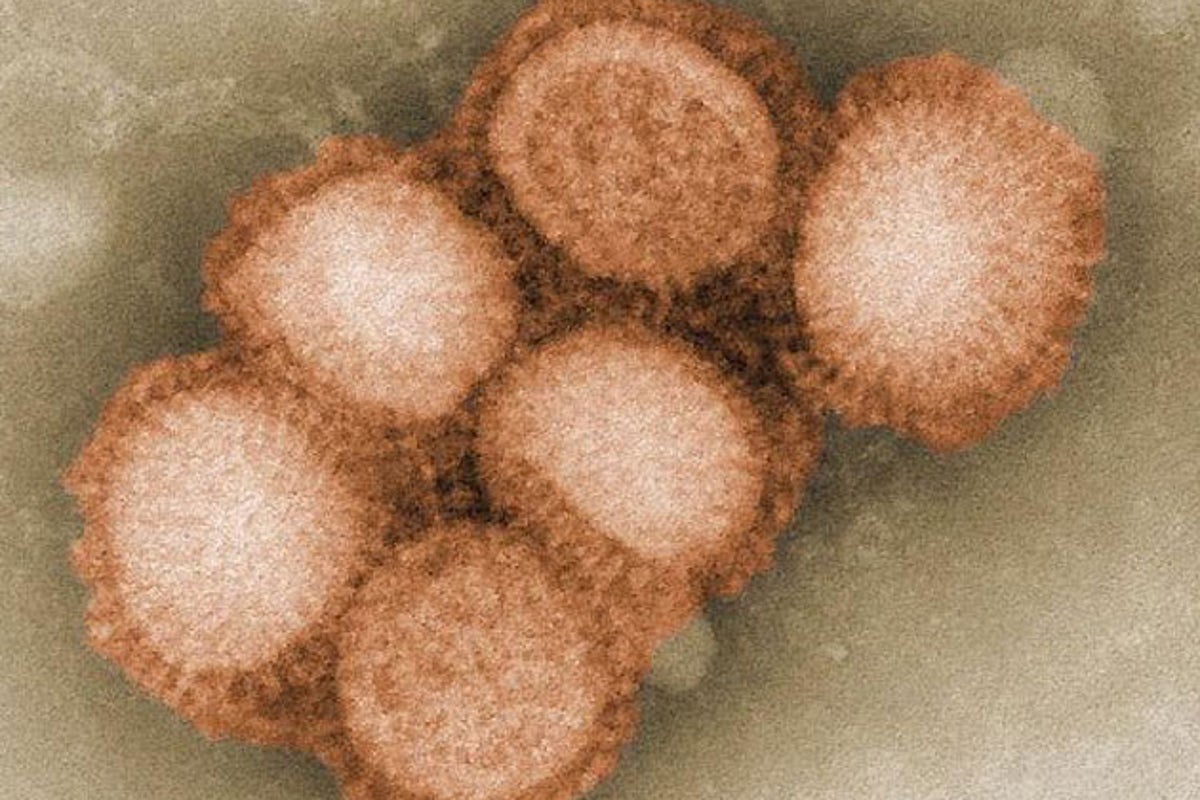
The Chikungunya virus itself belongs to the Togaviridae family. Once it enters a human host through a mosquito bite, it targets fibroblasts—the cells in connective tissue. This leads to the disease’s signature symptom: debilitating joint pain. The name "Chikungunya" comes from the Kimakonde language, meaning "to become contorted." It is an apt description. The pain can be so severe that patients are unable to walk or perform basic tasks for weeks, and in a significant percentage of cases, this joint pain becomes a chronic condition that lasts for years.
Why the Current Containment Strategy is Failing
The public health response across Europe has been largely reactive rather than preemptive. The standard operating procedure involves spraying insecticides in a small radius around the home of a person diagnosed with a tropical disease. This is a band-aid on a gaping wound.
Chemical spraying is increasingly ineffective. Mosquito populations are developing resistance to common pyrethroids, the class of pesticides most frequently used by European health authorities. Furthermore, the logistical challenge is immense. By the time a patient feels sick enough to go to a doctor, gets tested, and the results are reported to a central agency, the mosquito that bit them has already laid eggs and died, and its offspring have likely moved three blocks away.
The infrastructure of modern European life acts as a delivery system for the virus. We live in a world of high-speed rail and budget airlines. A person can be bitten by a mosquito in the morning in the Caribbean, fly to Milan in the afternoon, and be bitten by a local Milanese tiger mosquito the following day. The lag time between infection and the onset of symptoms (the incubation period) is the perfect window for the virus to hitchhike across borders undetected.
The Economic Shadow of the Fever
Governments have yet to fully account for the economic disruption of a wide-scale Chikungunya outbreak. Unlike some seasonal flus, Chikungunya is not a three-day ordeal. The acute phase typically lasts about a week, but the sub-acute phase can see a return of symptoms two months later.
If a major European city like Marseille or Barcelona faces an outbreak of several thousand cases, the loss of labor productivity is staggering. We are looking at thousands of people unable to stand at a production line, type at a desk, or serve in a restaurant for weeks at a time. The strain on healthcare systems, already stretched thin by aging populations and post-pandemic exhaustion, could be the breaking point for regional clinics.
The Myth of the Northern Shield
There is a dangerous complacency in Northern Europe. There is a lingering belief that the Alps or the cold winters of the Scandinavia will act as a natural barrier. This is a fantasy.
The Aedes albopictus has already been spotted in southern Germany and Belgium. It travels north not by flight—mosquitoes are poor long-distance fliers—but by hitching rides in the back of refrigerated trucks and shipping containers. The "niche" for this mosquito is expanding. As summers become longer and wetter in the north, the window for transmission grows.
The virus is also evolving. In 2005, an outbreak on Reunion Island saw the virus undergo a specific mutation (the E1-A226V mutation) that made it significantly easier for the Asian tiger mosquito to transmit it. This was a biological pivot that changed everything. The virus essentially learned how to use its new host more efficiently.
Infrastructure as a Biological Defense
If we want to stop the spread of Chikungunya, we have to stop talking about "raising awareness" and start talking about civil engineering. We need to rethink how we manage water in urban environments.
Standard green initiatives, such as "green roofs" and urban rain gardens, are excellent for carbon sequestration but can be a nightmare for public health if they are not designed with mosquito management in mind. Any standing water that remains for more than three days is a nursery for the tiger mosquito.
The Sterile Insect Technique
One of the few promising avenues is the use of the Sterile Insect Technique (SIT). This involves releasing millions of lab-reared male mosquitoes that have been sterilized (often via radiation or the Wolbachia bacteria). When these males mate with wild females, the eggs are non-viable.
Over time, the local population collapses. This has been tested in parts of Italy and Greece with varying degrees of success. However, it requires a massive, coordinated investment that transcends local municipal budgets. It also requires public buy-in. Explaining to a nervous public why the government is releasing "millions of mosquitoes" into their neighborhood is a PR hurdle that most politicians are too timid to jump.
The Diagnostic Gap
A major obstacle in controlling Chikungunya is that its initial symptoms—fever, rash, and muscle ache—are almost identical to those of the flu, COVID-19, or Dengue fever. In the early stages of an outbreak, many cases are misdiagnosed or simply dismissed as a "bad bug."
European doctors, particularly those in the north, are not trained to look for "tropical" diseases in patients who haven't traveled abroad. This lack of clinical suspicion is the virus’s greatest ally. By the time a cluster of cases is identified as Chikungunya, the local mosquito population is already saturated with the virus. We need a fundamental shift in how diagnostic protocols are handled in primary care. If a patient presents with joint pain and fever in July in Lyon, a Chikungunya test should be mandatory, regardless of their travel history.
Vaccines and the Long Road to Immunity
There are vaccines currently in various stages of approval and rollout, such as the Valneva vaccine (Ixchiq), which was the first to receive FDA approval in the United States and has seen subsequent progress in Europe. However, a vaccine is only as good as its distribution.
The question remains: who gets it? Do we vaccinate everyone in a high-risk zone, or only those who are most vulnerable to chronic complications? Given the "vaccine fatigue" observed globally over the last several years, achieving herd immunity through voluntary inoculation for a disease that many people haven't heard of will be a massive challenge.
Beyond the Mediterranean
The focus on the Mediterranean coast is a mistake of proximity. While the southern rim is the current frontline, the entire Rhine-Danube corridor is the next theater of operation. These river valleys provide the humidity and warmth that the Aedes mosquito thrives in.
We are seeing a shift where "tropical" is no longer a climate category, but a set of conditions that can occur in a suburban backyard in Frankfurt or a canal in Amsterdam. The traditional boundaries of epidemiology are dissolving.
The reality is that we are likely to see "endemicity" within the next decade. This means Chikungunya will not be something that "arrives" in Europe every summer; it will be something that lives there, hibernating in eggs through the winter, waiting for the first warm rains of May to wake up.
The battle against Chikungunya is a test of whether European institutions can coordinate a defense against a threat that doesn't respect borders or bureaucratic jurisdictions. It requires a level of cooperation between entomologists, urban planners, and clinicians that currently does not exist.
Check your own property for any container that can hold even a tablespoon of water. Flip it over. Cover it. If the government won't lead the defense, the individual must.