The desert does not forgive. It is a vast, indifferent witness to the machinery of men, a beige canvas where the heat ripples like a fever dream. On a Tuesday that felt like any other day of high-tension posturing, the sky over the Persian Gulf wasn’t just a theater of war. It became a graveyard for the most sophisticated technology on the planet, brought down not by an enemy’s brilliance, but by the jagged edge of human error.
Imagine a cockpit. Not as a collection of gauges and screens, but as a pressurized coffin of high-stakes intent. The pilot of an F-15 Eagle feels the hum of the twin engines through the seat of his pants. He is a god of the upper atmosphere, wrapped in millions of dollars of titanium and code. He trusts his instruments. He trusts his allies. Most of all, he trusts the invisible digital handshake that tells the world who is a friend and who is a target.
Then, the world breaks.
The Anatomy of a Ghost
The reports from the Kuwaiti border were clinical. They spoke of "mistaken engagement." They used words like "intercept" and "unfortunate." But these words are bandages on a sucking chest wound. When a Kuwaiti air defense battery—manned by soldiers who are supposed to be the shield against Iranian aggression—locks onto three American F-15s, the math of survival changes instantly.
Modern aerial warfare relies on a system called IFF: Identification Friend or Foe. It is a digital heartbeat. A pulse goes out, a pulse comes back. If the pulses match, you are brothers. If they don't, you are debris. In the space of a few frantic seconds, that heartbeat flatlined. The Kuwaiti radar operators didn't see three American pilots flying a routine patrol. They saw three unidentified bogeys screaming toward their sovereign airspace at a time when the entire region was a tinderbox soaked in gasoline.
They fired.
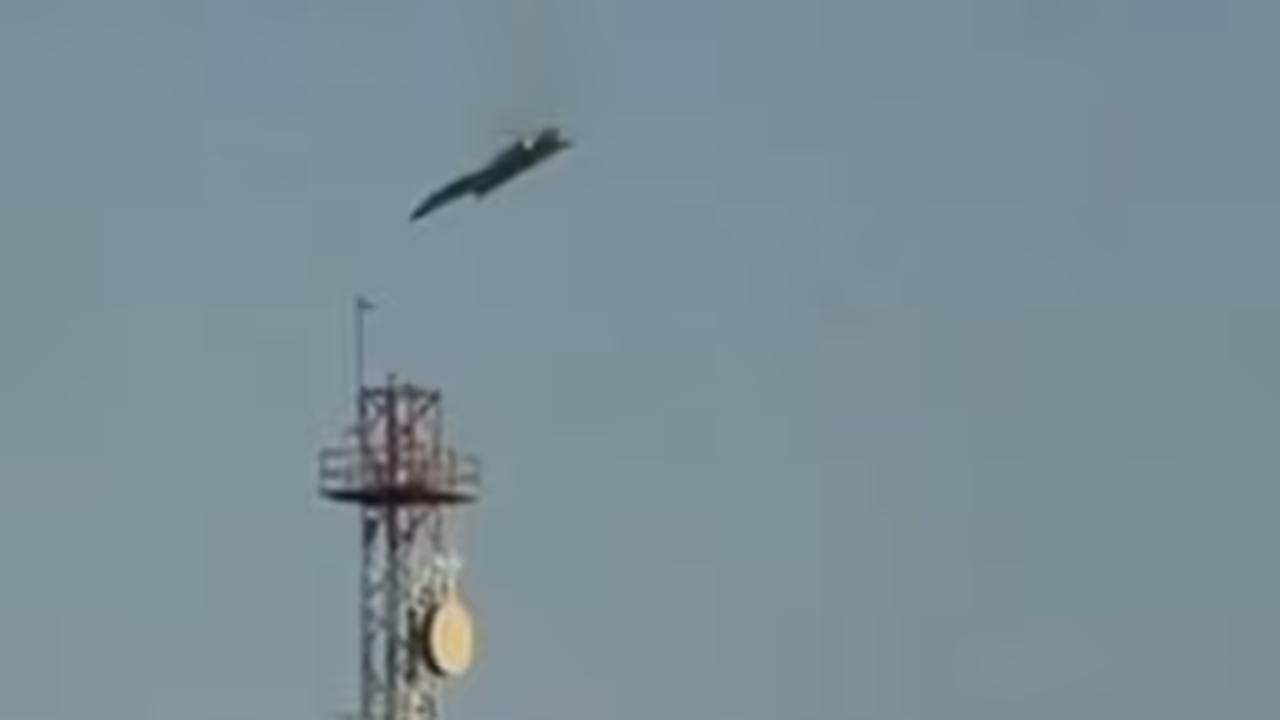
Three missiles, likely from a Patriot battery, tore into the thin air. These are not bullets. They are sentient predators. They don't just hit a target; they find it. They calculate the lead, they adjust for the pilot's desperate maneuvers, and they explode with a proximity fuse that turns the sky into a storm of shrapnel.
The F-15 is a beast. It is designed to take a hit and keep flying. But it was never designed to survive a "friendly" hug from a Patriot missile.
The Weight of the "Oops"
We often think of friendly fire as a freak accident, a one-in-a-million glitch. It isn't. It is the natural byproduct of a world that moves faster than the human brain can process. When we automate our killing, we automate our mistakes.
Consider the operator in the Kuwaiti bunker. His hands were likely shaking. He had been told for weeks that an Iranian strike was imminent. Every blip on his screen looked like a precursor to the end of his world. When the system failed to verify the American transponders—due to a software glitch, a frequency mismatch, or perhaps just the chaotic interference of the desert’s electronic warfare environment—he had to make a choice.
Seconds. That’s all he had.
If he waited to be sure, his city might burn. If he fired and was wrong, he would trigger an international catastrophe. He chose to fire. He chose the safety of his people over the certainty of his sensors.
The American pilots didn't even see it coming. You can be the best pilot in the world, a graduate of Top Gun with a thousand hours in the air, but you cannot outfly a missile that starts its journey only a few miles away. The warning tones in the cockpit would have been a frantic, dying scream. A momentary tug of the stick. A flash of light that outshines the sun.
Then, silence.
The Invisible Stakes of Alliances
This wasn't just a loss of hardware. Three F-15s represent a staggering amount of taxpayer money, yes, but they also represent the frayed edges of a geopolitical safety net. When we station troops in the Middle East, we are not just moving chess pieces. We are weaving a web of trust. We tell our soldiers, "Go fly over that desert. The people down there are on our side. Their radars are your friends."
That trust is now a pile of smoking wreckage in the sand.
The political fallout of such an event is a slow-motion car crash. In Washington, the phone lines hum with a mixture of fury and damage control. In Kuwait City, the apologies are whispered in backrooms while the military brass scrambles to find a scapegoat. Was it the American IFF codes? Was it the Kuwaiti training? Was it the contractor who sold the software?
The truth is usually far less satisfying: it was the friction of reality.
We live in a "landscape" (to use a word I despise) of total surveillance, yet we remain blind to the most basic truths. We have satellites that can read a license plate from orbit, but we cannot distinguish a billionaire's fighter jet from a regional threat when the pressure is on.
The Ghost in the Machine
We have a terrifying habit of overestimating the "intelligence" in Artificial Intelligence. We assume that because a computer handles the targeting, the target must be correct. But code is written by flawed people. It is maintained by tired people. It is operated by terrified people.
In this incident, the technology didn't fail in the way a car engine fails. It failed because it was too efficient at doing what it was told. It was told to find a target that didn't say "friend." The F-15s, through some cruel twist of fate or electronic fog, stayed silent. The system did exactly what it was programmed to do: it erased the silence.
This isn't just about the US and Iran, or the US and Kuwait. This is about the terrifying proximity of disaster in every corner of our hyper-connected world. We are one sensor error away from a war that nobody wants. We are one "mistake" away from a headline that changes the course of history.
Think about the families of those pilots. They weren't told their loved ones died in a heroic dogfight against a sworn enemy. They were told their husbands, sons, or daughters were erased by an "error." There is no glory in a friendly fire incident. There is only a hollow, echoing "why?" that never gets a real answer.
The Dust Settles
The wreckage will be cleared. The black boxes will be analyzed. The politicians will shake hands and reaffirm their "unshakeable bond." But every pilot who takes off from a base in the Gulf tomorrow will look at their radar screen with a new, cold clarity. They will know that the green light on their console is a liar. They will know that the "friendly" sky is full of hungry predators that don't care about the flag on their wing.
We spend billions to ensure our enemies cannot touch us. We build stealth coatings, we develop jamming pods, and we train for every conceivable scenario. Yet, we remain completely vulnerable to our own side.
The tragedy of the three F-15s is not that they were shot down. It is that they were shot down by the very people they were there to protect. It is a reminder that in the high-speed, high-tech theater of modern war, the most dangerous thing in the sky isn't the enemy.
It is the misunderstanding.
The desert is quiet now. The smoke has dissipated into the hazy horizon. But the lesson remains, etched into the sand like a warning from a future we aren't ready for: technology can give us the power of gods, but it cannot give us the wisdom to use it.
Somewhere in a Kuwaiti bunker, a young man is staring at a blank screen, wondering if he will ever see anything but those three disappearing blips for the rest of his life. Somewhere in an American airbase, three lockers are being emptied.
The machinery of war continues to grind. It is a cold, metallic sound. And if you listen closely, it sounds a lot like a mistake.