The air inside a coal mine does not feel like regular air. It is heavy, thick with the scent of damp earth, oiled machinery, and the faint, metallic tang of ancient stone under pressure. Hundreds of meters beneath the surface of the earth, the sky is not a concept; it is a memory. Men go down into that darkness every single day, trading the sunlight for wages, bound together by a silent contract with the rock above their heads.
Then, in a fraction of a second, the contract is torn to pieces.
When a gas explosion tears through a mine shaft, there is no time to scream. The ignition of trapped methane is a blinding, violent eruption of pressure and flame that turns narrow tunnels into cannon barrels. On a routine Tuesday in China, that precise nightmare materialized, cutting short the lives of at least 82 miners in an instant. State media reported the numbers with the cold, clinical detachment that often accompanies national tragedies. Eighty-two dead. A stark, terrible statistic.
But statistics do not bleed. They do not leave behind half-eaten lunches in plastic tin boxes, nor do they leave shoes waiting by the front door of a modest brick home. To understand what happened beneath that mountain, we have to look past the tally. We have to look at the dust.
The Weight of the Mountain
Consider a hypothetical miner named Lao Chen. He is forty-two years old, his hands are calloused into the texture of tree bark, and his lungs bear the permanent, gray tint of his profession. He has a daughter who wants to go to university in Shanghai and a wife who still checks the weather report every morning, even though weather means nothing when you work a third of a mile underground.
Lao Chen’s day begins in the gray fog of 5:00 AM. He straps on a battery pack, checks his headlamp, and steps into the iron cage that drops him into the throat of the earth. The descent is loud—a rattling, clanking journey into absolute dark. Down here, the temperature rises, and the humidity clings to the skin like a wet wool blanket.
The real enemy in these depths is not the hard physical labor. It is invisible. Methane gas seeps from the coal seams silently, odorless and tasteless. In a well-regulated mine, sophisticated ventilation systems pump millions of cubic feet of fresh air down the shafts, diluting the gas, keeping the environment stable. Sensors blink green, monitoring the invisible air.
But when production quotas press hard against the clock, or when maintenance is deferred for just one more shift, the balance tips. The gas pools in the pockets of the ceiling. It waits. All it takes is a single spark—from a faulty electrical cable, a friction strike from a cutting tool, or a compromised battery pack.
Boom.
The shockwave travels at supersonic speeds, followed immediately by a wall of fire that consumes every molecule of oxygen in its path. For those caught in the immediate radius, death is instantaneous. For those further down the line, the danger morphs into a suffocating shroud of carbon monoxide, known to generations of miners as the "afterdamp." It is a quiet executioner.
The Sound Above the Surface
For the families living in the valley surrounding the mine, the disaster does not arrive as a loud explosion. Sound travels poorly through hundreds of meters of solid rock. Instead, it arrives as a sudden, terrifying change in the rhythm of the town.
First, the sirens start at the pit head. Then, the heavy ventilation fans—which usually hum with a comforting, industrial drone—suddenly stutter or fall silent. Rumors travel faster than the rescue trucks. Women drop their market baskets; old men stop their games of chess on the sidewalks. Everyone begins to walk, then run, toward the iron gates of the colliery.
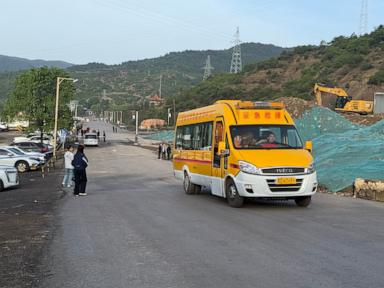
By midday, the gates are locked. Paramilitary police stand guard, their faces expressionless, forming a human wall between the families and the rescue operations. The crowd is a sea of heavy winter coats and desperate, tear-stained faces. They want names. They want to know who was on the roster for the morning shift.
State media outlets arrive shortly after, their cameras catching the flashing red lights of ambulances that sit idling, waiting for casualties that may never emerge. The official reports begin to filter out to the global press wires: an explosion occurred, rescue teams are working bravely, officials are investigating.
But the language of bureaucracy is entirely inadequate for the reality of grief. To say "82 people were killed" is to flatten 82 distinct universes into a single number. It erases the grandmother who will now raise a toddler alone. It erases the young man who was planning to propose over the upcoming Spring Festival. It turns an unimaginable human catastrophe into a logistical problem to be managed.
The Regulatory Shadow Play
China's relationship with its coal sector is a complex dance of economic hunger and safety crackdowns. For decades, the country’s breakneck economic growth was fueled almost entirely by the black rock dug out of provinces like Shanxi, Shaanxi, and Inner Mongolia. It was a brutal era. In the early 2000s, thousands of miners died every year in a relentless cycle of floods, cave-ins, and gas explosions.
To give credit where it is due, Beijing recognized the crisis. The government closed thousands of small, illegal "cookie-cutter" mines that lacked basic safety equipment. They modernized major operations, mandated automated gas-detection systems, and threatened mine owners with severe prison sentences if negligence led to fatalities. The death toll dropped significantly over the last twenty years.
Yet, disasters like this latest explosion prove that the systemic rot has not been entirely excised.
The underlying issue is structural. When global energy markets fluctuate, or when domestic power grids face shortages, the pressure on coal mines to produce becomes immense. Local officials are caught between two conflicting directives from the top: maintain absolute safety, but do not let the power output drop. When those two goals collide, safety measures are frequently treated as optional suggestions.
Consider what happens next in the aftermath of such an event. There will be an immediate, high-profile investigation. The mine manager will likely be arrested, paraded before local cameras as a scapegoat for systemic failures. There will be a nationwide mandate for safety inspections, forcing hundreds of other mines to temporarily suspend operations for review.
But these actions are reactive, a well-rehearsed theater of accountability that takes place only after the coffins are built.
The Chemistry of the Abyss
To understand why methane explosions remain so stubbornly persistent despite modern technology, we have to understand the specific physics of the mine environment. Methane gas ($CH_4$) is explosive only within a specific concentration range when mixed with air—typically between 5% and 15%.
If the concentration is below 5%, there is not enough fuel to sustain a flame. If it is above 15%, there is not enough oxygen for combustion. The danger zone is a narrow, volatile sweet spot.
$$\text{Methane (5% - 15%)} + \text{Oxygen} + \text{Spark} = \text{Detonation}$$
Modern mines use sophisticated infrared sensors to detect when methane levels reach even 1%. When that threshold is crossed, automated systems are supposed to cut power to the entire mine face, stopping all machinery to prevent a spark.
How, then, does an explosion of this magnitude still happen?
The answer almost always comes down to human intervention or catastrophic equipment failure. In some investigated disasters, investigators discovered that supervisors had deliberately placed plastic bags over the sensors to prevent them from triggering automated shutdowns, allowing production to continue uninterrupted. In other cases, poorly maintained ventilation curtains allowed gas to pocket in unmonitored, abandoned sections of the mine until it expanded into active work areas.
It is a terrifying gamble played with human lives as the currency. When the gamble fails, the result is the devastating scene currently unfolding in the Chinese interior.
What Remains in the Dust
As the days progress, the frantic hope of the rescue operation inevitably hardens into the grim reality of recovery. The specialized rescue teams, wearing heavy oxygen rebreathers and carrying thermal imaging gear, must move through tunnels that are structurally compromised, unstable, and filled with toxic gases. Every step they take is a risk to their own lives. They are not looking for survivors anymore; they are looking for closures.
Eventually, the news cycle moves on. The global headlines find a new crisis, a different tragedy to dissect. The official death toll will be finalized, the compensation packages will be distributed to the families—often a lump sum meant to replace a lifetime of earnings—and the mine will either be sealed forever or retrofitted to resume production.
But for the community left behind, the air never truly clears.
The true cost of coal is not measured in yuan or kilowatt-hours. It is measured in the quiet of a town that has lost a generation of its men. It is found in the lingering dust on a mantlepiece, next to a photograph of a smiling man in a hard hat, whose shift never ended, and who never made it back up to see the sun.