The world looks away when the headlines get repetitive. You see a news flash about a distant conflict, feel a brief pang of sadness, and swipe to the next story. But a shattering new report from the United Nations shows exactly why we can't afford to ignore Myanmar.
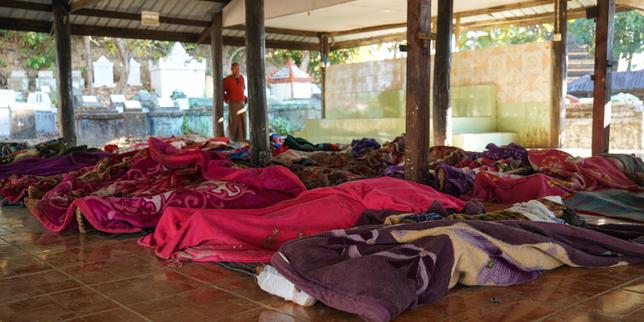
During a heavily restricted six-month election period designed to legitimize a brutal military junta, the army slaughtered at least 702 civilians.
That isn't a vague estimate. It's a verified minimum. Among those dead are 224 women and 153 children. Think about those numbers for a second. Children playing in villages or sitting in makeshift classrooms, obliterated by state-sponsored violence.
The military junta wanted a clean cosmetic makeover. They wanted the world to think they were transitioning back to a civilian-led democracy through an election cycle running from August through January. Instead, they weaponized the entire election period to clean house, crush dissent, and secure territory.
If you think a sham election is just political theater, you're wrong. In Myanmar, it's a death sentence.
The Brutal Reality Behind the Voting Booths
When the military announced it would hold tightly controlled elections, democracy watchdogs knew it was a farce. The military had already spent five years tearing the country apart after deposing the elected government of Aung San Suu Kyi in February 2021. The plan was simple. Run highly restricted polls, deliver a guaranteed walkover win for military allies, and select coup leader Min Aung Hlaing as president.
They got exactly what they wanted. But the price was paid in human blood.
The UN rights office recently released these horrifying figures. They tracked the violence leading up to and during the voting period. The findings show that human rights abuses skyrocketed precisely when the military needed to project total control.
They didn't win hearts and minds. They used sheer terror to eliminate any voice that could challenge the official narrative.
Death From the Skies
You might wonder how a military kills over 700 of its own citizens in just six months without causing a massive international ground war. The answer is simple and terrifying. They use superior air power against unprotected villages.
According to the UN data, airstrikes remain the single largest cause of destruction and suffering in the country. The military isn't just using standard fighter jets anymore. They've diversified their terror tactics.
- Jet fighters dropping heavy ordnance on residential areas.
- Drones carrying out targeted strikes on local leadership.
- Para-motors and gyrocopters used for low-altitude assaults and surveillance.
At least 505 civilians, which accounts for 57 percent of the total casualties, died from these airborne attacks. That includes 175 women and 112 children.
Imagine living under a sky where any humming sound could mean your home is about to vanish. The junta uses aviation fuel supplied by global networks to keep these planes in the air. When the international community fails to choke off these supply lines, they become complicit in the airstrikes.
Tracking the Spikes in Violence
The killing wasn't random. The UN report identified distinct phases where the body count surged. The first major spike happened around August and September. This perfectly matched the official announcement of the upcoming elections. The junta needed to clear out opposition forces and establish a presence in disputed zones before anyone could cast a ballot.
The second surge hit in December. As the voting period neared its end, the military launched major battlefield advancements to secure its territorial reach. They wanted to make sure that when the new, military-vetted MPs walked into parliament, the map of Myanmar looked entirely under control.
UN rights office spokeswoman Ravina Shamdasani clarified that while other armed groups operate in the country, these specific 702 deaths are directly attributable to the Myanmar military. She also stressed a vital point. This number is not a comprehensive total. It only represents the cases where investigators obtained completely verified, credible data despite massive communication blackouts and physical danger. The real number of deaths is almost certainly much higher.
How the International Community Fails the People
The response from global superpowers has been weak. While the military uses heavy weaponry to enforce its rule, foreign nations continue to look the other way or actively profit from the chaos.
Sanctions exist, sure. But they have holes. The military junta still manages to secure dual-use items, spare parts for their aircraft, and the specialized fuel needed to launch jet fighters from secure runways.
A civil war has been raging for years, and the stable control of the military's armed forces, known as the Tatmadaw, has actually dropped significantly. They only hold stable control over a fraction of the country's townships. Because they're losing ground to ethnic armed organizations and People's Defence Forces on the ground, they rely even more on indiscriminate slaughter from the air. It's the desperate tantrum of an occupying army losing its grip.
What Needs to Change Right Now
We can't just read these reports, shake our heads, and move on. Real accountability requires targeted, aggressive action from global governments. The UN has laid out the exact blueprint of what needs to happen to stop the bleeding.
First, countries must completely stop and prevent the transfer of arms, jet fuel, and dual-use items to Myanmar. If a country sells jet fuel to the junta, they're providing the literal fuel used to burn down a village. It's that simple.
Second, the international community needs to refer the entire situation in Myanmar to the International Criminal Court. Min Aung Hlaing and his generals shouldn't be traveling to international summits or enjoying diplomatic immunity. They belong in a dock in The Hague.
If you want to help, support grassroots organizations providing direct cross-border humanitarian aid to displaced families. Push your local representatives to support tighter sanctions on aviation fuel suppliers. Don't let Myanmar become another forgotten conflict. The numbers are horrific, but behind every single digit is a human life that deserved to see the future.