The air inside the lobby carried the mundane scent of floor wax and over-extracted coffee. It was a Tuesday. Tuesdays are supposed to be forgettable. They are the scaffolding of a work week, held together by the rhythmic clicking of keyboards and the low hum of an HVAC system struggling against the afternoon heat. For the security team stationed near the glass-paneled entrance, the primary adversary was usually boredom. They watched the door not because they expected a war, but because that was the job.
Then the glass moved.
We often talk about tragedy in the past tense, dissecting it with the cold precision of an autopsy. We look at grainy CCTV footage and point at timestamps, as if knowing the exact millisecond a life changed provides some sort of shield against it happening again. But stats and timestamps are hollow. They don't capture the sudden, physical weight of realization when a peaceful space is violated. They don't describe the way the sound of a footfall changes when someone isn't walking toward a desk, but charging toward a target.
The Anatomy of a Breach
Security isn't just a series of locks and badges. It is a psychological contract. We agree to play by the rules so that the person next to us feels safe enough to focus on their morning emails. When that contract is torn up, the shift is visceral.
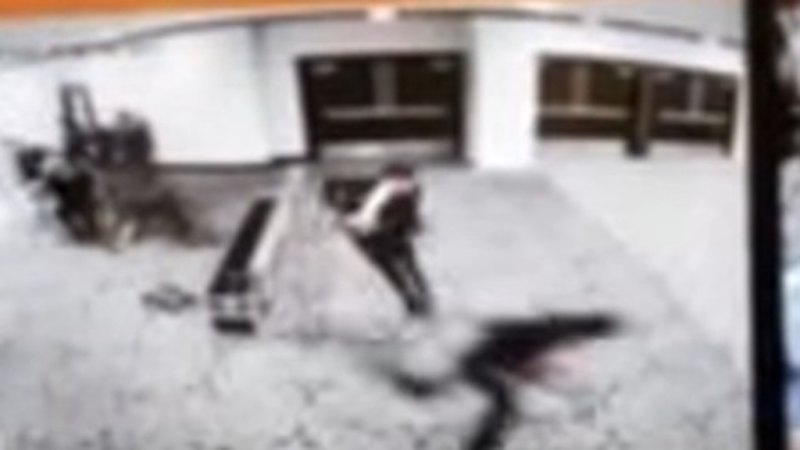
In the footage that now circulates as a grim artifact, you see a figure. He doesn't look like a monster from a movie. He looks like anyone else, until he doesn't. There is a specific tilt to the shoulders, a frantic, jagged energy that separates a person in a hurry from a person on a mission of violence. He ignores the stanchions. He ignores the unspoken social cues of "please wait here."
He rushes.
The security guards—men and women with families, mortgage payments, and favorite songs—had exactly three seconds to transition from a state of routine monitoring to a state of life-or-death confrontation. Imagine your own workplace. Think about the person who sits at the front desk. Now imagine them having to decide, in the time it takes to draw a single breath, if they are willing to be the thin line between a crowded room and a loaded weapon.
The Invisible Stakes of the Front Line
We rarely think about the "front line" when we are at a bank, a government building, or a corporate headquarters. We see uniforms as part of the furniture. We forget that every guard is a human being operating within a complex web of adrenaline and training.
When the alleged shooter bypassed the first layer of security, the stakes weren't just about "unauthorized entry." The stakes were the lives of forty people in the adjacent hallway. The stakes were the silence of a library or the chatter of a breakroom. Security is a binary state: it exists entirely, or it doesn't exist at all. There is no middle ground when a weapon is drawn.
The struggle was brief. It was messy. Real violence is never as choreographed as it appears on a screen. It is a scramble of limbs, a frantic grasping for control, and a terrifyingly loud intrusion of sound into a space meant for quiet. The guards didn't have the luxury of a bird’s-eye view. They didn't know if he was alone. They didn't know his name. They only knew the direction of his momentum.
The Ripple Effect of a Single Moment
The news reports will focus on the motive. They will dig into the alleged shooter’s social media, his past grievances, and his mental state. This is how we try to make sense of the senseless. We want a "why" because a "why" suggests a pattern we can avoid. If we can label the motive, we can tell ourselves we are safe as long as we don't encounter that specific brand of anger.
But the real story isn't in the motive. It’s in the aftermath for those who stood their ground.
Consider the sensory details that the "dry facts" omit. The smell of burnt gunpowder that lingers in the nostrils for weeks. The way a ringing phone suddenly sounds like a scream. The guilt of the survivor, and the quiet, shaking hands of the person who had to tackle a man to the ground. These are the hidden costs of our modern era. We live in a world where "security footage" has become a genre of entertainment, but for the people in that lobby, it wasn't a clip. It was the end of their innocence.
The heroics we praise in these moments are often just the result of a human being having no other choice. It wasn't a calculated decision to be a martyr; it was a desperate, instinctive grab for a wrist to keep a barrel pointed at the floor.
Why We Watch the Tape
There is a reason we find it impossible to look away from these recordings. It isn't just morbid curiosity. It is a search for a manual on how to survive. We watch the way the guard moved, the way the crowd scattered, and the way the shooter lunged. We are subconsciously rehearsing our own tragedies.
We live in an age of hyper-vigilance. We've traded the openness of our public spaces for the "robust" protection of metal detectors and armed response teams. We've accepted that the price of entry into our own society is a brief moment of being searched, scanned, and vetted.
Yet, as this incident proves, the most sophisticated technology in the world is still subservient to the human element. A camera can record a crime, but it cannot stop a man from running. A badge reader can deny access, but it cannot tackle a shooter. In the end, it always comes down to a person standing in a doorway, refusing to move.
The Weight of the "Almost"
The most haunting part of this specific event isn't what happened, but what almost happened. The distance between a "security incident" and a "mass casualty event" is often measured in inches. A jammed slide. A missed step. A guard who decided to look up from their phone at exactly the right second.
We walk through these invisible battlefields every day. We pass through lobbies and transit hubs, unaware of the countless times a disaster was averted by a tiny, unremarkable act of Diligence. We only notice the system when it fails, or when it comes dangerously close to failing.
When the dust settled in that lobby, the fluorescent lights kept humming. The coffee in the breakroom kept getting cold. But the people inside were different. They were no longer just employees or visitors; they were participants in a moment of history they never asked to join. They are now part of the growing fraternity of people who know exactly what it sounds like when a quiet Tuesday is torn open.
We can analyze the footage until the pixels blur. We can debate the policy changes and the security protocols. But we cannot ignore the raw, human terror of those seventeen seconds. It is a reminder that our safety is a fragile, beautiful thing, held together by the courage of people who show up to a "boring" job and find themselves facing the unthinkable.
The glass is replaced. The carpet is cleaned. The timestamps move forward. But the memory of the rush remains—a ghost in the machine, a shadow on the wall, and a permanent weight on the hearts of those who saw the man at the door and realized, too late and just in time, that the world had changed.
He didn't just rush a security desk. He rushed the very idea that we are safe. And in the silence that followed the struggle, the only thing left to do was breathe.