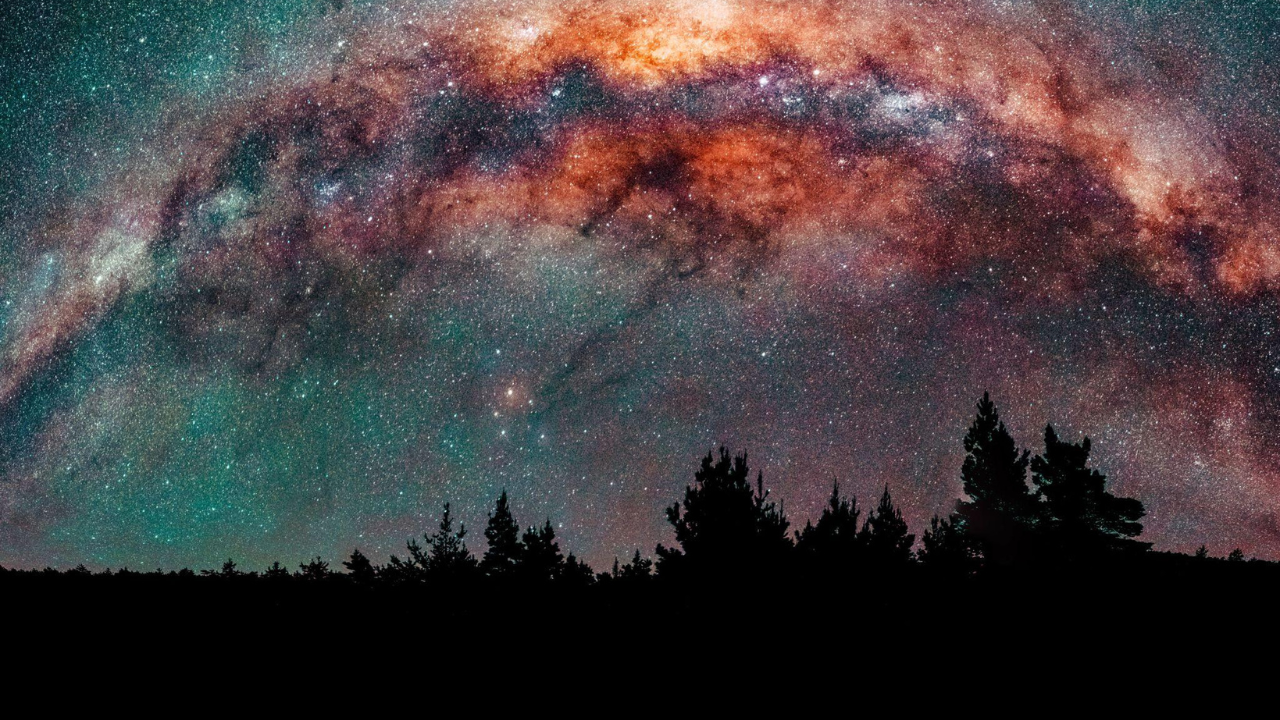
The travel industry loves selling you the romance of the middle of nowhere. Clickbait listicles whisper that if you just sell your possessions, fly to the remotest corner of the Chilean desert, or hike into the dead-zone of a Namibian park, the cosmos will suddenly reveal its secrets to you. They rank the "10 darkest regions on Earth" like they are collecting rare trading cards.
It is a lie designed to sell gear and eco-tourism packages.
Chasing absolute darkness—Bortle Class 1 status on the scale astronomers use to measure night sky brightness—is a fools errand for 99% of amateur astronomers and casual stargazers. The premise is flawed. You do not need absolute darkness to see a mind-blowing sky. In fact, dragging your expensive telescope or camera setup to the literal edge of the earth often guarantees a worse experience, ruined by mechanics that travel bloggers completely ignore: thermal turbulence, atmospheric distortion, and the physiological limits of the human eye.
Stop looking for the darkest spot on the map. Let us dismantle the myth of the remote sky.
The Dark Sky Fallacy: Why Zero Light Pollution is Overrated
The common narrative says light pollution is a binary switch. You are either trapped in a neon city slick or standing in pristine, perfect darkness.
This ignores the physics of our atmosphere. Even if you stand in the absolute center of the Pacific Ocean, thousands of miles from the nearest lightbulb, the sky is not pitch black. The atmosphere itself glows. This phenomenon, known as airglow, is caused by chemical reactions in the upper atmosphere, solar radiation, and cosmic rays.
Furthermore, the human eye has a hard biological limit. Once you reach a certain threshold of darkness—roughly a Bortle Class 3 or 4 sky, which you can find within a two-hour drive of almost any major city—your rods (the cells in your eyes responsible for night vision) are already operating at maximum capacity.
Moving from a rural backyard to the heart of Antarctica does not magically unlock a "super-vision" mode. Your eyes cannot process the marginal difference in contrast. The Milky Way will look marginally more detailed to a camera sensor over a four-hour exposure, but to your naked eye, the difference is negligible. You are burning thousands of dollars on flights to see something your brain literally cannot register.
The Real Enemy is Seeing, Not Shouting
I have spent fifteen years setting up astrophotography rigs on four continents. I have watched wealthy tech executives spend twenty thousand dollars traveling to remote high-altitude deserts, only to pack up their gear in frustration because they forgot the golden rule of optics: Transparency and seeing matter more than darkness.
In astronomy, "seeing" refers to the stability of the atmosphere.
$$\text{Image Quality} \propto \frac{\text{Atmospheric Stability}}{\text{Light Pollution}}$$
You can be in the darkest trench of the Sahara, but if the jet stream is howling overhead, or if the heat from the desert floor is radiating back into the night sky, you will experience severe thermal turbulence. The air will boil. Through a telescope, the stars will look like twinkling blobs, and planetary details will be completely washed out.
Conversely, a suburban park on a night with exceptional atmospheric stability will allow you to see the rings of Saturn, the cloud bands of Jupiter, and bright nebulae with razor-sharp clarity.
The Stargazing Trade-Off
| Location Type | Light Level | Atmospheric Stability | Logistics | Verdict |
|---|---|---|---|---|
| Extreme Remote (Bortle 1) | Perfect | Highly Unpredictable | Nightmare | Overpriced ego trip |
| Rural/State Park (Bortle 3) | Excellent | Predictable | Easy | The Sweet Spot |
| Suburban Backyard (Bortle 5) | Moderate | High (with local exceptions) | Zero Effort | Best for Planets/Moon |
The Logistics Nightmare They Never Mention
Let us talk about the battle scars of remote travel. The lifestyle blogs picture a pristine night under a tripod. They never mention the wind.
The world's darkest places are almost exclusively deserts, high-altitude plateaus, or oceanic islands. These places are meteorological battlegrounds.
- The Chilean Atacama: Bone-dry, yes. But the wind can gust so violently that it vibrates heavy equatorial mounts, ruining every single photographic exposure. The dust is microscopic and abrasive; it gets into the gears of your tracking mounts and pits the coatings on expensive mirrors.
- High-Altitude Plateaus: At 12,000 feet, your blood oxygen drops. Your brain gets sluggish. Your fine motor skills degrade. Trying to troubleshoot a complex computerized telescope mount while freezing and oxygen-deprived is a recipe for a miserable night.
- The Island Paradises: Places like Hawaii’s Mauna Kea are legendary, but the humidity at lower levels destroys gear, and the summit requires strict permits and hazardous driving conditions at night.
If you blow your budget getting to these places, you are sacrificing the money you should have spent on better optics, tracking mounts, or hydrogen-alpha filters that can cut through light pollution right from your backyard.
Dismantling the "People Also Ask" Assumptions
Whenever this topic arises, the same bad questions circulate online. Let us answer them with brutal honesty.
Can you see the Milky Way with the naked eye from anywhere?
No, but you do not need to go to the Atacama Desert either. If you can see the constellation of Scorpio clearly in the summer without it drowning in a orange glow, you are deep enough into a dark sky to see the core of our galaxy. Stop overthinking the coordinates.
What is the absolute best telescope for a beginner?
The one you actually use. If you buy a massive, 12-inch Dobsonian telescope because you think you need to haul it to a mountain top to see deep-sky objects, it will end up gathering dust in your garage. It is too heavy. It is too inconvenient. A small, high-quality 80mm apochromatic refractor used in a suburban driveway will give you more hours of actual enjoyment than a giant light-bucket trapped in your storage unit.
Do I need to buy tracking software and expensive cameras?
If your goal is just to experience the universe, no. The obsession with astrophotography has ruined basic stargazing. People spend four hours aligning computers and looking at a laptop screen instead of looking up.
Actionable Strategy: The 80/20 Rule of Stargazing
If you want to actually see the stars without destroying your wallet or your sanity, stop looking at global light pollution maps and start looking at local topography and weather patterns.
- Target the Rain Shadows: Look for regions behind mountain ranges that block coastal moisture and clouds. A slightly brighter sky that is perfectly clear and dry always beats a pitch-black sky covered in high-altitude cirrus clouds.
- Elevate Modestly: You do not need to climb Mount Everest. Getting just 2,000 to 3,000 feet above sea level gets you above the dense, murky boundary layer of the atmosphere where most human light pollution and humidity trap themselves.
- Invest in Filtration, Not Airfare: Modern narrow-band filters are dark sky simulators in a metal thread. A multi-band pass filter isolates the specific wavelengths of light emitted by nebulae ($H-\alpha$ and $O-$III) while completely blocking the wavelengths emitted by LED and sodium-vapor streetlights.
You can capture research-grade images of the Cygnus Wall from a balcony in downtown Los Angeles using the right filters.
The travel industry wants you to believe that the night sky is a scarce commodity locked away in premium destinations. It is a marketing gimmick designed to exploit your sense of wonder. The cosmos is not hiding behind a five-thousand-dollar plane ticket. It is sitting right outside your city limits, waiting for you to look up on a night when the air stands still. Stop packing your bags, check the barometric pressure, and go use what you have.