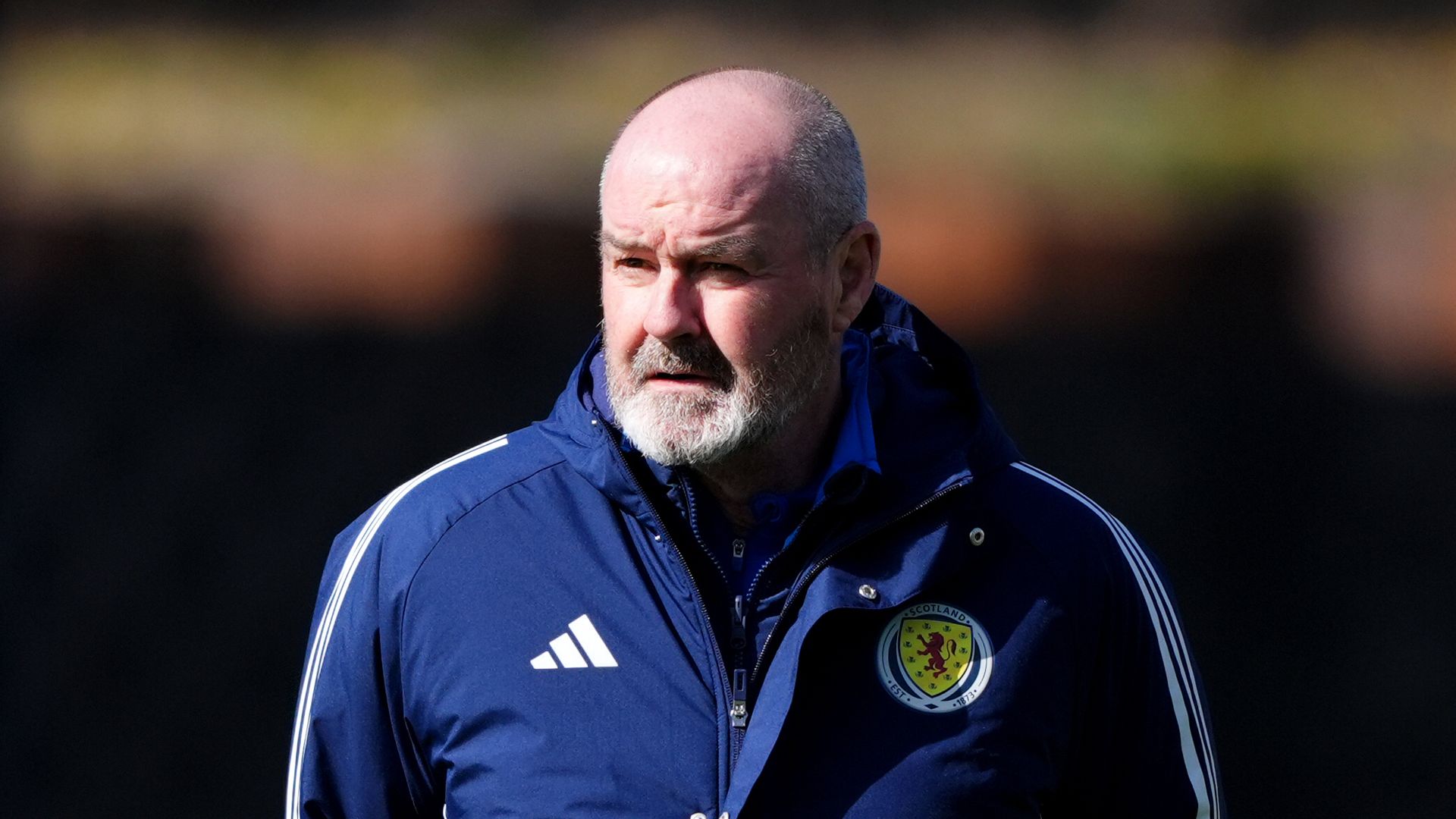
Steve Clarke just handed the Tartan Army a roadmap to mediocrity.
The 26-man squad announced for the 2026 World Cup is a monument to sentimentalism. It’s a roster built on the shaky foundation of "loyalty" rather than the cold, hard logic of tournament physics. By leaning on the old guard—names like Craig Gordon and a returning Ross Stewart—Scotland isn’t preparing for a deep run in North America. They are preparing for a dignified exit.
The "lazy consensus" among the pundits is that we need "experienced heads" to navigate the pressure of a global stage. This is a fallacy. Experience in losing or failing to qualify is not a badge of honor; it is a weight. While the media celebrates the inclusion of Findlay and Curtis as "shrewd depth," they ignore the reality that this squad lacks the explosive verticality required to survive the heat of a 48-team format.
The Craig Gordon Paradox
Let’s start with the most glaring act of nostalgia: Craig Gordon.
At 43, Gordon is a legend. He is also a liability in the modern game. Goalkeeping in 2026 isn't just about shot-stopping; it’s about sweeping, high lines, and distribution that breaks the first press. By prioritizing a veteran whose mobility is naturally declining, Clarke is forcing his defensive line to sit five yards deeper than they should.
In a high-intensity environment, those five yards are the difference between a compact mid-block and a disjointed mess. We saw it in the qualifiers. When the backline drops to protect a stationary keeper, the gap between the defense and Billy Gilmour or Scott McTominay becomes a playground for elite No. 10s. Clarke isn't picking a keeper; he’s picking a security blanket.
Why Sentimentality Kills Underdogs
- The Mobility Gap: CONCACAF conditions—humidity and travel—punish older squads.
- The Tactical Anchor: A deep-sitting keeper prevents the aggressive press Scotland needs to upset superior technical sides.
- Wasted Slots: Every "experience" pick is a stolen opportunity for a 19-year-old with the lung capacity to chase a game in the 80th minute.
The Myth of the Target Man
The inclusion of Ross Stewart and the reliance on traditional physical profiles is a tactical retreat. The world has moved on from the "big man up top" strategy unless that big man has the technical floor of an Erling Haaland.
The Scottish media loves a "handful" of a striker. They talk about "putting himself about" and "winning headers." This is 1990s logic. In the modern World Cup, center-backs from the likes of France, Spain, or even the rising powers in Africa and South America are athletes who eat traditional target men for breakfast.
If you aren't threatening the space behind the defense, you aren't threatening the defense at all. By loading the squad with strikers who need the ball to feet or onto their heads in a static box, Clarke has made Scotland predictable. We are essentially saying, "We hope to win a corner or a set-piece." That isn't a strategy; it’s a prayer.
Imagine a scenario where Scotland faces a side like Morocco or Japan. These teams thrive on transitions. If your focal point up top cannot press from the front for 70 minutes, your midfield gets overrun. Stewart is a fine player, but his injury history and physical profile suggest he’s a plan B that will be used as a plan A out of sheer stubbornness.
The Midfield Congestion Problem
John McGinn and Scott McTominay are the heart of this team. Nobody disputes that. But the squad balance suggests Clarke plans to run them into the ground.
By picking Findlay and Curtis—essentially "steady" players—the manager has signaled that he doesn't trust the mavericks. Where is the genuine, terrifying pace on the wings? Where is the player who can take a ball in tight quarters and turn a defender in one motion?
The squad is heavy on "honest" players. "Honest" is scout-speak for limited. You don't win at the World Cup by being honest; you win by being difficult to track. We have a midfield of engines, but no steering wheel.
The Cost of Consistency
- Predictability: Every opponent knows Scotland will try to narrow the pitch and win second balls.
- Fatigue: Without tactical variety, the primary starters have to exert 110% effort every game.
- Lack of "X-Factor": There is no one on this bench that a Brazilian or German defender fears seeing at the 70-minute mark.
I’ve seen dozens of mid-tier nations make this exact mistake. They pick the guys who "got them there." It feels right. It feels fair. But the World Cup isn't a reward for past services; it’s a ruthless culling of the stagnant. Croatia didn't become a powerhouse by being loyal to aging stalwarts; they did it by ruthlessly integrating technical youth alongside world-class anchors. Scotland is doing the opposite. We are holding onto the anchor and letting the ship sink.
Dismantling the "Depth" Argument
The press releases are touting this as the deepest Scotland squad in a generation. That is a fundamental misunderstanding of the word "depth."
Depth isn't having three players of the same mediocre level for every position. True depth is having tactical pivots.
- Can we switch to a back four mid-game? Not effectively with these personnel.
- Can we play a false nine? No.
- Can we play a high-press, high-line trap? Absolutely not with the chosen goalkeeping and center-back union.
Clarke has picked 26 players to play one specific, rigid style of football. If an opponent figures out how to bypass McTominay—which top-tier coaches do by doubling the pivots—Scotland has no "Plan C." We are essentially bringing 26 versions of the same tactical idea.
The Uncomfortable Truth
The fans won't like hearing this, but this squad selection is a white flag. It’s a manager choosing the players he "trusts" because he is afraid of the volatility that comes with genuine flair and youth.
We are told that Ben Doak or the younger, unproven flyers are "too raw" for a tournament of this magnitude. This is the same tired rhetoric that kept world-class talents on the bench for decades. If they are fast enough and skilled enough, they are old enough. A 20-minute cameo from a "raw" talent who can run a 100m in sub-11 seconds is worth more than 90 minutes of an "experienced" pro who can no longer win a footrace.
The 2026 World Cup will be defined by athletic superiority and the ability to rotate without losing intensity. Clarke’s squad is built for a 90-minute slog, not a seven-game tournament. We have picked a squad of survivors, not a squad of hunters.
Stop praising the "consistency" of the selections. Consistency is just another word for a ceiling. By refusing to gamble on high-ceiling, low-floor youngsters, Clarke has ensured that Scotland's performance will be exactly what we expect: a few brave blocks, a scrappy goal from a corner, and a flight home before the knockout rounds begin.
If you want to win, you have to be willing to look stupid. You have to bench the legends and start the kids who don't know they're supposed to be scared. Clarke isn't willing to look stupid. He’d rather be "respectably" eliminated with his favorites by his side.
Stop asking if this is the best squad Clarke could have picked. Ask why he was too afraid to pick the one that could actually win.
Pack your bags for the group stage. The status quo has never looked so bleak.