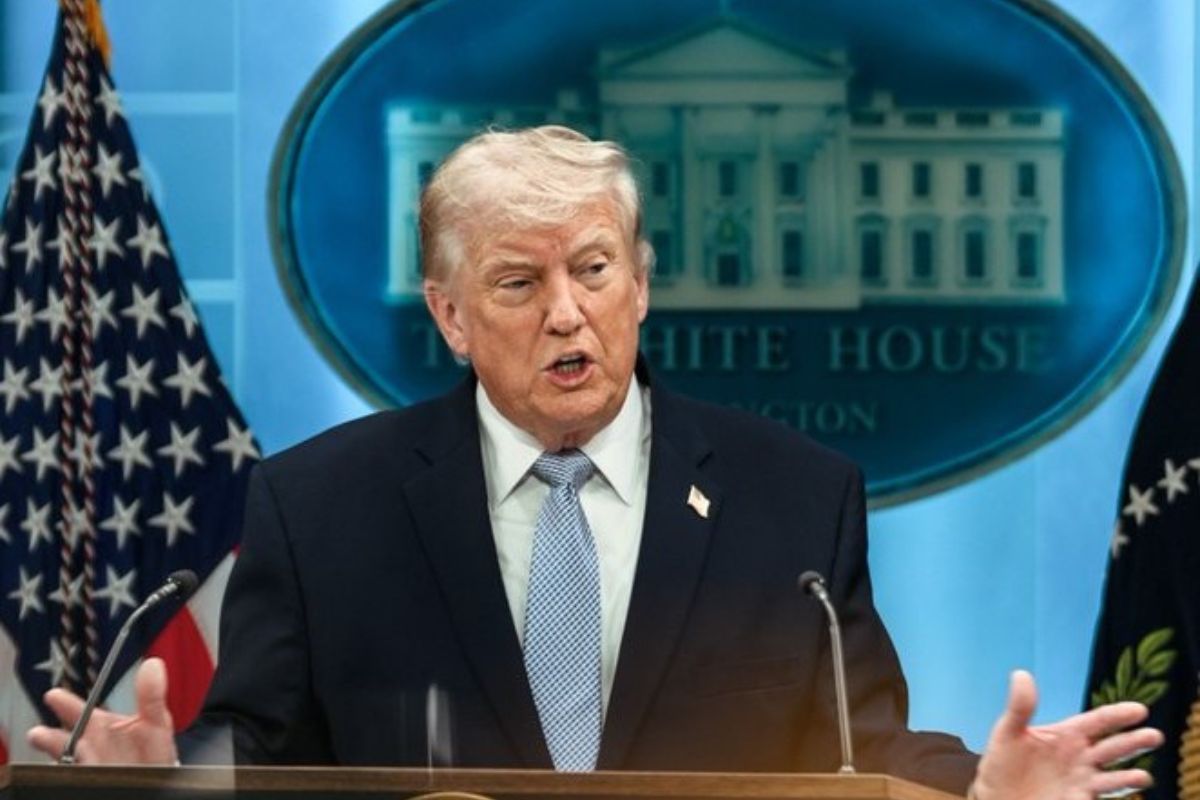
The mainstream media is choking on its own outrage. Ever since the news broke that Sam Bankman-Fried formally petitioned President Donald Trump for a presidential pardon, the commentary has followed a painfully predictable script. The talking heads call it the ultimate act of millennial audacity. They paint it as a disgraced crypto bro begging for a get-out-of-jail-free card, relying on the same blind hubris that collapsed FTX.
They are entirely misreading the board.
This petition isn't a desperate Hail Mary from a broken man. It is a calculated, deeply logical legal gambit that aligns perfectly with the transactional architecture of modern executive clemency. The lazy consensus views this through a moral lens. But Washington does not operate on morality. It operates on leverage, precedent, and the realignment of political narrative.
When you strip away the emotional theater surrounding the $8 billion collapse of FTX, Bankman-Fried’s move isn't just understandable. From a clinical, strategic standpoint, it is the only move that makes sense.
The Flawed Premise of the Perpetual Villain
The public wants a simple story: bad man does bad things, goes to jail for 25 years, and stays there. The current media narrative surrounding the pardon request treats the judicial system as an immutable moral arbiter.
Let's dismantle that illusion immediately.
The criminal justice system routinely recalibrates sentences based on political shifts and economic realities. To understand why SBF’s application is structurally sound, you have to look at the specific nature of his conviction and the unique philosophy of the current administration regarding federal prosecutions.
The core of the prosecution's case in United States v. Samuel Bankman-Fried rested on wire fraud, securities fraud, and money laundering. The Department of Justice framed it as an open-and-shut case of a rogue founder using customer funds as a personal piggy bank. The mainstream press bought this hook, line, and sinker, cementing SBF as the modern Bernie Madoff.
But here is the nuance the superficial analysts missed: Madoff’s victims lost everything permanently. FTX’s bankruptcy estate, managed by John J. Ray III, has systematically recovered assets, aggressively liquidating venture investments and crypto holdings. Due to the massive appreciation of digital assets during the market recovery, the estate confirmed that non-governmental creditors are projected to receive 118% to 142% of their allowed claims.
The Reality Check: In the eyes of federal sentencing guidelines, intent and harm are inextricably linked. When the "harm" metric shifts from catastrophic permanent loss to a delayed, interest-bearing payout via bankruptcy court, the narrative foundation of a 25-year sentence begins to warp.
Bankman-Fried’s legal team isn't arguing that he did nothing wrong. They are arguing that the institutional punishment vastly outstrips the ultimate financial reality of the recovery. In a political environment that views aggressive federal overreach by executive agencies with extreme skepticism, that distinction is everything.
The Transactional Logic of the Trump Clemency Strategy
To judge the viability of a pardon request by looking at legal textbooks is a rookie mistake. You have to look at the historical behavior of the specific executive holding the pen.
Donald Trump’s first term fundamentally redefined the parameters of the presidential pardon power. He shattered the traditional, bureaucratic pipeline run by the Department of Justice’s Office of the Pardon Attorney. Instead, clemency became an instrument to challenge the perceived excesses of the federal bureaucracy and the "Deep State" justice apparatus.
Look at the precedents. Trump previously commuted the sentence of high-profile white-collar defendants like Rod Blagojevich and completely pardoned figures like Michael Flynn and Roger Stone. He also granted clemency to digital asset pioneers and operators who fell afoul of federal regulators, such as Ross Ulbricht, the creator of the Silk Road, whose sentence was a major rallying cry for the libertarian wing of the tech sector.
SBF’s legal team knows exactly what they are doing. They are positioning his case not as an apology, but as a critique of a highly politicized Department of Justice that rushed to secure a trophy conviction.
The Regulatory Overreach Narrative
The argument being pitched to the White House doesn't lean on sympathy; it leans on a shared enemy. The narrative is simple: SBF was a victim of a coordinated campaign by Gary Gensler’s SEC and a weaponized Southern District of New York (SDNY) to crush domestic cryptocurrency innovation.
By framing the FTX prosecution as an aggressive, politically motivated crusade led by the previous administration's appointees, SBF’s team targets a specific ideological vulnerability.
- The SDNY Variable: The Southern District of New York has long been viewed by conservative populists as an unchecked fiefdom targeting political outsiders.
- The "Made in America" Crypto Angle: FTX’s collapse paved the way for offshore, unregulated exchanges to dominate the global market, effectively punishing American enterprise while driving capital out of the country.
I’ve watched corporate entities spend tens of millions of dollars trying to fight federal indictments with standard legal maneuvers, only to realize too late that the courtroom is a theater where the rules favor the house. The only way to counter a political prosecution is with a political solution. SBF’s team understands this reality. The public doesn't.
Dismantling the Public's Flawed Objections
The internet is flooded with "People Also Ask" style objections regarding this pardon application. Most of these questions are built on completely broken premises. Let’s address them with cold, institutional reality.
"Why would Trump pardon a massive Democratic donor?"
This is the most common, surface-level objection. Yes, SBF was one of the largest publicly declared donors to Democratic campaigns during the 2022 midterm elections.
But this ignores two critical facts. First, SBF himself admitted in a subsequent interview with crypto journalist Tiffany Fong that he donated just as much money to Republican candidates, but did so via "dark money" channels to avoid media scrutiny from left-leaning journalists. The political class in Washington knows exactly where that money went, even if the public doesn't.
Second, a pardon here serves as the ultimate dominance display over the opposition. By pardoning or commuting the sentence of a figure so deeply intertwined with the institutional establishment of the opposing party, the executive branch effectively signals that the entire previous era of regulation and prosecution was illegitimate. It turns a former adversary into a living monument of your own unilateral power.
"Isn't the scale of the fraud too large for a pardon?"
This question assumes that the magnitude of a crime prevents executive intervention. History proves otherwise.
Consider Marc Rich, the billionaire commodities trader indicted for tax evasion, wire fraud, and racketeering, who fled the country to avoid prosecution. He was granted a full controversial pardon by President Bill Clinton on his last day in office. The scale of the alleged offense is rarely the deciding factor; the geopolitical and macroeconomic alignment at the moment the pen hits the paper is what matters.
The Strategic Underbelly of the Timing
Why now? Why file this petition early in the administrative cycle rather than waiting for the traditional lame-duck period at the end of a presidency?
Because timing dictates intent. A late-stage pardon is an act of political cowardice; an early-stage petition is an invitation to negotiate.
[SBF Legal Strategy Timeline]
       │
       ▼
[Identify Asset Recovery Milestones (100%+ Payouts)]
       │
       ▼
[Frame SDNY/SEC Prosecution as Overreach]
       │
       ▼
[File Early Clemency Petition to Force Administrative Review]
       │
       ▼
[Position Case within Broad Crypto/Regulatory Reform Agenda]
By injecting the pardon request into the current political cycle, SBF’s team leverages the broader ongoing debate surrounding cryptocurrency regulation in the United States. The administration is actively looking for ways to signal that America is open for digital asset business and that the aggressive enforcement actions of the 2021–2024 era are officially over.
SBF is offering himself up as the ultimate case study of that era's excesses. If his sentence is commuted, it serves as an immediate, undeniable declaration that the old rules no longer apply.
The Hard Truth of the Legal Chessboard
Let’s be clear about the downsides of this strategy. It is incredibly high-risk. It completely alienates the residual base of retail investors who lost access to their funds for years during the bankruptcy proceedings. It turns SBF into a permanent lightning rod for public outrage. If the petition is rejected outright, he has exhausted his most potent narrative lever, leaving him to rot in a medium-security federal facility for the next two decades.
But what else does he have to lose?
An appeal through the Second Circuit Court of Appeals is a statistical graveyard. The reversal rate for federal criminal convictions in the Second Circuit is abysmally low, hovering around single digits. Relying on traditional appellate logic to overturn a multi-count fraud conviction handed down by a jury that deliberated for less than five hours is a fool's errand.
The mainstream press will continue to write moralizing op-eds about how disgusting it is that Bankman-Fried is seeking an exit strategy. They will call it a delusion of grandeur.
They are wrong. It is a calculated assessment of the intersection between law, power, and political theater. SBF isn't playing by the rules of the judicial system because the judicial system has already spent its ammunition on him. He is playing by the rules of power. And in that arena, the only unforgivable sin is failing to move your pieces when the board changes.