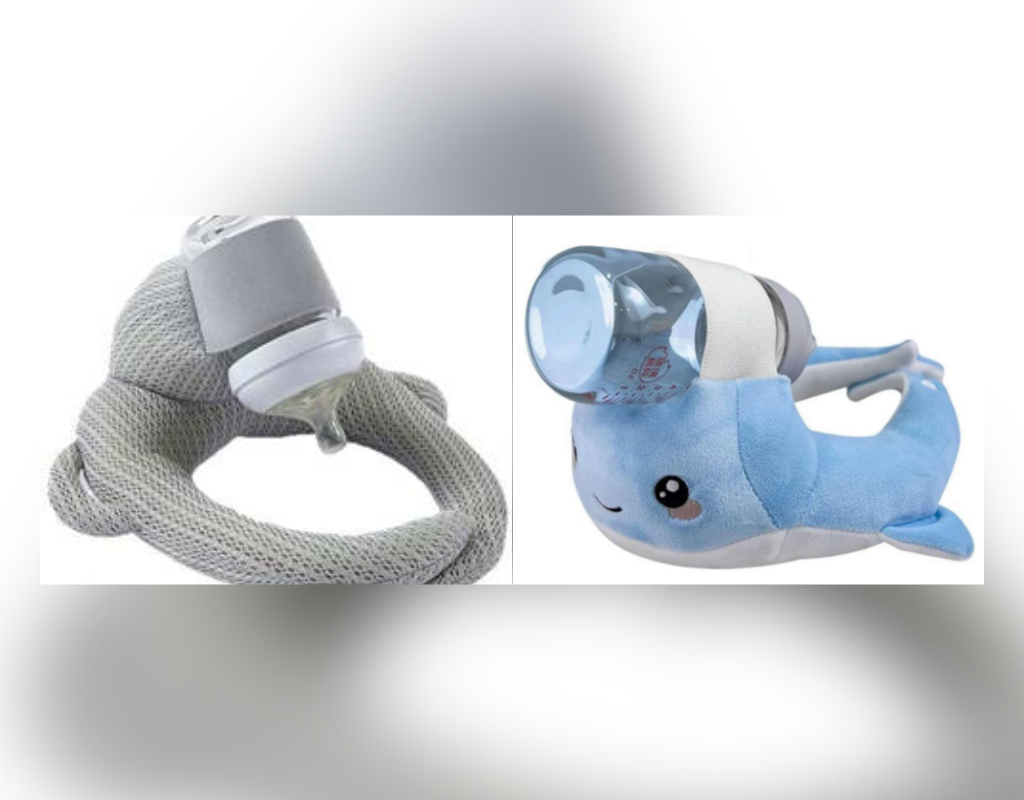
Health Canada is worried about your baby’s mesh feeder. They’ve issued the standard bureaucratic warnings, flagged the "choking hazards," and signaled for a retreat toward the sterile safety of total parental control. They are wrong. Not because the devices are flawless—they aren't—but because the underlying premise is a fundamental misunderstanding of human oral-motor development.
The panic over self-feeding gadgets is a symptom of a larger, more dangerous trend: the infant safety industrial complex. By hyper-focusing on the infinitesimal risk of a mesh bag breaking, we are ignoring the massive, long-term risk of delayed sensory integration and oral mapping. We are raising a generation of children who don't know how to navigate the mechanics of their own mouths because we’ve replaced exploration with fear. Building on this theme, you can also read: The Invisible Passenger at Gate 155.
The Choking Hazard Fallacy
Let’s dismantle the "choking hazard" narrative immediately. The primary argument against self-feeding devices is that they can break or that they encourage "unsafe" feeding positions.
Statistics on actual choking incidents caused by regulated self-feeding devices are remarkably low compared to common household objects or even poorly prepared "finger foods." When a regulatory body issues a warning, they aren't looking at the efficacy of the tool; they are covering their legal liabilities. They want to eliminate the risk of a headline, not optimize your child's ability to eat. Experts at Psychology Today have also weighed in on this trend.
Choking is a physiological reality of learning to eat. It is separate from gagging, which is a vital protective reflex. Most parents—and apparently, many regulators—cannot distinguish between the two. Gagging is the body's way of saying, "This is too big, let me move it forward." Choking is a silent, life-threatening airway obstruction.
By removing the tools that allow a child to safely practice the "tongue lateralization" required to move food from the center of the mouth to the molars, we are actually increasing the risk of choking later. You don't learn to drive by sitting in a stationary car; you don't learn to eat by being passively spoon-fed mush until you're two years old.
The Sensory Deprivation of Purees
The "lazy consensus" suggests that if a device is slightly risky, we should return to the gold standard: the spoon and the jar of beige sludge.
This is a developmental disaster.
When a baby uses a self-feeder—whether it’s a silicone model or a mesh bag—they are receiving feedback. They feel the texture. They control the pressure. They are mapping the boundaries of their oral cavity. This is proprioception.
I have spent years watching the fallout of "hyper-safe" feeding. I’ve seen toddlers who refuse anything with a grain of texture because their parents were so terrified of a Health Canada warning that they bypassed the critical window for sensory acceptance. This window doesn't stay open forever. Between six and nine months, the mouth is a primary tool for learning. If you restrict that learning to "safe" liquids, you are creating a "picky eater" who is actually just a sensory-avoidant child.
The Real Enemy is Passive Feeding
The competitor article treats the device as the problem. The device is a tool. The real problem is passive feeding.
When you spoon-feed a baby, you are in control. You decide the pace, the volume, and the timing. You are effectively overriding the child's internal hunger and satiety cues. Self-feeding devices, for all their supposed mechanical flaws, shift the power dynamic. They require the child to be an active participant.
- Active Feeding: Child grabs the device, brings it to the mouth, gnaws, tastes, and stops when they are done.
- Passive Feeding: Parent waits for an open mouth, shoves in a spoon, and repeats until the jar is empty.
The former builds a healthy relationship with food and a functional jaw. The latter builds a compliant consumer. If a mesh feeder allows a child to experience the acidity of a strawberry or the fiber of a cold piece of melon without the parent having a panic attack, the developmental trade-off is worth the "risk" of a plastic clip failing—a risk that can be mitigated by basic, common-sense inspection.
Why We Fear Autonomy
Why are we so quick to ban the feeder and embrace the puree? Because autonomy is messy.
Self-feeding is disgusting. It involves spit, mashed banana in the eyebrows, and a high probability of laundry. Regulators love to cite "safety" because it’s an unimpeachable shield. If you argue against safety, you’re a monster. But we aren't arguing against safety; we are arguing against stagnation.
Imagine a scenario where we applied Health Canada's feeding logic to walking. "Toddlers often fall and hit their heads when learning to walk. Therefore, all children should be kept in padded walkers or carried until the age of four to ensure maximum cranial safety."
We would call that insanity. Yet, when it comes to the complex, muscular task of eating, we treat the most basic tools of exploration as "hazards."
The Mechanics of the Mouth
To understand why these devices are actually beneficial, you have to understand the Gag Reflex Shift.
At birth, the gag reflex is triggered near the front of the tongue. As a child puts things in their mouth—fingers, toys, and yes, self-feeders—the trigger point for the gag reflex moves further back. This is a calibrated, physical desensitization.
If a child never "challenges" their mouth with textures or objects they can control, that reflex stays forward. These are the kids who throw up the moment a piece of lumpy potato hits their tongue at twelve months old. By "protecting" them from the feeder, you have inadvertently trapped them in a permanent state of gag-response hypersensitivity.
The Myth of the "Perfect" Food Size
The standard advice is to cut food into "pinky-finger-sized" pieces. While this is the foundation of Baby-Led Weaning (BLW), it isn't a silver bullet. Some children have low muscle tone in the jaw. Some have delayed motor skills.
For these children, a self-feeding device is not a "hazard"—it is an assistive technology.
It allows them to get the nutrients and the flavor profile of real food without the frustration of losing the food in their mouth or being unable to grip it. To dismiss these tools as "dangerous" is a slap in the face to parents of children who don't fit the "perfectly developing" mold that Health Canada assumes exists for everyone.
Tactical Advice for the Unfiltered Parent
Stop reading the fear-mongering bulletins and start looking at the mechanics of your child.
- Inspect the Tool, Don't Ban It: If you're using a silicone or mesh feeder, check the structural integrity every single time. Look for tears. Test the hinge. It’s a tool, not a "set and forget" babysitter.
- Supervision is Not a Suggestion: The "hazard" exists when parents use these devices as a way to ignore their children. If you are sitting with your child, a device failure is a minor inconvenience. If you are in the other room, it’s a crisis.
- Prioritize Resistance: Use the feeder for foods that offer resistance—frozen mango, cold cucumber, steak strips. The resistance is what builds the masseter muscle.
- Phase It Out: These aren't for three-year-olds. They are a bridge. Use them to build the map, then burn the bridge and move to open-air solids.
The Expert Burden
I’ve seen the "safety first" crowd win. I’ve seen the clinics filled with three-year-olds who can’t chew a chicken nugget because their parents followed every regulatory warning to the letter. These parents aren't "bad"; they're just well-behaved. And in the world of infant development, being well-behaved is often the quickest path to a developmental delay.
Trust the biology of your child more than the bureaucracy of a government agency. Your baby’s mouth was designed to explore, to fail, to gag, and eventually, to master the art of eating.
Stop trying to sanitize the process. A mesh bag isn't the enemy. The belief that your child is too fragile to learn is.
If you’re waiting for a government agency to give you permission to let your child take a risk, you’ll be waiting until they’re thirty. By then, they’ll still be choking on the stuff you were too afraid to let them chew.