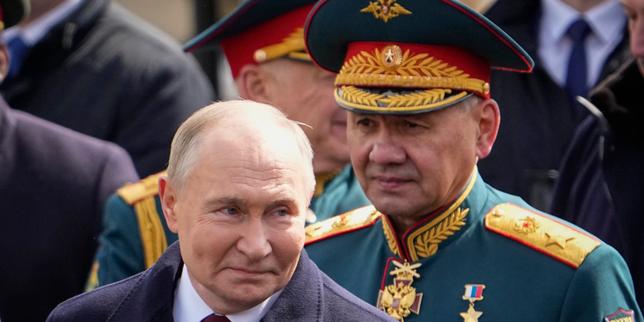
Sergei Shoigu wants you to believe that every square inch of Russia is a bullseye. He wants the Russian public to feel the breath of Ukrainian drones on their necks, and he wants the West to believe that the geographical buffer of the largest country on Earth has evaporated. It is a compelling narrative. It is also a fundamental misunderstanding of how modern attrition works.
The "lazy consensus" among defense analysts is that the proliferation of long-range UAVs has rendered traditional borders obsolete. They see a drone strike in Tatarstan or a refinery fire near St. Petersburg and conclude that the Kremlin’s air defense has collapsed. They are wrong. They are falling for a psychological operation disguised as a technical failure. Also making news lately: Finland Is Not Keeping Calm And The West Is Misreading The Silence.
The Myth of Total Vulnerability
When the Secretary of the Russian Security Council claims "no region is safe," he isn't admitting defeat. He is justifying a massive, permanent shift in state resource allocation. To say everything is a target is to say that nothing is a priority.
Geography still matters. Physics still matters. Further details on this are detailed by USA Today.
The math of drone warfare is often presented as a simple equation of $Cost_{Drone} < Cost_{Interceptor}$. While $10,000 for a cardboard-and-lawnmower-engine drone versus $2 million for an S-400 missile is an ugly ratio, it ignores the most expensive variable: Signal-to-Noise.
Russia occupies 17 million square kilometers. To "protect" everything, as Shoigu implies is necessary, would require an electronic warfare (EW) density that would effectively shut down Russia’s own domestic infrastructure. You cannot jam every frequency in every village without blinding your own logistics.
The reality? Ukraine isn't aiming for "every region." They are aiming for the specific nodes where the Russian economy bleeds—oil refineries and specific dual-use factories. Shoigu’s rhetoric about "total vulnerability" is a political tool to flatten the nuance of these surgical strikes into a generalized "national emergency."
Precision is a Proxy for Weakness
We have been conditioned to see precision as the ultimate flex. It isn't. In a war of high-intensity attrition, precision is often the tool of the side that cannot afford volume.
Ukraine's deep-penetration strikes are masterpieces of engineering, but they are also symptoms of a constraint. They must fly 1,000 kilometers because they cannot move the front line 10 kilometers. Every successful hit on a Russian oil depot is a tactical victory, but it is not a strategic pivot.
I’ve seen military planners obsess over the "spectacle" of a drone hitting a skyscraper in Moscow. It makes for a great TikTok. It does almost zero damage to the Russian war machine's ability to manufacture 152mm shells.
The Refined Attrition Model
Let's look at the actual mechanics of these long-range strikes. A typical Ukrainian long-range UAV, like the Liutyi, carries a payload that is, frankly, modest compared to a cruise missile.
- The Payload Problem: Most of these drones carry between 20kg and 50kg of explosives.
- The Structural Reality: To take down a hardened industrial target, you don't need a hit; you need a series of hits on specific, unshielded cooling towers or distillation units.
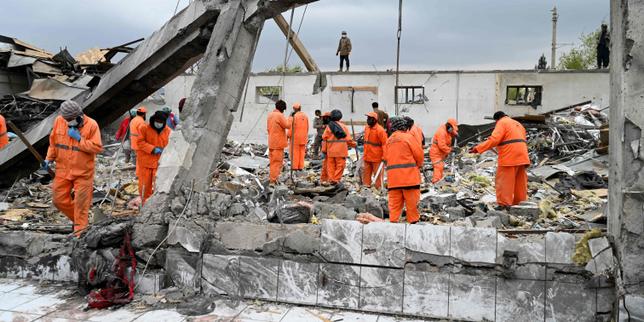
- The Repair Loop: Russia has shown an annoying, grit-toothed ability to patch industrial damage. They are using 1970s-style redundancy to defeat 2020s-style precision.
The status quo says drones are the ultimate disruptor. The nuance is that drones are the ultimate irritant. They force the Russian military to pull Pantsir systems away from the front lines to guard refineries, but they do not stop the tanks from rolling.
The Electronic Warfare Blind Spot
People ask: "If Russia has the best EW in the world, why do these drones keep getting through?"
The premise is flawed. EW isn't a magical dome. It’s a radio-frequency shouting match. If you shout loud enough to drown out a drone 500 miles from the front, you also drown out the local cell tower, the police radio, and the civilian GPS.
Russia’s "vulnerability" is a choice. They are choosing to keep their domestic economy functioning rather than turning the interior of the country into a total EM-blackout zone.
Furthermore, we are seeing the rise of Autonomous Terminal Guidance. This is the real "disruptor" that Shoigu is actually terrified of, even if he won't name it. If a drone uses Machine Vision to recognize its target in the final 5 kilometers, jamming the GPS becomes irrelevant.
But here is the counter-intuitive truth: The more autonomous drones become, the more they behave like traditional, expensive missiles. As the tech stack on the drone grows—onboard processing, optical sensors, anti-jamming modules—the price per unit creeps up. Eventually, the "cheap drone" isn't cheap anymore. It becomes a small, slow, propeller-driven cruise missile that is significantly easier to shoot down with a simple heavy machine gun.
Stop Asking if They Can Hit Russia
The question everyone asks is: "Can Ukraine hit [Insert City]?"
The answer is yes. They’ve proven it.
The question you should be asking is: "Does hitting [Insert City] change the caloric intake of the Russian military?"
The Russian military is a beast that eats rail lines and diesel. Unless drones can systematically dismantle the thousands of miles of Russian rail gauge—which are remarkably easy to repair and incredibly hard to target with a 30kg warhead—the "threat to every region" remains a psychological burden rather than a physical blockade.
Shoigu is playing a game of Budgetary Jiu-Jitsu. By amplifying the drone threat, he secures:
- Unlimited funding for "internal security."
- A mandate to crack down on any "suspicious" civilian activity near industrial sites.
- A convenient excuse for any domestic economic contraction ("It wasn't mismanagement; it was the drones!").
The Hard Truth About Asymmetric Warfare
Asymmetry works until the opponent stops caring about the cost of the defense. Russia has proven it is willing to spend its way out of a deficit. They will build 100 dummy refineries if they have to. They will put a soldier with a shotgun on every rooftop from Belgorod to Vladivostok.
The Western obsession with "drone superiority" overlooks the fact that we are watching a massive, real-time beta test. We are gathering data on how a sprawling, authoritarian state absorbs high-tech pinpricks.
The data suggests that the pinpricks hurt, but they don't kill the giant.
Ukraine is doing the best it can with the tools it has, but we must stop pretending that a drone reaching a suburb in the Urals is a sign of Russia’s imminent collapse. It is a sign that the theater of war has expanded, but the script remains the same: a brutal, grinding war of industrial output where the side with the most steel usually wins, regardless of how many "scary" drones are buzzing in the backyard.
Move your air defense assets. Harden your sensors. But stop buying the lie that geography is dead. Russia is still huge, and being huge is its own form of armor.
Stop watching the explosions. Start watching the repair crews. That's where the war is actually being won or lost.